
LED light therapy device safety 2026: FDA recalls & advice
LED light therapy device safety 2026: Practical update on LED light therapy device safety 2026 after July recalls: what Woodland Hills clients should know abou…
View article sections
- 01Quick summary for local clients
- 02Why the July 10, 2026 recall matters in Woodland Hills
- 03LED light therapy device safety 2026: what to ask before a facial add‑on
- 04Regulatory terms: what “FDA‑cleared”, “FDA‑listed”, and “recall” mean
- 05How Asal Skin Lounge approaches device safety
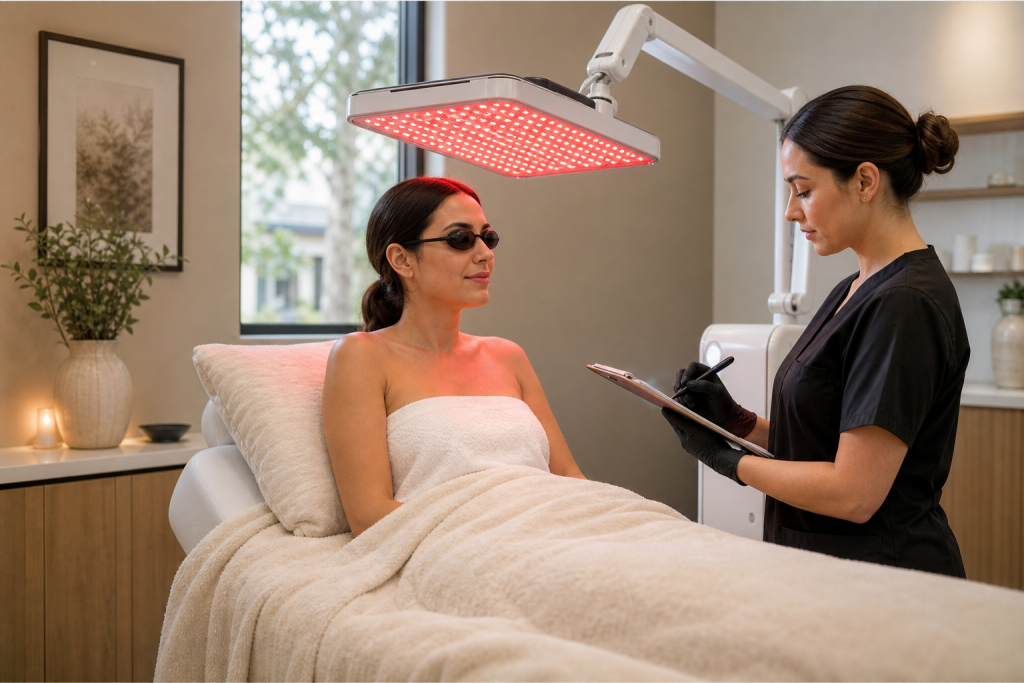
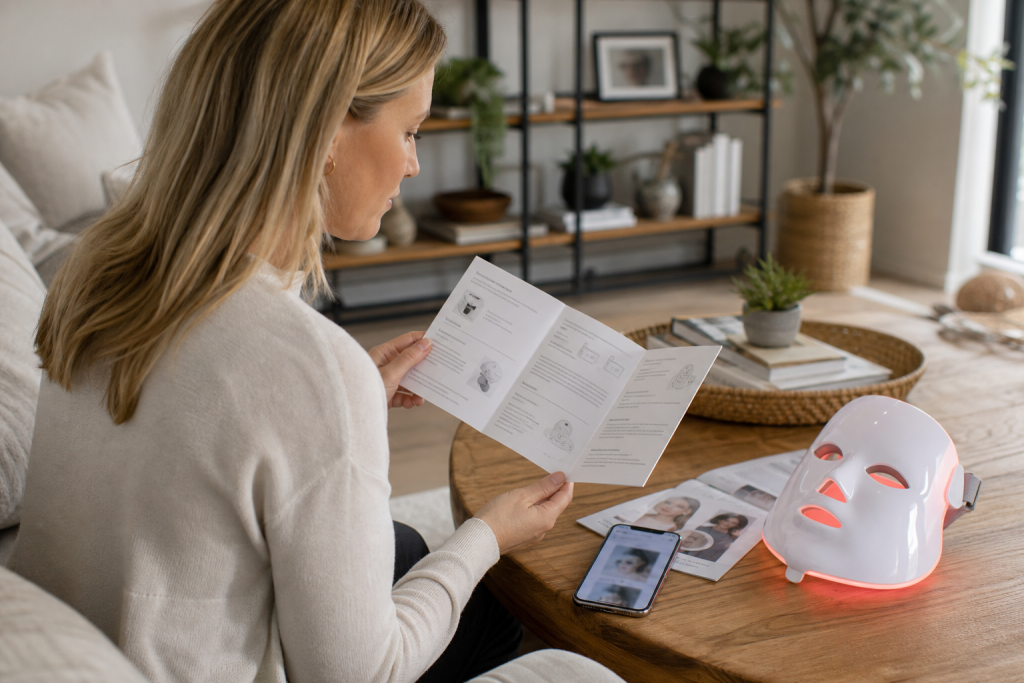
- 06Comparing in‑studio LED panels vs at‑home masks (safety & suitability)
- 07Practical next steps if you’re worried or considering a purchase
- 08Confirmed facts, analysis, and things we don’t know (clearly labeled)
- 09Costs, availability, and alternatives
- 10Summary — safe choices for Woodland Hills clients
- 11FAQs
- 12Related guides and resources
- 13Frequently asked questions
- 14Need practical help?
- 15Topic in context
- 16Sources and further reading
LED light therapy device safety 2026 is the focus of this dated, source-based update. As a result, the article separates verified details from analysis.
What changed (July 10, 2026): the U.S. Food and Drug Administration posted a Class II recall for a professional phototherapy unit on July 10, 2026, and the manufacturer issued an urgent customer notice that same day. This update matters to Woodland Hills clients because LED add‑ons and mask‑style devices are commonly offered as facial upgrades at spas and used at home.
Confirmed fact (official announcement): the FDA recall for the Photera phototherapy device was posted on July 10, 2026, and describes a Class II device recall action [1].
Quick summary for local clients
Asal Skin Lounge is monitoring the recall and safety notices so clients can choose treatments with confidence. If you plan to add an LED session to a facial, consider asking about the device brand, maintenance logs, and staff training. Importantly, “LED light therapy device safety 2026” updates focus on device performance and battery or electrical risks in some models, rather than a broad ban on light therapy as a modality.
Why the July 10, 2026 recall matters in Woodland Hills
Official announcement: the FDA recall listing describes a Class II recall for a professional phototherapy device and is dated July 10, 2026 [1].
Confirmed reports like this affect two decisions clients commonly face: whether to receive an in‑studio LED add‑on during a facial, and whether to buy or use an at‑home LED device. As a practical matter, the agency’s action encourages asking a few straightforward safety questions before booking or buying.
What the recall notices and past FDA actions show
- Confirmed fact: a Class II recall was posted on July 10, 2026 for a professional phototherapy device (Photera) [1].
- Confirmed fact (prior related action): the FDA previously posted a Class II recall in 2025 for an LED mobile exam light due to battery overheating [2].
- Independent reporting/industry guidance: recent buyer guides list FDA‑cleared devices and provide context for shopping choices; these guides can help compare clearance status and intended uses [3].
Together, the records indicate regulators are actively tracking device malfunctions and that some safety issues relate to electrical components, like batteries, rather than the light wavelengths themselves.
LED light therapy device safety 2026: what to ask before a facial add‑on
When you book an LED add‑on, it’s reasonable to ask your esthetician a few simple questions. In Woodland Hills, our team at Asal Skin Lounge recommends asking:
- Which device brand and model will you use?
- Is this device FDA‑cleared or FDA‑listed for this intended use? (Clarify the distinction—see below.)
- How often is the device inspected or serviced, and is there a maintenance log I can see?
- Do staff follow a written safety checklist for use and storage?
These questions are practical and help you assess whether in‑studio equipment is maintained to professional standards.
Regulatory terms: what “FDA‑cleared”, “FDA‑listed”, and “recall” mean
Understanding the language helps you interpret notices:
- FDA‑cleared: clearance (often via 510(k)) means the agency found the device is substantially equivalent to a predicate device for a specified use. Some consumer red‑light panels and professional units hold clearance for certain skin uses. For shopping context, buyer guides list cleared models and how they differ [3].
- FDA‑listed / registered: some devices are registered with the FDA but not cleared; registration alone does not imply FDA review of safety or effectiveness.
- Recall types: Class II recalls, like the July 10, 2026 action, indicate a temporary or medically reversible adverse health consequence is possible. The recall notice itself is an official announcement from the manufacturer and FDA when posted [1].
Confirmed fact (official): the July 10, 2026 posting is an FDA recall record for a Class II action [1].
How Asal Skin Lounge approaches device safety
Analysis: in professional practice, device safety combines proper selection, regular maintenance, staff training, and client screening. At Asal Skin Lounge, we prioritize:
- Using devices with documented maintenance and cleaning logs.
- Confirming staff complete device‑specific training and follow manufacturer protocols.
- Inspecting devices for visible wear, frayed cords, or battery issues before each use.
- Following manufacturer guidance on contact time, wavelengths, and contraindications.
These steps reduce the likelihood of electrical faults or misuse that can cause adverse events.
Comparing in‑studio LED panels vs at‑home masks (safety & suitability)
| Feature | In‑studio professional LED | At‑home LED mask/panel |
|---|---|---|
| Typical power & coverage | Higher irradiance; larger panels; operator‑controlled sessions | Lower power by design; smaller panels or masks for safety |
| Regulatory status | Often FDA‑cleared for specific clinical uses; check model | Some cleared models exist; many are marketed as wellness devices |
| Maintenance & inspection | Regular professional maintenance and logs recommended | User‑level checks; recalls may require consumer follow‑up |
| Operator control | Trained staff manage session length and safety | User controls session timing; risk of misuse higher |
| Typical risks | Electrical faults, improper settings, eye exposure if unprotected | Battery/electronics faults in some models; misuse increases risk |
In short, professional settings can offer tighter procedural controls. Nevertheless, safety ultimately depends on device design, maintenance, and correct use.
Practical next steps if you’re worried or considering a purchase
- Ask your spa which device model they use and whether the unit is serviced on schedule.
- Check the FDA recall database if you want to verify a manufacturer notice; the July 10, 2026 recall is in the FDA’s recall listings [1].
- When buying an at‑home device, compare manufacturer claims to independent buyer guides and clearance status [3].
- If you own a device covered by a recall, follow the manufacturer’s instructions in the recall notice and report adverse events to the FDA if applicable.
Confirmed facts, analysis, and things we don’t know (clearly labeled)
- Confirmed fact (official): FDA posted a Class II recall for the Photera phototherapy device on July 10, 2026 [1].
- Confirmed fact (official): FDA previously posted a Class II recall in 2025 for an LED mobile exam light due to battery overheating [2].
- Independent reporting / buyer guidance: industry buyer guides list FDA‑cleared consumer and professional units and describe clearance distinctions [3].
- Analysis: available records suggest some safety issues relate to batteries or electrical components rather than the light wavelengths themselves.
- Estimate: many at‑home devices operate at lower power than professional units, which reduces some risks but can increase the chance of incorrect self‑use.
- Not confirmed / no evidence: there is no official recall that broadly prohibits LED phototherapy as a modality across all devices (as of October 4, 2026).
- Rumor status: any unverified reports on social media about a nationwide ban are rumors unless supported by FDA record or manufacturer notice.
Costs, availability, and alternatives
Cost and availability vary. Professional LED add‑ons typically add a modest fee to a facial. At‑home devices range widely in price and claims. If you prefer to avoid LED at this time, consider other evidence‑based facial add‑ons we offer, such as hydrating boosters, high‑frequency for congestion, or galvanic infusion for product penetration.
For clients interested in at‑home options, buyer guides list cleared devices and help compare models and intended uses [3].
Summary — safe choices for Woodland Hills clients
To summarize: the July 10, 2026 FDA recall is an official, confirmed action affecting a professional phototherapy device [1]. In light of that recall and past device notices, clients should ask simple questions about brand, servicing, and staff training when booking LED add‑ons.
At Asal Skin Lounge in Woodland Hills, we adhere to manufacturer instructions and routine device inspections. If you want reassurance before booking, call us or request the device model and service schedule. We’ll gladly explain our safety checks.
FAQs
1. Should I cancel a scheduled LED add‑on after the July 10, 2026 recall?
Answer: Not necessarily. Confirm which device your spa uses. If it’s the model named in the recall, follow the spa’s or manufacturer’s instructions. If it’s a different, well‑maintained, cleared model, your appointment may proceed after your questions are answered.
2. Does the recall mean LED therapy is dangerous for skin?
Answer: The recall addresses device safety issues for specific models, often related to electrical components. It does not constitute an FDA prohibition on LED phototherapy as a technique. However, device‑specific safety matters.
3. How can I tell if an at‑home device is FDA‑cleared?
Answer: Look for manufacturer statements about 510(k) clearance and cross‑check buyer guides and the FDA device database. Independent guides can help, but clearance status is the most reliable indicator that the device underwent a regulatory review [3].
4. Who should avoid LED treatments?
Answer: For medical or personalized advice, consult a licensed provider. In general, inform your esthetician about photosensitizing medications, recent procedures, or implantable electronic devices; the spa can adapt or decline treatment based on safety guidance.
5. Where can I see the official recall details?
Answer: The FDA recall listing for the July 10, 2026 action is the official source for that recall [1]. For prior related recalls, see the FDA listing from July 2025 about a mobile LED exam light [2].
Sources and notes: Official FDA recall notices and manufacturer postings are described above and labeled as confirmed facts where cited. Independent buyer guidance and product comparisons help evaluate purchases and cleared status [1][2][3].
Asal Skin Lounge is committed to safe, professional care in Woodland Hills. If you have questions about our LED equipment or want to schedule a facial with an LED add‑on, please book online or call +1 (747) 746-3818.
As of October 4, 2026.

Frequently asked questions
Should I cancel a scheduled LED add‑on after the July 10, 2026 recall?
Not automatically. Confirm the exact device your spa uses. If it matches the recalled model, follow the manufacturer or spa instructions. If it’s a different, well‑maintained model, you can usually proceed after asking about maintenance and staff training.
Does the FDA recall mean LED phototherapy is unsafe for everyone?
No. The recall applies to specific device models and typically concerns device malfunction or electrical risks. It does not represent a blanket prohibition on LED therapy, but it does reinforce the importance of device maintenance and correct use.
How can I check whether an at‑home device is FDA‑cleared?
Look for manufacturer statements about 510(k) clearance and cross‑check with buyer guides and the FDA device database. Clearance indicates the device underwent a regulatory review for a specified use [3].
What safety steps do professional spas take for LED devices?
Reputable spas use documented maintenance logs, staff training, pre‑use inspections, and follow manufacturer protocols on session length and device handling. Ask to see or hear about these practices before your appointment.
Where can I find the official recall information mentioned in this article?
The FDA recall listing for the July 10, 2026 Class II action is the official source for that recall [1]. Related prior device recalls, such as the 2025 mobile LED exam light recall, are also listed by the FDA [2].
Need practical help?
Asal Skin Lounge — Contact us to schedule service or request a quote. Service area: Woodland Hills.
Topic in context
Sources and further reading
These links were validated and checked when possible when this article was created; some publishers limit automated requests. Facts, guidance, prices, regulations, and availability can change.
- Class 2 Device Recall (Photera) — FDA recall notice — U.S. Food and Drug Administration (accessdata.fda.gov) (2026-07-10) — primary source
- Class 2 Device Recall — MRI LED Mobile Exam Light (battery overheating) — U.S. Food and Drug Administration (accessdata.fda.gov) (2025-07-22) — primary source
- FDA‑Cleared Red Light Therapy Devices for Face: Buyer Guide — Solawave (brand buyer/education guide) (2026-09-07)