
LED light therapy add-on Woodland Hills: Safety & Expectations
LED light therapy add-on Woodland Hills: LED light therapy add-on Woodland Hills: up-to-date guidance, benefits, limits, safety checks, and how Asal Skin Loung…
View article sections
- 01What changed on 2026-09-30 and why it matters
- 02Quick overview: what is an LED light therapy add-on Woodland Hills clients ask about?
- 03Supported benefits and realistic expectations
- 04Safety, limitations, and common contraindications
- 05How Asal Skin Lounge uses LED add‑ons (what to expect at your appointment)
- 06Cost and availability — practical notes and estimates
- 07Comparing LED add-on with other common facial add-ons
- 08How to decide: professional facial vs. at‑home LED devices
- 09Recent clinical evidence and what it means
- 10Practical next steps before you book
- 11Labeling of content
- 12Resources and sources
- 13FAQs
- 14Related guides and resources
- 15Frequently asked questions
- 16Need practical help?
- 17Topic in context
- 18Sources and further reading
Updated 2026-09-30 — Independent reporting and analysis: This guide explains why recent regulatory activity and professional guidance matter for Woodland Hills clients considering a LED light therapy add-on Woodland Hills facial. It summarizes draft FDA recommendations on photobiomodulation devices, American Academy of Dermatology consumer guidance, and recent clinical results, and then explains what that means for safety, realistic expectations, and practical booking steps at Asal Skin Lounge.
What changed on 2026-09-30 and why it matters
Independent reporting and analysis as of 2026-09-30: federal regulators have been clarifying premarket expectations for photobiomodulation (PBM) devices and professional groups updated consumer-facing guidance on red‑light therapies. The U.S. Food and Drug Administration issued a draft guidance on premarket notification (510(k)) for PBM devices, outlining data and labeling considerations for manufacturers [1]. Separately, the American Academy of Dermatology published updated consumer advice about red‑light therapy that stresses safety limits, realistic outcomes, and when to consult a clinician [2]. These changes matter because they affect device labeling, salon and clinic practices, and the information clients should expect before choosing an LED add‑on.
Quick overview: what is an LED light therapy add-on Woodland Hills clients ask about?
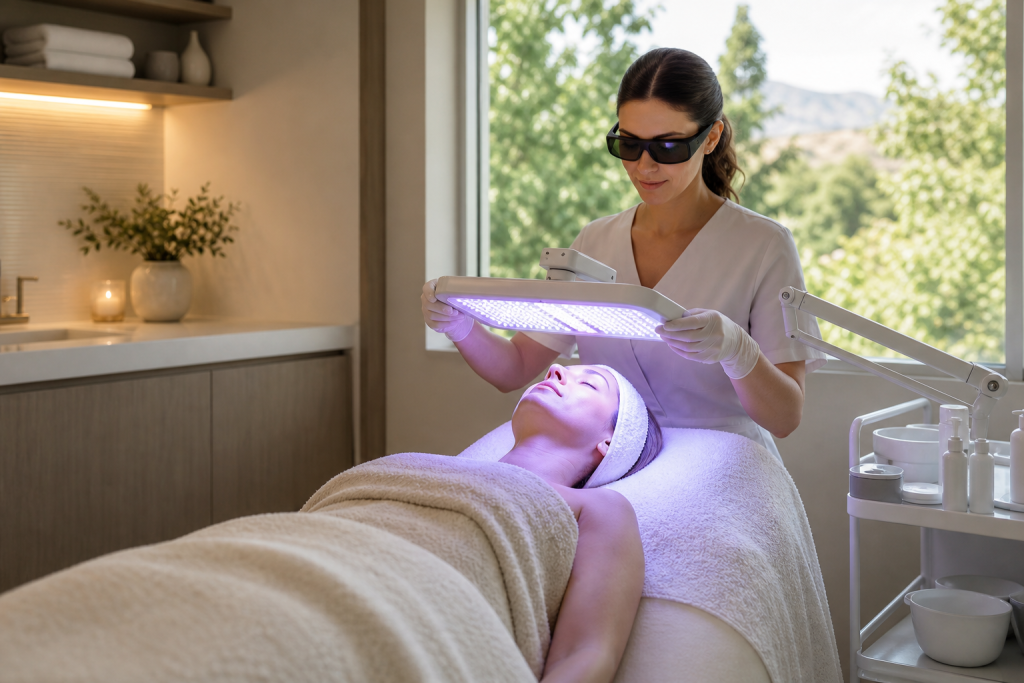
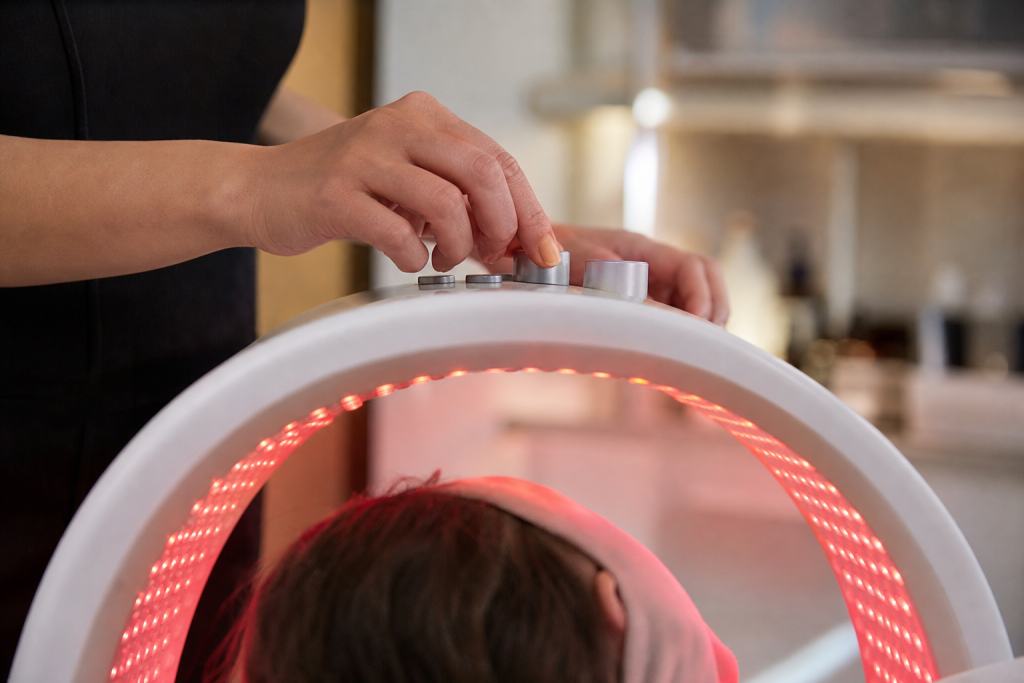
An LED light therapy add-on Woodland Hills clients request is a short, in‑spa session using low‑power LED panels or handheld applicators during or after a facial. The device emits specific wavelengths—commonly red, near‑infrared, or blue—intended to interact with skin cells without heating the surface like lasers or radiofrequency tools. Staff use the add-on to complement cleansing, exfoliation, or serums in a custom facial. As of 2026-09-30, clinicians and regulators treat these devices differently from high‑energy cosmetic lasers; guidance emphasizes safe device claims and clear labeling [1][2].
Confirmed facts, official guidance, and independent analysis
- Confirmed fact: The FDA published draft guidance describing premarket notification expectations for photobiomodulation devices, including performance data and labeling recommendations [1].
- Official announcement: The American Academy of Dermatology updated consumer guidance on red‑light therapy to outline safety points and realistic outcomes for users [2].
- Independent reporting and analysis: Recent clinical work continues to explore LED and infrared effects on skin structure; for example, a randomized clinical trial compared infrared technology and microfocused ultrasound and reported findings on dermal thickness, illustrating ongoing active research in 2025–2026 [3].
Supported benefits and realistic expectations
Clients should expect modest, gradual improvements in skin appearance, not immediate, dramatic transformations. Evidence indicates some benefits for skin tone, mild inflammation, and post‑procedure recovery when devices are used appropriately. The AAD recommends understanding the device, treatment plan, and expected results before committing [2]. Recent peer‑reviewed studies add data points about tissue response to specific wavelengths, but outcomes vary with device design, treatment duration, and baseline skin condition [3].
Safety, limitations, and common contraindications
The AAD and the FDA draft guidance emphasize safety measures and honest labeling. Key practical safety points you should expect before booking:
- Eye protection for both client and technician when needed; certain wavelengths require goggles or shielding [1][2].
- Clear contraindications discussed during intake—examples include active photosensitizing medications and certain skin conditions; always disclose medications and recent treatments [2].
- Device claims that sound medical or promise cures should be treated cautiously; regulators aim to limit unsupported therapeutic claims [1].
Likely problems or risks include temporary redness, slight warmth, and rare phototoxic reactions if combined with photosensitizing drugs. Long‑term safety data are still accumulating; therefore, professional supervision and conservative treatment plans remain best practice [2].
How Asal Skin Lounge uses LED add‑ons (what to expect at your appointment)
At Asal Skin Lounge in Woodland Hills, LED light therapy add‑on Woodland Hills appointments are offered as short, clinician‑supervised treatments that complement a customized facial. Treatments are scheduled after consultation and skin analysis. Expect the technician to review medical history and medication use, select wavelengths to match your concerns, and record device settings in your file. Asal follows current professional safety practices and consumer guidance when integrating LED into a facial service. (Availability and specific protocols are subject to change; contact Asal for current scheduling and device details.)
Cost and availability — practical notes and estimates
Exact prices for LED add‑ons vary with clinic, device, and package choices. Asal Skin Lounge posts current service options on its site and can confirm pricing during booking. If you need a price estimate, please call or check online, since fees and promotions change seasonally (this is an estimate, not a guaranteed price).
Comparing LED add-on with other common facial add-ons
| Feature | LED light therapy add-on Woodland Hills | High‑frequency | Galvanic deep infusion |
|---|---|---|---|
| Primary mechanism | Low‑power light wavelengths interacting with cells | Low current to oxygenate and reduce bacteria | Galvanic current to enhance product penetration |
| Typical use | Inflammation reduction, skin tone, recovery support | Acne bacterial control, pore treatment | Hydration and deep serum infusion |
| Session length | 5–20 minutes (add‑on) | 5–15 minutes | 5–15 minutes |
| Downtime | None | Possible transient redness | None to minimal |
| When to choose | Want a recovery or calming boost; complement to exfoliation | Active acne with professional guidance | Hydration and product delivery goals |
How to decide: professional facial vs. at‑home LED devices
Professional devices tend to have controlled protocols, staff training, and device maintenance, while at‑home units vary widely in power and design. The AAD recommends being cautious about at‑home devices that make broad medical claims [2]. If you have sensitive skin, a complex treatment history, or take photosensitizing medication, a supervised professional session is generally safer. For routine maintenance, some high‑quality at‑home devices can be supplementary, but they should follow manufacturer instructions and realistic expectations.
Recent clinical evidence and what it means
Independent clinical reports are expanding our understanding of how light and near‑infrared energy interact with skin. For example, a randomized clinical trial compared infrared technology with microfocused ultrasound and reported effects on dermal thickness, illustrating ongoing investigation into structural skin changes [3]. These studies help practitioners refine treatment plans, but outcomes depend on device parameters and patient factors. As such, Asal frames LED add‑ons as complementary, supportive steps in a tailored facial plan rather than standalone cures.
Practical next steps before you book
- Review your medical history and any photosensitizing medications with your esthetician.
- Ask which wavelengths and device model will be used and why; request to see manufacturer labeling if you want details.
- Request a conservative protocol for your first session and schedule follow‑up or package sessions only if you see gradual, tolerable improvements.
- If you have a dermatologic condition or a complex medical history, consult your dermatologist before booking.
Labeling of content
Confirmed facts and official announcements in this article are labeled with source citations. The description of events and their local significance is independent reporting and analysis by Asal Skin Lounge staff and content editors as of 2026-09-30. This article does not represent legal or medical advice.
Resources and sources
- FDA draft guidance on photobiomodulation (PBM) devices and 510(k) submissions — draft guidance document (mentioned for device labeling and premarket considerations) [1].
- American Academy of Dermatology consumer guidance on red‑light therapy — summary of safety and appropriate use for consumers [2].
- Recent randomized clinical trial on infrared technology and dermal thickness — example of current clinical evidence landscape (PubMed listing) [3].
FAQs
Is LED light therapy safe for all skin types?
LED light therapy is widely used across many skin types, but safety depends on your medications and skin history. The AAD advises checking for photosensitizing drugs and consulting professionals for unusual conditions [2]. Disclose medical history at intake.
How many sessions of the LED light therapy add-on are usually needed?
Treatment goals and response differ. Many clients start with one to a few add‑on sessions to support a facial series, then reassess. Asal recommends conservative initial protocols and documented progress.
Will LED light therapy replace other facial treatments?
No. Asal treats LED as a complementary add‑on that supports hydration, calming, or recovery. It is not a substitute for targeted procedures when those are clinically indicated.
Can LED therapy damage my eyes?
Certain wavelengths can affect the eyes if unprotected. Professional settings use appropriate eye protection per device recommendations, and AAD guidance highlights eye safety [2].
Does insurance cover LED light therapy?
Cosmetic LED add‑ons are generally elective and not covered by medical insurance. If treatment is part of a medically recommended plan, check with your provider and submit documentation as needed.
If you live in Woodland Hills, Tarzana, Encino, West Hills, Canoga Park, or Calabasas and want to discuss whether a LED light therapy add-on Woodland Hills facial suits your needs, book online or call Asal Skin Lounge at +1 (747) 746-3818.


Frequently asked questions
Is LED light therapy safe for all skin types?
LED light therapy is commonly used across many skin types, but safety depends on medical history and medications. The American Academy of Dermatology recommends checking for photosensitizing drugs and discussing any dermatologic conditions with a clinician before treatment [2].
How many sessions of the LED light therapy add-on are usually needed?
Responses vary. Many clients try one to a few add-on sessions in a facial series and then reassess. Asal Skin Lounge recommends a conservative initial plan and documentation of results before committing to packages.
Will LED light therapy replace other facial treatments?
No. LED therapy is treated as a complementary add-on to support hydration, calming, or recovery. It is not intended to replace targeted clinical procedures when those are clinically indicated.
Can LED therapy damage my eyes?
Certain wavelengths may pose a risk if eyes are unprotected. Professional clinics use appropriate eye protection per device manufacturer guidance and professional best practices to minimize risk [1][2].
Does insurance cover LED light therapy?
Cosmetic LED add-ons are generally elective and not covered by medical insurance. If treatment is part of a documented medical plan, check with your insurer and obtain supporting clinical documentation as needed.
Need practical help?
Asal Skin Lounge — Contact us to schedule service or request a quote. Service area: Woodland Hills.
Topic in context
Sources and further reading
These links were validated and checked when possible when this article was created; some publishers limit automated requests. Facts, guidance, prices, regulations, and availability can change.
- Photobiomodulation (PBM) Devices – Premarket Notification [510(k)] Submissions (Draft Guidance) — U.S. Food and Drug Administration (FDA) (2023-01-01)
- Is red light therapy right for your skin? — American Academy of Dermatology (AAD) (2024-09-13)
- Effect of infrared technology on dermal thickness of the face compared to microfocused ultrasound — randomized clinical trial (example of recent clinical evidence) — PubMed / journal article (PubMed listing) (2026-08-01)