
led-light-therapy-add-on-safety-evidence — 2026 Guide
led-light-therapy-add-on-safety-evidence: A Woodland Hills explainer on led-light-therapy-add-on-safety-evidence: what studies and recent 510(k) activity show,…
View article sections
- 01Table of contents
- 02led-light-therapy-add-on-safety-evidence
- 03What changed (2026-10-30) and why it matters
- 04What the best evidence says about LED light therapy add-ons
- 05Safety considerations and likely risks for facial add-ons
- 06How Asal Skin Lounge integrates LED safely into facials (Woodland Hills)
- 07Comparing LED add-ons with other facial add-ons
- 08Cost, availability, and what to expect at your appointment
- 09Limitations, realistic outcomes, and what the evidence does not show
- 10Practical next steps for Woodland Hills clients
- 11Sources and how we labeled them
- 12Frequently asked questions
- 13Final notes and how to book
- 14Related guides and resources
- 15Frequently asked questions
- 16Need practical help?
- 17Topic in context
- 18Sources and further reading
Estimated reading time: 9 minute read
Table of contents
- led-light-therapy-add-on-safety-evidence
- What changed (2026-10-30) and why it matters
- Quick summary for clients
- What the best evidence says about LED light therapy add-ons
- What ‘‘510(k) clearance’’ means (short)
- Safety considerations and likely risks for facial add-ons
- How Asal Skin Lounge integrates LED safely into facials (Woodland Hills)
- Comparing LED add-ons with other facial add-ons
- Cost, availability, and what to expect at your appointment
- Limitations, realistic outcomes, and what the evidence does not show
- When to choose an alternative or combine therapies
- Practical next steps for Woodland Hills clients
- Sources and how we labeled them
- Frequently asked questions
- Is LED light therapy safe to add to my facial?
- How many sessions will I need to see results?
- Are at-home LED devices as good as professional add-ons?
- Does a 510(k) record mean the FDA “approved” the device?
- Final notes and how to book
- Related guides and resources
- Frequently asked questions
- Is LED light therapy safe to add to a professional facial?
- How effective is LED for acne and skin rejuvenation?
- Does FDA 510(k) clearance mean the device is proven effective?
- Should I choose at-home LED devices or a professional add-on?
- What screening should I expect before LED treatment?
- Need practical help?
- Topic in context
- Sources and further reading
led-light-therapy-add-on-safety-evidence
This dated, source-based update separates verified details, limitations, and practical next steps.
What changed (2026-10-30) and why it matters
What changed: as of 2026-10-30, several recent evidence reviews and continuing device-clearance activity have clarified how well LED light as a facial add-on works and how regulators view consumer and clinic devices. This matters for Woodland Hills clients choosing professional facials because it improves how estheticians explain likely benefits, limitations, and safety precautions before adding LED to a facial.
Confirmed facts: systematic reviews and meta-analyses have summarized the clinical data on LED for acne and photo-rejuvenation, and at least one LED mask received a U.S. Food and Drug Administration 510(k) record in 2025 (K243555) showing substantial-equivalence filings for certain devices [2][1][3].
Quick summary for clients
- Evidence: Peer-reviewed reviews report modest but measurable benefit for mild-to-moderate acne and some improvement in skin appearance; tolerability is generally good in trials [2][1].
- Regulation: Some LED devices have 510(k) records; a 510(k) indicates a regulatory submission claiming substantial equivalence to a legally marketed predicate device, not an FDA ‘‘approval’’ of effectiveness [3].
- Practical effect: LED add-ons in professional facials are low-risk for most clients when used correctly, but there are limitations and contraindications to discuss before treatment.
What the best evidence says about LED light therapy add-ons
First, the exact phrase: led-light-therapy-add-on-safety-evidence. Systematic reviews focused on at-home and in-clinic LED treatments find consistent but modest effects for common concerns like inflammatory acne and general photo-rejuvenation. For acne, pooled analyses report reduced lesion counts compared with sham or baseline, yet study sizes and protocols vary considerably [2].
Second, a wider 2026 review of home-based dermatologic devices summarized evidence across acne and skin-rejuvenation uses and emphasized that study design, wavelength, dosing, and device delivery matter for outcomes [1]. In particular, differences between consumer masks, professional panels, and clinic-grade units complicate direct comparison.
Confirmed fact: clinical trials and reviews generally find LED is well tolerated, with few serious adverse events reported; most side effects are transient and mild, such as temporary redness or dryness [2][1].
What ‘‘510(k) clearance’’ means (short)
Official announcement: a 510(k) submission such as K243555 documents that a manufacturer believes a device is substantially equivalent to an earlier marketed device [3]. However, a 510(k) is not an FDA endorsement of clinical superiority or cure claims; rather, it addresses safety and substantial equivalence for marketing in the U.S. [3].
Safety considerations and likely risks for facial add-ons
The phrase led-light-therapy-add-on-safety-evidence appears here because safety is the most common client question. Evidence shows LED is generally low-risk when devices are used according to manufacturer and clinic protocols, but there are important practical points:
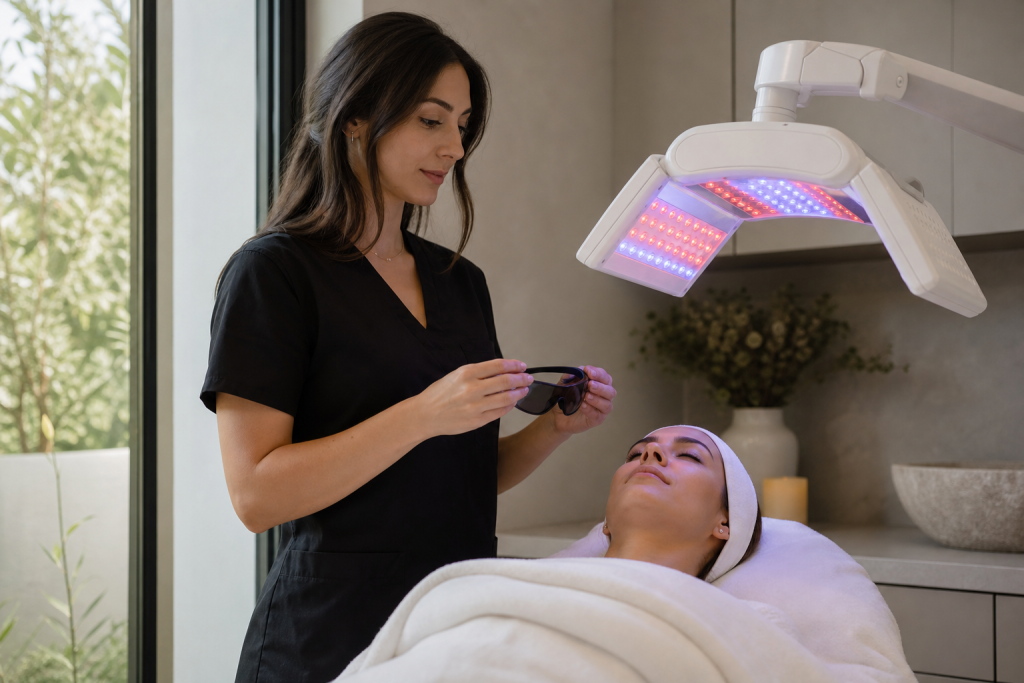
- Eye protection: direct retinal exposure to intense light should be avoided; professional sessions use goggles or eye shields as standard practice.
- Photosensitizing medications and topical agents: clients using oral or topical photosensitizers (for example certain antibiotics, retinoids, or herbal supplements) may face increased sensitivity; always disclose medications during screening.
- Sensory reactions: a minority of users report temporary warmth, tingling, or mild flushing after treatment.
- Unregulated claims: some consumer devices make broad claims unsupported by strong evidence; prefer clinical-grade devices or trained providers for best safety practices.
Confirmed fact: systematic reviews report low rates of adverse events across trials, but long-term safety data remain limited and study protocols differ; therefore, clinics adopt conservative screening and follow-up practices [2][1].
How Asal Skin Lounge integrates LED safely into facials (Woodland Hills)
Asal Skin Lounge uses clinic-grade LED panels or masks operated by licensed estheticians and integrates led-light-therapy-add-on-safety-evidence into intake and consent steps. Specifically:
- Pre-treatment screening documents medications, supplements, and health conditions that could increase photosensitivity.
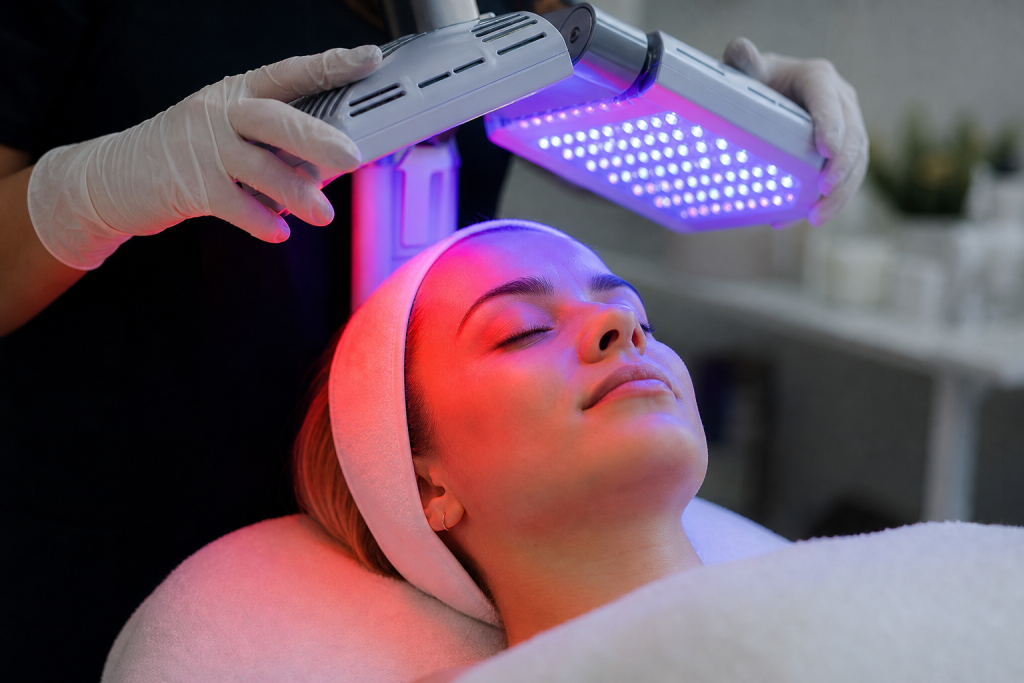
- Estheticians select wavelengths and session length based on skin concern—blue for acne-prone skin, red or near-infrared for photo-rejuvenation—while avoiding excessive cumulative dosing.
- Eye protection is provided and kept in place for the entire session.
- Clients receive post-session guidance, including gentle cleansing and sunscreen use if outdoors the same day.
Analysis: this layered approach follows evidence-based safety principles and reduces the likelihood of avoidable side effects [1][2][3].
Comparing LED add-ons with other facial add-ons
| Feature | LED light therapy | High-frequency | Galvanic deep infusion |
|---|---|---|---|
| Common goal | Acne reduction; skin tone/texture improvement | Oxygenation; mild antimicrobial effect | Enhanced product penetration |
| Evidence strength | Modest clinical support for acne and photo-rejuvenation [2][1] | Limited, mixed evidence | Mechanistic support; clinical outcomes vary |
| Typical risks | Transient redness, photosensitivity concerns | Slight tingling; improper use can irritate skin | Skin sensitivity if used incorrectly |
| Session length | 10–30 minutes (add-on) | 5–10 minutes | 10–20 minutes |
Cost, availability, and what to expect at your appointment
Estimate: pricing varies by studio; add-on LED sessions are commonly offered as a 10–30 minute extension to a facial. Asal Skin Lounge lists LED as an optional add-on and will confirm pricing during booking. Availability depends on device capacity and appointment type.
At your appointment in Woodland Hills, expect a short screening, explanation of the targeted wavelength, and protective eyewear. The LED portion is quiet, noninvasive, and suitable as a relaxing finale to many facial types. For some concerns, estheticians recommend a series of sessions spaced weekly or biweekly for optimal response, although individual needs vary.
Limitations, realistic outcomes, and what the evidence does not show
Important limitation: led-light-therapy-add-on-safety-evidence supports modest improvements for select concerns but does not support dramatic, guaranteed results. Systematic reviews note heterogeneity in device types, dosing, and outcomes, which limits certainty about which protocol is best for any single client [2][1].
Confirmed fact: LED is not a substitute for medical treatments prescribed by a dermatologist for severe acne or other medical skin conditions; discuss medical issues with a licensed clinician.
When to choose an alternative or combine therapies
- If you have severe or cystic acne, consult a dermatologist before relying on LED alone.
- For targeted textural changes, combining LED with professional exfoliation, resurfacing, or prescription topical regimens may be recommended by your provider.
Practical next steps for Woodland Hills clients
- Review your medication and supplement list for photosensitizing agents and discuss these with your esthetician before booking.
- Book a consultation or request LED as an add-on to a regular facial; the esthetician will recommend wavelength, session length, and a treatment plan.
- Follow post-treatment care instructions, including sunscreen and gentle products for 24–48 hours.
- Track response across several sessions and report any unexpected reactions promptly.
Sources and how we labeled them
- Independent reporting and peer-reviewed syntheses: systematic reviews and evidence reviews summarized trial outcomes and safety profiles for at-home and clinic LED devices [2][1].
- Official announcement / regulatory record: the 510(k) filing K243555 is listed in a public FDA 510(k) index entry (Innolitics record) and documents 2025 device-clearance activity [3].
- Analysis and estimates in this guide are based on those sources and on standard esthetic practice; they are presented as educational information, not individualized medical advice.
Frequently asked questions
Is LED light therapy safe to add to my facial?
Answer: For most clients, yes — trials and reviews report favorable tolerability when devices are used appropriately and after proper screening. However, disclose medications and health issues that could increase photosensitivity before treatment [2][1].
How many sessions will I need to see results?
Answer: Studies and clinic practice suggest a series of sessions is often needed for measurable change; for example, weekly or biweekly sessions for 4–12 weeks are common. Individual responses vary, and your esthetician will recommend a plan based on your goals [2][1].
Are at-home LED devices as good as professional add-ons?
Answer: Evidence varies because device power, wavelength control, and treatment protocols differ. Some at-home devices show benefit in trials, but clinic-grade systems typically allow more consistent dosing and professional oversight. Check device documentation and clinical evidence before purchasing [2][1].
Does a 510(k) record mean the FDA “approved” the device?
Answer: No. A 510(k) submission documents that a manufacturer believes the device is substantially equivalent to a predicate device and supports legal marketing in the U.S.; it is not the same as an FDA approval of clinical claims [3].
Final notes and how to book
Asal Skin Lounge balances the best available led-light-therapy-add-on-safety-evidence with personalized intake and conservative screening to keep treatments safe and comfortable for Woodland Hills clients. If you have questions about whether LED is a good add-on for your next facial, contact our team for a consult.
Book online or call +1 (747) 746-3818 to schedule an appointment at Asal Skin Lounge in Woodland Hills.
Sources: systematic reviews and evidence summaries on LED devices for acne and rejuvenation [2][1]; public 510(k) record K243555 entry (Innolitics) for LED mask submissions [3]. Information is educational and not a substitute for medical advice. As of 2026-10-30.


Frequently asked questions
Is LED light therapy safe to add to a professional facial?
Generally yes for most clients. Peer-reviewed reviews find LED is well tolerated with few serious adverse events when devices are used properly, but proper screening for photosensitizing medications and eye protection are essential [2][1].
How effective is LED for acne and skin rejuvenation?
Systematic reviews show modest but measurable improvements in inflammatory acne and some photo-rejuvenation outcomes. Results vary by device, wavelength, dosing, and individual response; therefore, multiple sessions are often recommended [2][1].
Does FDA 510(k) clearance mean the device is proven effective?
No. A 510(k) record indicates a manufacturer claims substantial equivalence to a marketed predicate device, allowing legal marketing in the U.S.; it does not equal an FDA approval of clinical efficacy [3].
Should I choose at-home LED devices or a professional add-on?
Both options can show benefit, but clinic-grade devices and professional oversight offer more consistent dosing and safety screening. If you use an at-home device, verify published evidence for that model and follow manufacturer instructions carefully [2][1].
What screening should I expect before LED treatment?
Expect questions about oral and topical medications, skin conditions, recent procedures, and sunscreen or topical retinoid use. Estheticians will also provide eye protection and advise on post-session care to minimize risks.
Need practical help?
Asal Skin Lounge — Contact us to schedule service or request a quote. Service area: Woodland Hills.
Topic in context
Sources and further reading
These links were validated and checked when possible when this article was created; some publishers limit automated requests. Facts, guidance, prices, regulations, and availability can change.
- Home-Based Dermatologic Devices for Acne and Rejuvenation: Evidence-Based Insights — PubMed / Dermatologic Surgery (Raef et al.) (2026-08-04)
- At-Home LED Devices for the Treatment of Acne Vulgaris: A Systematic Review and Meta-Analysis — PMC (systematic review)
- LED light therapy mask (K243555) — FDA 510(k) record — U.S. Food and Drug Administration (via Innolitics index of 510(k) records) (2025-02-05) — primary source