

LED high frequency galvanic facial add-ons safety Woodland
LED high frequency galvanic facial add-ons safety Woodland: LED high frequency galvanic facial add-ons safety Woodland — what changed Aug 7, 2026; questions, r…
View article sections
- 01Table of contents
- 02What changed and why it matters (Aug 7, 2026)
- 03Opening summary: what to know now
- 04Quick definitions: what each add‑on does
- 05LED high frequency galvanic facial add-ons safety Woodland: confirmed facts and official notices
- 06Supported benefits, limitations, and what the evidence says
- 07Likely problems and material risks to discuss
- 08Contraindications and safety flags to ask about
- 09How in‑office devices differ from at‑home tools
- 10Questions to ask before you book
- 11Typical session flow and what to expect
- 12Cost and availability (estimates and local context)
- 13Alternatives and complementary options
- 14Practical next steps: a booking checklist for Woodland Hills clients
- 15Comparing LED, high‑frequency, and galvanic: quick at‑a‑glance
- 16How Asal Skin Lounge approaches add‑on safety in Woodland Hills
- 17Sources and dates
- 18FAQs
Quick summary: This post summarizes confirmed regulatory guidance, a recent FDA 510(k) clearance example, and independent safety reviews relevant to LED, high‑frequency, and galvanic facial add‑ons. It explains common risks, contraindications, and practical booking questions for Woodland Hills clients.
Estimated reading time: 10 minute read
Table of contents
- What changed and why it matters (Aug 7, 2026)
- Opening summary: what to know now
- Quick definitions: what each add‑on does
- LED high frequency galvanic facial add-ons safety Woodland: confirmed facts and official notices
- Independent reporting and analysis
- Supported benefits, limitations, and what the evidence says
- Likely problems and material risks to discuss
- Contraindications and safety flags to ask about
- How in‑office devices differ from at‑home tools
- Questions to ask before you book
- Typical session flow and what to expect
- Cost and availability (estimates and local context)
- Alternatives and complementary options
- Practical next steps: a booking checklist for Woodland Hills clients
- Comparing LED, high‑frequency, and galvanic: quick at‑a‑glance
- How Asal Skin Lounge approaches add‑on safety in Woodland Hills
- Sources and dates
- FAQs
- Q: Is LED high frequency galvanic facial add-ons safety Woodland guaranteed by the FDA?
- Q: Can LED PBM increase cancer risk?
- Q: How should I prepare for a session with galvanic or high‑frequency add‑ons?
- Q: Are at‑home LED masks as effective as in‑office devices?
- Q: What should I do if I have an adverse reaction after a facial add‑on?
- Related guides and resources
- Frequently asked questions
- Is LED high frequency galvanic facial add-ons safety Woodland guaranteed by the FDA?
- Can LED photobiomodulation increase cancer risk?
- How do in‑office LED devices compare to at‑home LED masks?
- What precautions should I take before scheduling a high‑frequency or galvanic add‑on?
- What should I do if I have an adverse reaction after a facial add‑on?
- Need practical help?
- Topic in context
- Sources and further reading
LED high frequency galvanic facial add-ons safety Woodland is the focus of this dated, source-based update. As a result, the article separates verified details from analysis.
What changed and why it matters (Aug 7, 2026)
On Aug 7, 2026 the U.S. Food and Drug Administration posted a 510(k) decision summary for an LED light therapy face mask, a recent example of cleared low‑level light/photobiomodulation devices for aesthetic use [2]. Combined with the FDA’s draft guidance on photobiomodulation (PBM) devices released in January 2023, this regulatory activity clarifies expectations for device performance, labeling, and premarket submissions that affect in‑office add‑ons in spas and medi‑spas in Woodland Hills and the surrounding San Fernando Valley [1].
Why this matters to local clients: facilities offering LED, high‑frequency, or galvanic facial add‑ons should be able to explain device intent, regulatory status, and safety steps. Use the checklist below at booking to compare providers and protect your skin health.
Opening summary: what to know now
LED high frequency galvanic facial add-ons safety Woodland guidance now combines federal draft rules and recent clearances, independent safety review data, and common clinical precautions. The FDA draft guidance remains the primary federal reference for PBM/LED devices, and the Aug 7, 2026 510(k) decision is an example of the kinds of clearances manufacturers may hold [1][2]. A 2023 systematic review summarized available safety data for low‑level light therapy and found no consistent evidence of oncologic risk but noted limitations in long‑term data and study heterogeneity [3].
Quick definitions: what each add‑on does
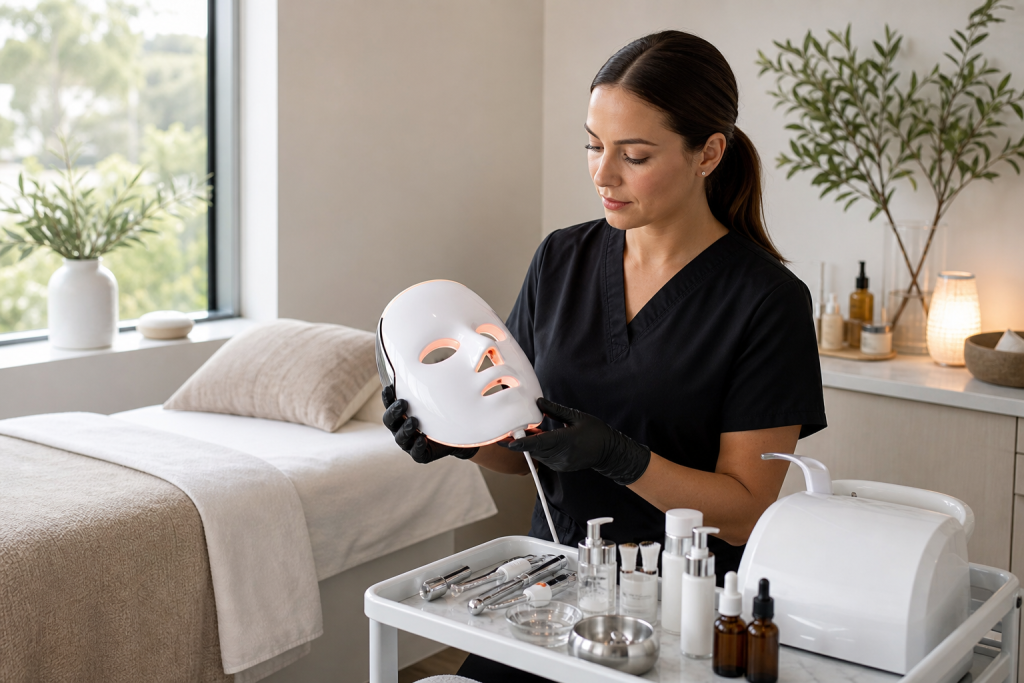
- LED (photobiomodulation): Non‑thermal light in red and/or near‑infrared ranges used to target cellular responses. Devices vary by wavelength, irradiance, and treatment time; regulated PBM devices are addressed in FDA draft guidance [1].
- High‑frequency: A handpiece that delivers alternating electrical current to the skin surface, often producing a mild warming or ozone effect; used for surface circulation and transient congestion reduction in professional facials.
- Galvanic: A low‑voltage direct current used with conductive serums to encourage deeper product infusion or iontophoresis and to provide a measurable current for extraction or desincrustation steps.
LED high frequency galvanic facial add-ons safety Woodland: confirmed facts and official notices
Confirmed facts and official announcements you can rely on as of 2026‑09‑18:
- FDA issued draft guidance on photobiomodulation devices for industry and staff (Jan 2023). The guidance outlines regulatory expectations for premarket notifications (510(k)), labeling, and safety considerations for PBM devices [1].
- On Aug 7, 2026, the FDA decision summary for a cleared LED face mask (K261601) illustrates the kind of 510(k) documentation manufacturers submit and what a cleared device record looks like [2].
- An independent systematic review (Apr 2023) examined the oncologic safety of low‑level light therapy for aesthetic skin use and reported no consistent evidence of increased cancer risk in analyzed studies, while noting limited long‑term follow‑up in available trials [3].
Independent reporting and analysis
Independent reviews and clinical summaries have clarified measurable safety parameters for PBM and helped clinicians set exposure limits and contraindication lists. However, evidence quality, device heterogeneity, and variable study endpoints mean long‑term safety signals require ongoing monitoring [3].
Supported benefits, limitations, and what the evidence says
Supported benefits: peer‑reviewed literature and clinical summaries suggest that PBM/LED can produce short‑term improvements in skin appearance measures in controlled settings, and it is commonly used as a non‑invasive add‑on in professional facials. The 2023 systematic review judged oncologic risk in available studies to be low or unproven, but it emphasized limitations in long‑term data [3].
Limitations and unknowns: device performance depends on wavelength, power, and exposure time. Home devices vary widely from cleared professional units. The FDA draft guidance instructs manufacturers how to describe intended use and safety limits; that helps clinicians judge a device’s appropriateness for in‑office use [1].
Likely problems and material risks to discuss
- For LED/PBM: transient redness, photosensitivity with certain medications, or eye discomfort without proper protection. Refer to device labeling and the FDA guidance for exposure limits and labeling expectations [1].
- For high‑frequency: mild tingling, temporary erythema, or irritation on very sensitive skin. Avoid overuse on inflamed or open wounds.
- For galvanic treatments: skin irritation, tingling, or burns if the device is misused or settings are inappropriate; metal implants or implantable electrical devices are commonly listed as contraindications for electrical modalities (analysis/standard practice).
- All add‑ons: reactions to products used during iontophoresis or aftercare; ask about ingredients and perform a patch test when needed.
Contraindications and safety flags to ask about
Ask a provider if the following apply to you and whether they will change their protocol. This list is educational and not exhaustive; always disclose medical history to your practitioner:
- Pregnancy or breastfeeding (providers may modify or defer certain electrical modalities).
- Implantable electronic devices (pacemakers, neurostimulators) or metal facial implants.
- Photosensitizing medications or recent isotretinoin use (disclose medications to your provider).
- Active infection, open wounds, or severe inflammatory skin conditions.
How in‑office devices differ from at‑home tools
| Dimension | In‑office device | At‑home device |
|---|---|---|
| Power / irradiance | Typically higher, operator‑controlled, and matched to treatment protocols. | Lower power, conservative settings for safety and repeatability. |
| Supervision | Licensed esthetician or clinician operates and monitors skin response. | User self‑applies; relies on manufacturer instructions. |
| Regulatory status | Some professional devices have 510(k) clearances or meet professional equipment standards [1][2]. | Many consumer devices are cosmetic and vary widely in claims and documentation. |
| Cost & sessions | Higher per session cost; tailored protocols and monitoring. | Lower upfront cost but may require regular use for effect. |
Questions to ask before you book
Bring these questions to your booking call or consultation. They help you compare practices in Woodland Hills, Tarzana, Encino, and nearby neighborhoods:
- Is the LED/high‑frequency/galvanic device used in‑office cleared or registered for professional use? (Ask for model name or 510(k) number.)
- Who operates the device and what are their credentials?
- What contraindications do you screen for, and how do you modify treatment for sensitive clients?
- What protective steps do you take (eye shields for LED, grounding and patch checks for galvanic)?
- Can I see the device instructions for use or manufacturer labeling on request?
Typical session flow and what to expect
Most professional facials that add LED, high‑frequency, or galvanic steps follow a short sequence: consultation and informed consent, deep cleansing, targeted add‑on (5–20 minutes depending on modality), serum or mask application, and aftercare guidance. Ask how the add‑on integrates with your custom facial plan and whether the device will be used alone or with topical serums.
Cost and availability (estimates and local context)
Costs for add‑ons vary across Woodland Hills and surrounding communities. As an estimate, professional add‑ons often range from about $25 to $80 per session depending on modality and clinic tier (analysis/estimate). Memberships or package pricing can lower per‑session costs. Ask for a written estimate when you book.
Alternatives and complementary options
- Topical treatments: professionally applied serums and masks can be paired with or used instead of electrical/light modalities.
- Mechanical modalities: microdermabrasion or extractions address congestion differently than electrical add‑ons.
- At‑home maintenance: consumer LED devices and gentle daily care help sustain in‑office results, but check device claims against FDA guidance and labeling [1].
Practical next steps: a booking checklist for Woodland Hills clients
- Confirm provider credentials and device model; request device labeling or 510(k) number if they reference regulatory clearance.
- Disclose medical history, implants, medications, and recent isotretinoin use.
- Ask about immediate aftercare and any recommended gap before other in‑office treatments.
- Request a patch test or lower‑intensity trial if you have sensitive skin or a history of reactions.
Comparing LED, high‑frequency, and galvanic: quick at‑a‑glance
| Add‑on | Primary intent | Typical session time | Common precautions |
|---|---|---|---|
| LED (PBM) | Cellular stimulation / skin appearance | 5–20 minutes | Eye protection; avoid with photosensitizing meds; check device clearance/labeling [1][2] |
| High‑frequency | Surface circulation; transient congestion control | 2–10 minutes | Avoid on open wounds; may be modified for sensitive skin |
| Galvanic | Deeper infusion / iontophoresis | 5–15 minutes | Avoid with implantable electronic devices; monitor for irritation |
How Asal Skin Lounge approaches add‑on safety in Woodland Hills
Asal Skin Lounge uses informed consent, client screening, and device protocols aligned with manufacturer guidance. We review device labeling, monitor skin responses, and tailor settings to skin type and medical history. If you want details about a specific device model or our protocols, ask when you schedule.
Sources and dates
- FDA draft guidance: Photobiomodulation (PBM) Devices — Premarket Notification [510(k)] Submissions (draft guidance), published Jan 2023. This is the principal federal reference for PBM device submissions and labeling expectations [1].
- Example FDA 510(k) decision summary for an LED light therapy mask, published Aug 7, 2026; cited as a recent clearance example for device records and labeling [2].
- Systematic review on oncologic safety of low‑level light therapy for aesthetic skin rejuvenation, published Apr 10, 2023; evaluated clinical safety literature and noted limited long‑term data [3].
FAQs
Q: Is LED high frequency galvanic facial add-ons safety Woodland guaranteed by the FDA?
A: No. The FDA does not “guarantee” safety for every procedure. The agency issues guidance and clears specific devices through 510(k) when manufacturers demonstrate substantial equivalence and submit required data. Ask your provider about the device model and labeling; some professional devices hold 510(k) clearances or meet manufacturer safety protocols [1][2].
Q: Can LED PBM increase cancer risk?
A: Current systematic reviews found no consistent evidence that low‑level light therapy increases oncologic risk in the short to mid term, but reviewers highlighted limited long‑term follow‑up and study differences. Discuss your cancer history with your provider before treatment [3].
Q: How should I prepare for a session with galvanic or high‑frequency add‑ons?
A: Disclose medications and medical devices, avoid heavy topical products before arrival unless instructed, and follow your esthetician’s screening checklist. Providers typically review contraindications and may modify or defer the add‑on based on your history.
Q: Are at‑home LED masks as effective as in‑office devices?
A: At‑home devices have lower power and conservative settings for safety. They can support maintenance but are not identical to higher‑power, operator‑controlled in‑office equipment. Check device claims and manufacturer labeling, and ask your provider for recommendations [1].
Q: What should I do if I have an adverse reaction after a facial add‑on?
A: Contact your provider immediately for aftercare instructions. For severe reactions (intense swelling, blistering, breathing difficulty), seek emergency care. Report device concerns to the provider and, if appropriate, to the FDA MedWatch program (official reporting channel).
For personalized guidance and transparent device information, contact Asal Skin Lounge in Woodland Hills. Our team will review device models, protocols, and screening steps before your appointment. Book online or call +1 (747) 746-3818. Visit us at 19903 Ventura Blvd #3, Woodland Hills, CA 91364.


Frequently asked questions
Is LED high frequency galvanic facial add-ons safety Woodland guaranteed by the FDA?
No. The FDA provides guidance and clears specific devices through 510(k) when manufacturers submit required data, but it does not guarantee safety for every procedure. Ask your provider for device model and labeling; some professional devices have 510(k) clearances [1][2].
Can LED photobiomodulation increase cancer risk?
Current systematic reviews found no consistent evidence that low‑level light therapy increases oncologic risk in the short to mid term; however, reviewers note limited long‑term follow‑up and variability among studies. Discuss personal cancer history with your provider before treatment [3].
How do in‑office LED devices compare to at‑home LED masks?
In‑office devices typically operate at higher irradiance and are used under professional supervision, while at‑home devices are lower power and designed for safety and daily use. Check device labeling and manufacturer claims, and consult your esthetician [1].
What precautions should I take before scheduling a high‑frequency or galvanic add‑on?
Disclose any implantable electronic devices, metal implants, medications (including photosensitizing drugs), or recent isotretinoin use. Ask for a patch test or a lower‑intensity trial if you have sensitive skin. Providers should screen and modify treatment accordingly (analysis/standard practice).
What should I do if I have an adverse reaction after a facial add‑on?
Contact your provider for aftercare guidance. For severe symptoms such as intense swelling or breathing difficulty, seek emergency care. You can also report device safety concerns to the FDA MedWatch program (official reporting channel).
Need practical help?
Asal Skin Lounge — Contact us to schedule service or request a quote. Service area: Woodland Hills.
Topic in context

Sources and further reading
These links were validated and checked when possible when this article was created; some publishers limit automated requests. Facts, guidance, prices, regulations, and availability can change.
- Photobiomodulation (PBM) Devices – Premarket Notification [510(k)] Submissions — Draft Guidance for Industry and FDA Staff — U.S. Food & Drug Administration (FDA) (2023-01-01) — primary source
- 510(k) Clearances — LED Light Therapy Mask (K261601) (example 510(k) decision summary) — U.S. Food & Drug Administration (FDA) (2026-08-07)
- Photobiomodulation: A Systematic Review of the Oncologic Safety of Low-Level Light Therapy for Aesthetic Skin Rejuvenation — PubMed Central / Journal (systematic review) (2023-04-10)