
California cosmetology 2026 infection control rules Guide
California cosmetology 2026 infection control rules: Understand the California cosmetology 2026 infection control rules and how they change sanitation, consent…
View article sections
- 01Table of contents
- 02Quick summary for Woodland Hills salons and clients
- 03Key infection-control requirements (what to expect)
- 04California cosmetology 2026 infection control rules — what estheticians should update now
- 05Confirmed facts, independent reporting, and supportive evidence
- 06What this means for facials, waxing, and device add‑ons at Asal Skin Lounge
- 07Comparison: older rules vs. the 2026 updates
- 08Costs, availability, and likely operational impacts
- 09Alternatives and choices for small salons
- 10Next steps for Woodland Hills clients and professionals
- 11How Asal Skin Lounge is responding (Woodland Hills)
- 12California cosmetology 2026 infection control rules — confirmed source notes
- 13Reader FAQs
- 14Final notes and how to book
- 15Related guides and resources
- 16Frequently asked questions
- 17Need practical help?
- 18Topic in context
Estimated reading time: 9 minute read
Table of contents
- Quick summary for Woodland Hills salons and clients
- Key infection-control requirements (what to expect)
- How these rules link to consumer guidance
- California cosmetology 2026 infection control rules — what estheticians should update now
- Confirmed facts, independent reporting, and supportive evidence
- What this means for facials, waxing, and device add‑ons at Asal Skin Lounge
- Practical client impact
- Comparison: older rules vs. the 2026 updates
- Costs, availability, and likely operational impacts
- Alternatives and choices for small salons
- Next steps for Woodland Hills clients and professionals
- How Asal Skin Lounge is responding (Woodland Hills)
- California cosmetology 2026 infection control rules — confirmed source notes
- Reader FAQs
- Q: Do these changes mean I should cancel my facial if I have a cold?
- Q: Will my favorite facial add‑on still be available?
- Q: Are salons now required to use autoclaves?
- Q: How long should my salon keep cleaning and consent records?
- Q: Where can I read the official rules?
- Final notes and how to book
- Related guides and resources
- Frequently asked questions
- Do the 2026 rules require salons to install autoclaves?
- How will the new rules affect my facial appointment length?
- Can a practitioner refuse service under the new rules?
- Where can I read the official revised Act and Regulations?
- Need practical help?
- Topic in context
- Sources and further reading
What changed, when, and why it matters. On September 16, 2026 the California Board of Barbering and Cosmetology published a revised Act and Regulations that clarify infection‑protection practices, documentation, and scope‑of‑practice rules for cosmetology, esthetics, and related services. These changes affect salon policies, client screening, and sanitation procedures across California, including Woodland Hills providers and clients.
California cosmetology 2026 infection control rules is the focus of this dated, source-based update. As a result, the article separates verified details from analysis.
Quick summary for Woodland Hills salons and clients
Confirmed fact: the revised Act and Regulations contain updated infection‑control requirements for licensed practitioners and establishments, and they are effective as published by the Board on September 16, 2026 [1]. The revisions emphasize written policies, cleaning and disinfection protocols, and clearer scope boundaries for services such as facials, waxing, and device-based add-ons [1][2].
Key infection-control requirements (what to expect)
Below are the primary, confirmed changes in the 2026 rules that directly affect facial, waxing, and salon operations in Woodland Hills. These are summarized from the Board’s revised Act and Regulations and the Board’s consumer guidance, as of 2026-09-16 [1][2].
- Written infection‑protection plan: Establishments must maintain a written infection‑protection policy available to staff and inspectors, detailing cleaning frequency, product lists, and responsibility assignments [1].
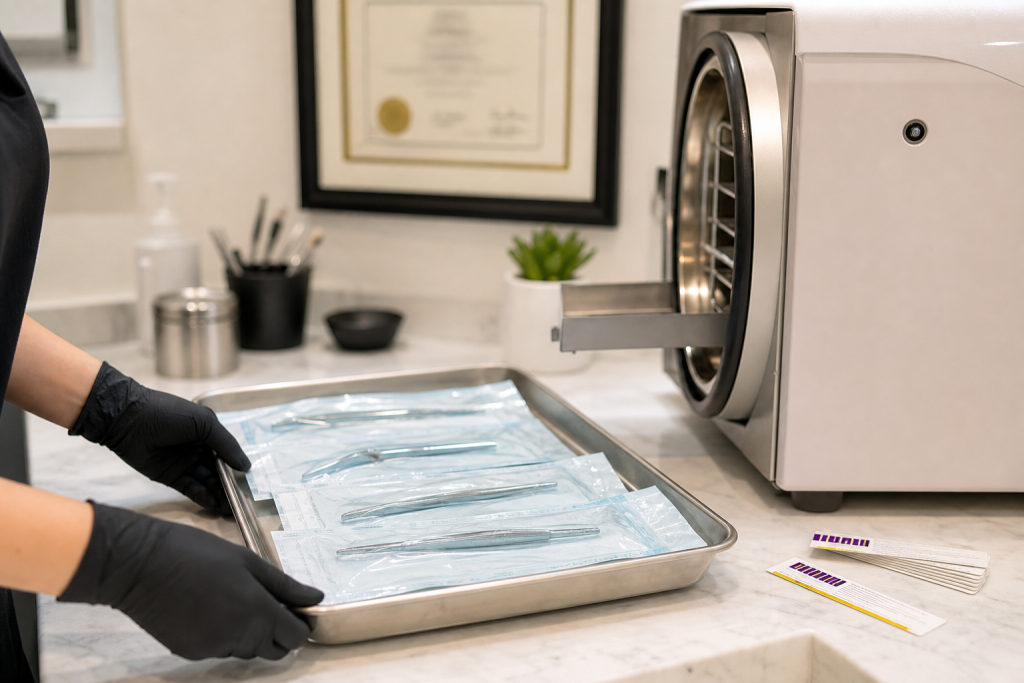
- Tool processing and single‑use rules: The updated rules clarify sterilization vs high‑level disinfection vs single‑use labeling for implements that contact skin or mucous membranes; some tools previously shared must now be single‑use or processed in certified sterilization equipment [1][2].
- Client screening & informed consent: New language requires routine client screening for active skin infections or other contraindications, and written informed consent for procedures that carry infection risk (for example, extractions, microdermabrasion, or certain device add‑ons) [1].
- Recordkeeping and logs: Salons must keep cleaning and sterilization logs, client screening forms, and training records accessible for inspection for a specified retention period [1].
- Training and documented staff competency: Practitioners must demonstrate competency in infection prevention, either through the Board’s approved coursework or equivalent documented training [1].
- Inspection emphasis: Inspectors will focus on sterile processing areas, point‑of‑service cleaning, and whether single‑use items are actually disposed of after use [1].
How these rules link to consumer guidance
The Board’s consumer guidance page reaffirms basic hygiene principles such as hand hygiene, clean towels, and proper barbershop/salon housekeeping, and it now refers users to the more granular regulatory text for specifics on sterilization and instrument processing [2].
California cosmetology 2026 infection control rules — what estheticians should update now
Practicing estheticians, waxing specialists, and salon owners in Woodland Hills should take these practical steps within 30–90 days to align with the revised rules:
- Adopt a written infection‑protection plan that lists disinfectants by EPA registration number, sterilization methods, and a cleaning schedule [1][2].
- Audit reusable tools and move borderline items to labeled single‑use disposables where required by the updated definitions [1].
- Update client intake and consent forms to include screening questions and procedure‑specific risk acknowledgements, retaining records per the Board’s retention schedule [1].
- Document staff training and conduct a competency demonstration for sterilization and high‑level disinfection procedures; keep certificates and logs on file [1].
- Prepare a dedicated sterilization area with appropriate equipment and monitoring (e.g., chemical indicators) if your services require instrument reuse [1].
Confirmed facts, independent reporting, and supportive evidence
Confirmed fact: the full revised Act and Regulations were issued by the California Board of Barbering and Cosmetology (primary source for the legal text) and contain specific language about instrument processing and establishment responsibilities [1].
Independent reporting and public‑health literature emphasize that consistent, documented infection prevention in salons reduces transmission risk for many pathogens; for example, CDC field reports have shown instances where robust mask and hygiene policies correlated with low apparent transmission in salon settings during respiratory outbreaks [3]. This supports the Board’s focus on documented practices and screening [3].
What this means for facials, waxing, and device add‑ons at Asal Skin Lounge
Analysis: For our Woodland Hills practice, the revised California cosmetology 2026 infection control rules mean clearer steps and documentation rather than fundamental changes to the luxury, safety‑first client experience you expect.
- We already use medical‑grade disposables for extractions and certain waxing consumables; the new rules require visible documentation that single‑use items are routed to disposal after one use [1].
- Device add‑ons (LED light, high frequency, galvanic) will now include procedure‑specific consent language and documentation that the device provider’s cleaning instructions are followed between clients [1][2].
- We will update intake forms to include the Board‑recommended screening items and add a brief, signed consent for treatments that penetrate the skin or use higher‑intensity modalities [1].
Practical client impact
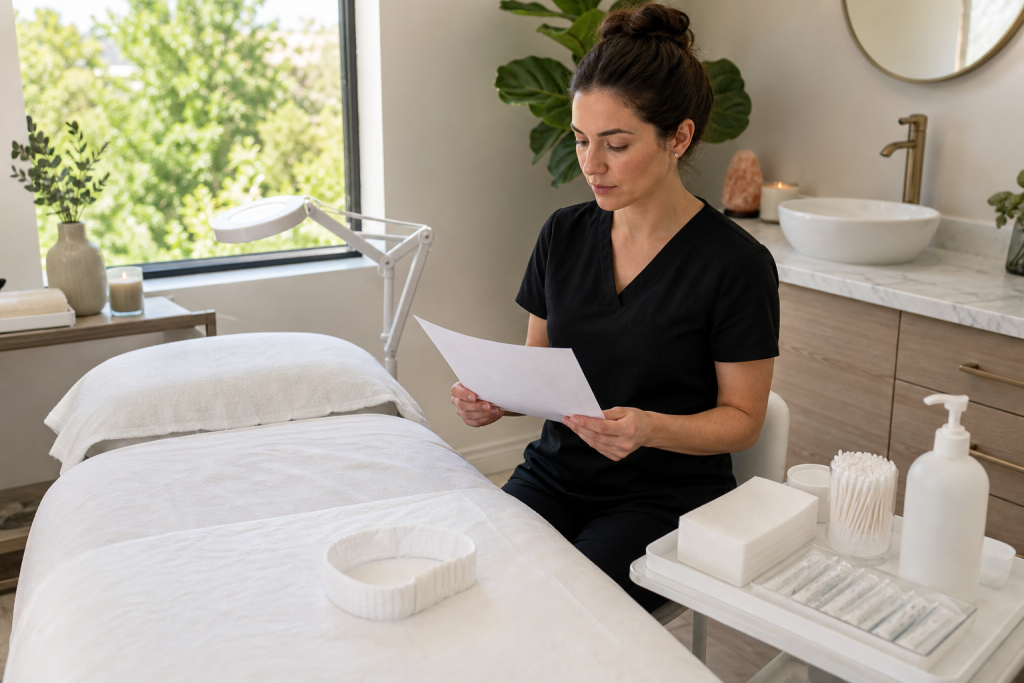
Clients should expect slightly longer intake times so staff can complete updated screening and consent forms. For some appointments, practitioners may postpone or refuse services when an active skin infection or contraindication is identified, per the Board’s clarified scope and safety language [1]. This protects client safety and helps prevent cross‑contamination.
Comparison: older rules vs. the 2026 updates
| Topic | Pre‑2026 | Revised 2026 rules (confirmed) |
|---|---|---|
| Instrument processing | General cleaning and disinfection guidance appeared in regulations and guidance documents. | Clearer definitions for single‑use vs reusable, and written sterilization procedures with logs are required [1]. |
| Client screening | Basic screening suggested in guidance. | Routine screening and written consent for higher‑risk procedures are required or strongly emphasized [1]. |
| Training | Training recommended; no uniform documentation requirement. | Documented competency in infection prevention and sterilization must be maintained on site [1]. |
| Inspections | Inspections focused on visible cleanliness and license validation. | Inspections will include review of logs, policies, and implementation of sterilization procedures [1]. |
Costs, availability, and likely operational impacts
Estimate: Some businesses will incur modest one‑time costs for sterilization equipment, policy templates, and staff training. Ongoing costs may rise slightly due to increased single‑use supplies and documentation time. The Board allowed standard compliance timelines; consult the official Act for exact compliance dates and retention periods [1].
Availability: Sterilization equipment and EPA‑registered disinfectants are widely available in professional supplies, but demand spikes can cause short delays. Plan purchases early to avoid service interruptions.
Alternatives and choices for small salons
Smaller practices have options: form a sterile‑processing shared service, outsource certain reprocessable tools to certified sterilization services, or move borderline instruments to single‑use disposables where feasible. Each option has tradeoffs in cost, sustainability, and client experience; choose based on service mix and volume [1].
Next steps for Woodland Hills clients and professionals
- Clients: arrive 5–10 minutes early to complete updated intake; ask your provider about their infection‑protection plan if you have questions about sanitation or device cleaning.
- Providers: adopt a written plan, update intake/consent forms, and schedule staff competency checks within 60 days to stay inspection‑ready [1].
- Both: if you spot a sanitation gap, report it to the Board via their consumer complaint process; the Board enforces the Act and Regulations [1][2].
How Asal Skin Lounge is responding (Woodland Hills)
Analysis: Asal Skin Lounge will implement the updated documentation, extend intake time slightly to complete screening and consent, and publicly post our infection‑protection policy. We will continue to use medical‑grade disposables for extraction tools and follow manufacturer cleaning instructions for add‑on devices. Our priority remains client safety along with a restful facial experience.
California cosmetology 2026 infection control rules — confirmed source notes
- Primary source for legal text and regulatory language: Board of Barbering and Cosmetology, 2026 Act & Regulations (Revised 2026) [1].
- Consumer guidance and practical infection‑protection recommendations: Board’s Infection Protection page (as of 2026-09-16) [2].
- Independent public‑health example supporting documented hygiene: CDC MMWR report on salon transmission contexts (example of field data supporting prevention measures) [3].
Reader FAQs
Q: Do these changes mean I should cancel my facial if I have a cold?
A: Confirmed guidance: practitioners are instructed to screen clients for active infections and may postpone treatments when contagious illness is present; this protects other clients and staff [1][2]. Discuss rescheduling with your provider.
Q: Will my favorite facial add‑on still be available?
A: Most add‑ons remain available, but some device or penetration procedures now require explicit written consent and may be postponed if your skin shows signs of active infection. Providers must follow device cleaning instructions and record the cleaning steps [1].
Q: Are salons now required to use autoclaves?
A: The 2026 rules clarify when sterilization (e.g., autoclave) versus high‑level disinfection is required for particular instruments; not every salon must install an autoclave, but those that reprocess certain invasive instruments may need appropriate sterilization equipment and monitoring [1].
Q: How long should my salon keep cleaning and consent records?
A: Confirmed fact: the revised Act specifies record retention periods for logs and training records; consult the Act for exact timeframes and keep records available for inspection as required [1].
Q: Where can I read the official rules?
A: The revised Act and Regulations are published by the California Board of Barbering and Cosmetology; see the Board’s official PDF for the full legal text and the consumer infection protection page for practical guidance [1][2].
Final notes and how to book
Confirmed: the California Board issued the revised cosmetology Act and Regulations on September 16, 2026, which emphasize written infection‑protection plans, clearer instrument processing rules, and stronger documentation expectations for practitioners and establishments [1][2].
If you have questions about how the rules affect a particular facial or waxing service, please contact Asal Skin Lounge in Woodland Hills. We’ve updated our intake and consent process to match the Board’s requirements and to keep your appointments safe and relaxing. Book online or call +1 (747) 746-3818 to schedule.


Frequently asked questions
Do the 2026 rules require salons to install autoclaves?
The revised 2026 Act clarifies when sterilization (such as autoclave use) is required for instruments that contact mucous membranes or penetrate the skin. Not every salon must install an autoclave, but establishments that reprocess invasive instruments may need appropriate sterilization equipment and monitoring to comply [1].
How will the new rules affect my facial appointment length?
Practically, appointments may be slightly longer to allow for updated intake screening and written consent for higher‑risk procedures. This ensures proper triage and documentation under the Board’s revised guidance [1][2].
Can a practitioner refuse service under the new rules?
Yes. If screening reveals an active skin infection or contraindication, a practitioner may postpone or refuse services to protect client and staff safety. This approach is aligned with the clarified scope and infection‑protection expectations in the revised regulations [1].
Where can I read the official revised Act and Regulations?
The official revised Act and Regulations are published by the California Board of Barbering and Cosmetology; see the Board’s full PDF for the legal text and the Board’s infection protection page for practical consumer guidance [1][2].
Need practical help?
Asal Skin Lounge — Contact us to schedule service or request a quote. Service area: Woodland Hills.
Topic in context
Sources and further reading
These links were validated and checked when possible when this article was created; some publishers limit automated requests. Facts, guidance, prices, regulations, and availability can change.
- 2026 Board of Barbering and Cosmetology Act and Regulations (Revised 2026) — California Board of Barbering & Cosmetology (barbercosmo.ca.gov) — primary source
- Infection Protection – California Board of Barbering and Cosmetology — California Board of Barbering & Cosmetology
- Absence of Apparent Transmission of SARS-CoV-2 From Two Stylists After Exposure at a Hair Salon (MMWR/CDC) — Centers for Disease Control and Prevention (CDC) / MMWR