

LED vs high-frequency vs galvanic facial add-ons Guide
LED vs high-frequency vs galvanic facial add-ons: A Woodland Hills guide comparing LED vs high-frequency vs galvanic facial add-ons: how they work, safety note…
View article sections
- 01LED vs high-frequency vs galvanic facial add-ons: how each works
- 02When estheticians add each modality during a professional facial
- 03Safety, contraindications, and regulatory context
- 04Practical comparison table
- 05Who typically benefits from each add-on (in practice)
- 06Costs, availability, and session planning (Woodland Hills context)
- 07Common questions answered
- 08How to choose at booking (practical next steps)
- 09Summary: picking between LED vs high-frequency vs galvanic facial add-ons
- 10Related guides and resources
- 11Frequently asked questions
- 12Need practical help?
- 13Topic in context
- 14Sources and further reading
LED vs high-frequency vs galvanic facial add-ons is the focus of this dated, source-based update. As a result, the article separates verified details from analysis.
What changed (2026-09-12) and why it matters. On 2026-09-12 Asal Skin Lounge published this updated, evidence-aware guide because more clients are asking which electrical or light-based add-on best matches their skin goals and safety needs. This article explains how LED, high-frequency, and galvanic add-ons work, when estheticians typically use them in a professional facial, key safety and contraindication points, and how Asal integrates each as a customized option for Woodland Hills clients.
Short summary: LED is a low-level light therapy used for photobiomodulation, high-frequency uses a glass electrode and alternating current to produce localized ozone and gentle warming, and galvanic (iontophoresis) uses a direct current to assist product infusion. Each modality has distinct technical features, typical uses, and safety considerations; choose based on skin type, treatment goals, and any health contraindications.
LED vs high-frequency vs galvanic facial add-ons: how each works
Below are straightforward descriptions based on device-type explanations and regulatory context.
LED (photobiomodulation)
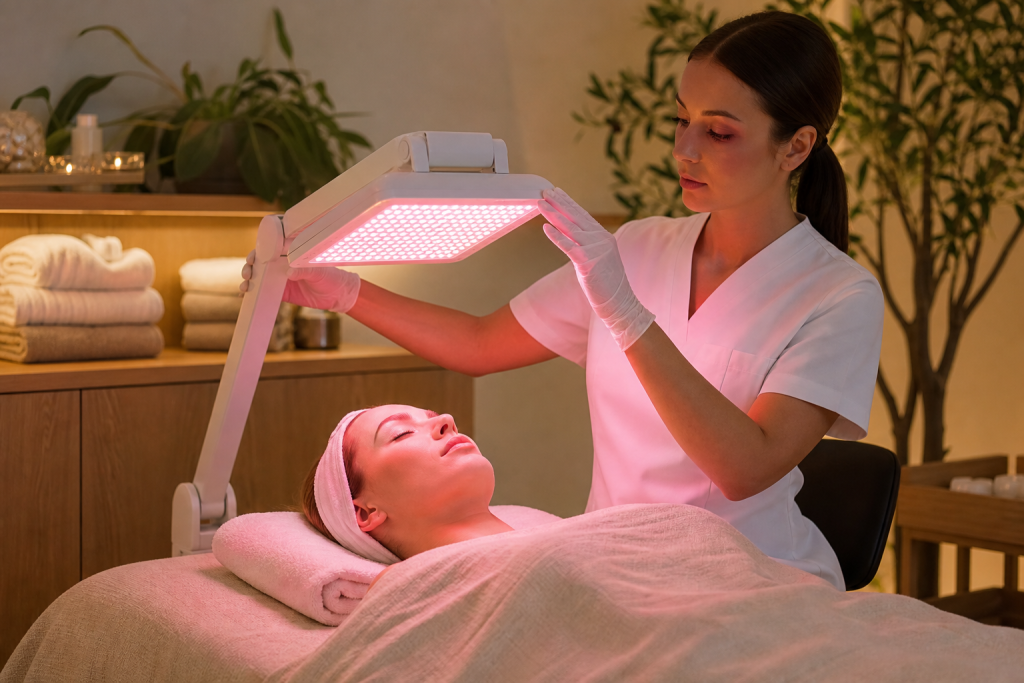
LED light therapy delivers specific wavelengths of visible or near-infrared light to the skin without heat or electric current. The FDA describes low-level light therapy/photobiomodulation as a non‑invasive modality that can influence cellular activity depending on wavelength and dosage; providers typically use red, blue, or near‑infrared settings for different reported effects [1]. (Confirmed fact: FDA overview on photobiomodulation, as of 2026-09-12.)
High-frequency
High-frequency facial devices generate a mild alternating current fed to a glass electrode; when applied to skin, the electrode produces a soft buzzing and a small amount of ozone at the contact zone. Licensed professionals use the modality for short periods to target congestion, stimulate circulation, and add a warming sensation during extractions or finishing steps [2]. Manufacturer descriptions note the need to follow device instructions and avoid metal implants in the treatment area [2].
Galvanic (iontophoresis and desincrustation)
Galvanic devices use a controlled direct current to create polarity-driven effects. In esthetic practice, a negative polarity solution can assist deep cleansing (desincrustation) of oily, congested skin, whereas a positive polarity can help drive water‑soluble actives deeper into the epidermis (iontophoresis) during a product‑infusion step. Device suppliers describe two common professional uses: cleansing and active ingredient delivery [3].
When estheticians add each modality during a professional facial
- Typical LED timing: used as a mid- or finishing step, often 10–20 minutes after cleansing and serum application to allow light penetration and avoid active extraction immediately beforehand [1].
- Typical high-frequency timing: applied briefly (often 3–7 minutes total) during extractions or over localized congested areas, and sometimes as a finishing touch to calm and oxygenate the skin [2].
- Typical galvanic timing: used during a desincrustation or infusion phase; one polarity for cleansing, then the opposite polarity for product delivery. Sessions are short, and estheticians monitor comfort and conductivity for safety [3].
How Asal Skin Lounge customizes timing (analysis)
At Asal Skin Lounge in Woodland Hills, estheticians choose add-ons based on an initial skin assessment and treatment goals. For example, an acne-prone client may receive desincrustation with galvanic followed by targeted blue LED, while a dehydrated or mature client may receive iontophoresis to infuse hydrating serums followed by red or near‑infrared LED. These combinations are selected to reduce redundant steps and maximize comfort.
Safety, contraindications, and regulatory context
Important safety points and limitations:
- LED/photobiomodulation: The FDA recognizes photobiomodulation as a non‑invasive therapy but stresses that devices must meet applicable safety and performance standards; eye protection is recommended for some wavelengths and durations [1]. (Official guidance: FDA overview on photobiomodulation, as of 2026-09-12.)
- High-frequency: Follow manufacturer instructions carefully; avoid use over broken skin with active bleeding, near pacemakers, or when clients have uncontrolled seizures. Avoid direct contact with metal dental work in the treatment zone [2]. (Confirmed fact: manufacturer safety notes.)
- Galvanic: Contraindications commonly include pregnancy (depending on clinic policy), pacemakers or implanted electrical devices, active metal implants near the treatment area, open wounds, and certain skin conditions. Devices must be used at professional settings with trained staff to control current and polarity [3].
Always tell your esthetician about medications, implants, or medical conditions before adding any electrical or light-based treatment. These are general safety reminders and not medical advice.
Practical comparison table
| Feature | LED (Photobiomodulation) | High-frequency | Galvanic (Iontophoresis) |
|---|---|---|---|
| Primary mechanism | Specific light wavelengths alter cellular responses and circulation [1] | Alternating current with glass electrode; localized ozone and warming effect [2] | Direct current to change polarity for cleansing or product infusion [3] |
| Typical treatment time | 10–20 minutes | 3–7 minutes localized | 5–10 minutes per polarity |
| Best for | Red/near‑IR: skin tone and comfort; Blue: bacteria‑targeting for oily/acneic skin (professional judgment) [1] | Congestion, extractions, circulation support | Deep cleansing, delivering water‑soluble serums |
| Common contraindications | Photosensitive medications, certain eye sensitivities, follow device guidance [1] | Pacemakers, metal implants near area, open wounds; follow manufacturer guidance [2] | Pacemakers/implants, pregnancy policies vary, open wounds — professional screening required [3] |
| Comfort level | Non‑invasive, usually comfortable | Gentle buzzing; can be tingly | Mild sensation from current; depends on settings |
Who typically benefits from each add-on (in practice)
These are practical, clinic-level observations rather than medical claims:
- Choose LED when you want a non‑contact finishing step to support hydration, circulation, or target microbial balance in acneic skin—providers often layer LED after serums [1].
- Choose high-frequency for spot treatment of congested pores, to assist extraction comfort, or to finish with a warm, oxygenating sensation [2].
- Choose galvanic when you want professional-grade cleansing of oily, congested skin or to actively drive water-soluble serums deeper during a hydration or brightening infusion [3].
Costs, availability, and session planning (Woodland Hills context)
Asal Skin Lounge offers these add-ons as optional extras to custom facials in Woodland Hills. Prices vary by session length and combinations; availability depends on the esthetician schedule and any package or membership you choose. Typical add-on durations range from 5 to 20 minutes, and many clients book an extra 15–30 minutes to accommodate one or two modalities in a single visit.
Estimate: As of 2026-09-12, add-on pricing is set per service and may change; call Asal Skin Lounge to confirm current rates and package discounts. (Estimate: clinic policy, not a guaranteed price.)
Common questions answered
Can you combine modalities in one facial?
Yes. Many estheticians combine galvanic infusion with a red LED finishing step or use high-frequency locally then finish with LED. Combination choices are clinical decisions made to avoid overlapping contraindications and to sequence steps for comfort and efficacy.
Do these add-ons replace a professional facial?
No. Add-ons supplement a customized facial but do not replace core professional steps: skin assessment, cleansing, exfoliation/extraction as needed, and appropriate professional-grade serums and moisturizers. Add-ons enhance specific objectives within the facial framework.
How to choose at booking (practical next steps)
- Book a full custom facial if you’re unsure; your esthetician will assess and recommend one or more add-ons.
- Mention medications, implants, pregnancy, or any history of seizures when booking so staff can screen for contraindications.
- If you have congestion and oily skin, ask about galvanic desincrustation plus targeted blue or high-frequency; if you want calm, hydrating results, ask about red or near‑IR LED plus iontophoresis for serums.
- Consider a consultation visit if you want to try a modality first; many clients opt for a short add-on the first time to confirm comfort and results.
Remember, this is general educational information and not individualized medical advice.
Summary: picking between LED vs high-frequency vs galvanic facial add-ons
In short, LED vs high-frequency vs galvanic facial add-ons each bring different mechanisms and practical benefits. LED offers a non‑contact light therapy step well‑suited to finishing and broad skin goals [1]. High-frequency is useful for localized congestion and extraction assistance [2]. Galvanic techniques are chosen for deep cleansing and for driving water‑soluble serums into the skin [3]. At Asal Skin Lounge in Woodland Hills, estheticians sequence and combine modalities only after screening for contraindications and aligning choices with your skin goals.
To schedule a customized facial and discuss which add-on best suits your skin, book online or call Asal Skin Lounge at +1 (747) 746-3818. Visit our studio at 19903 Ventura Blvd #3, Woodland Hills, CA 91364.

Frequently asked questions
Which add-on is best for acne-prone, congested skin?
For oily or acne-prone skin, estheticians commonly use galvanic desincrustation to loosen sebum and debris, often combined with blue LED or targeted high-frequency over localized spots. Device choice depends on assessment and any contraindications; discuss options with your provider before treatment [1][2][3].
Are these add-ons safe if I have a pacemaker or metal implants?
Galvanic and high-frequency devices are generally contraindicated with pacemakers or certain metal implants near the treatment area, and some clinics avoid electrical modalities during pregnancy. LED is often safer but may require additional screening if you take photosensitizing medications. Always disclose implants, medical devices, and medications to your esthetician for proper screening [1][2][3].
How many sessions will I need to see benefits?
Responses vary by skin condition, the modality used, and your homecare routine. Estheticians typically recommend a series of sessions for cumulative effects, or single-session add-ons as part of a maintenance facial. This article provides general guidance, not individualized medical advice; consult with your practitioner for a personalized plan.
Can I do these add-ons at home with consumer devices?
At-home LED and some low-intensity high-frequency devices exist, but professional devices have stronger, regulated outputs and are used by trained staff who perform thorough skin assessments. Follow manufacturer instructions and consult a professional for safe use. For higher-current galvanic procedures, professional delivery is recommended [1][2][3].
Will add-ons increase downtime after a facial?
Most add-ons—LED, short high-frequency, and properly administered galvanic—cause little to no downtime. You may experience temporary redness or tingling depending on the modality and your skin’s sensitivity. Your esthetician will advise expected sensations and aftercare during booking.
Need practical help?
Asal Skin Lounge — Contact us to schedule service or request a quote. Service area: Woodland Hills.
Topic in context

Sources and further reading
These links were validated and checked when possible when this article was created; some publishers limit automated requests. Facts, guidance, prices, regulations, and availability can change.
- Non-Invasive Body Contouring Technologies (section on Photobiomodulation / low-level light) — U.S. Food and Drug Administration (FDA) (2026-09-12)
- High Frequency Facial System, Single Unit – Universal Companies — Universal Companies (manufacturer / professional supplier) (2026-09-12)
- Galvanic – Iontophoresis — Decomedical (device/technology supplier) (2026-09-12)