

LED high-frequency galvanic facial add-ons safety — Current Guide
LED high-frequency galvanic facial add-ons safety: Understand LED high-frequency galvanic facial add-ons safety after the FDA draft guidance. Practical contrai…

View article sections
- 01Table of contents
- 02LED high-frequency galvanic facial add-ons safety: what changed and why it matters
- 03Common contraindications and safety checks
- 04Comparing LED, high‑frequency, and galvanic add-ons
- 05How providers and clients should act now (as of October 8, 2026)
- 06Alternatives and when to choose them
- 07Final notes, sources, and definitions
- 08Related guides and resources
- 09Frequently asked questions
- 10Need practical help?
- 11Topic in context
- 12Sources and further reading
- 13Related services and resources
Quick summary: This guide explains how the FDA’s October 8, 2026 draft guidance on photobiomodulation affects LED facial add‑ons and what clients should check before booking. It summarizes device differences, common contraindications, and practical safety steps used by licensed studios.
Estimated reading time: 9 minute read
Table of contents
- LED high-frequency galvanic facial add-ons safety: what changed and why it matters
- Quick definitions: what each add-on does in a professional facial
- What the science and guidance actually confirm
- Common contraindications and safety checks
- Practical safety steps we follow at a licensed studio (Woodland Hills)
- Comparing LED, high‑frequency, and galvanic add-ons
- How providers and clients should act now (as of October 8, 2026)
- Likely problems, how they present, and how we handle them
- Alternatives and when to choose them
- What we recommend at Asal Skin Lounge (Woodland Hills)
- Final notes, sources, and definitions
- Related guides and resources
- Frequently asked questions
- Is LED therapy safe as an add-on to a professional facial?
- Can I combine LED with high-frequency and galvanic during one facial?
- What should I tell my esthetician before booking an add-on?
- Are these devices regulated and cleared by the FDA?
- What are common side effects or risks?
- Need practical help?
- Topic in context
- Sources and further reading
On October 8, 2026 the U.S. Food and Drug Administration released draft guidance that clarifies regulatory expectations for photobiomodulation and related light devices, and this matters to anyone considering LED add-ons at a professional facial in Woodland Hills. The updated guidance changes how device makers document safety, performance, and claims, and it affects which devices licensed studios choose to use. In practice, that means clients should ask about device clearance and protocols when evaluating LED high-frequency galvanic facial add-ons safety before booking.
LED high-frequency galvanic facial add-ons safety: what changed and why it matters
Confirmed fact: the FDA issued draft guidance on photobiomodulation (PBM) devices that outlines recommended content for premarket submissions and safety considerations for manufacturers as of October 8, 2026 [1]. Independent research reviews show randomized trials of LED therapy in dermatology with promising signals but also variable methods and reporting quality [2][3]. Professional esthetics resources summarize how galvanic and high-frequency equipment are used in clinics and list common contraindications and safety checks [4].
Analysis: together, these documents mean spas and clinics in Woodland Hills should prioritize trained technicians and cleared or well‑documented devices. As a result, clients who care about LED high-frequency galvanic facial add-ons safety should ask providers about device documentation, technician training, and individualized contraindication screening.
Quick definitions: what each add-on does in a professional facial
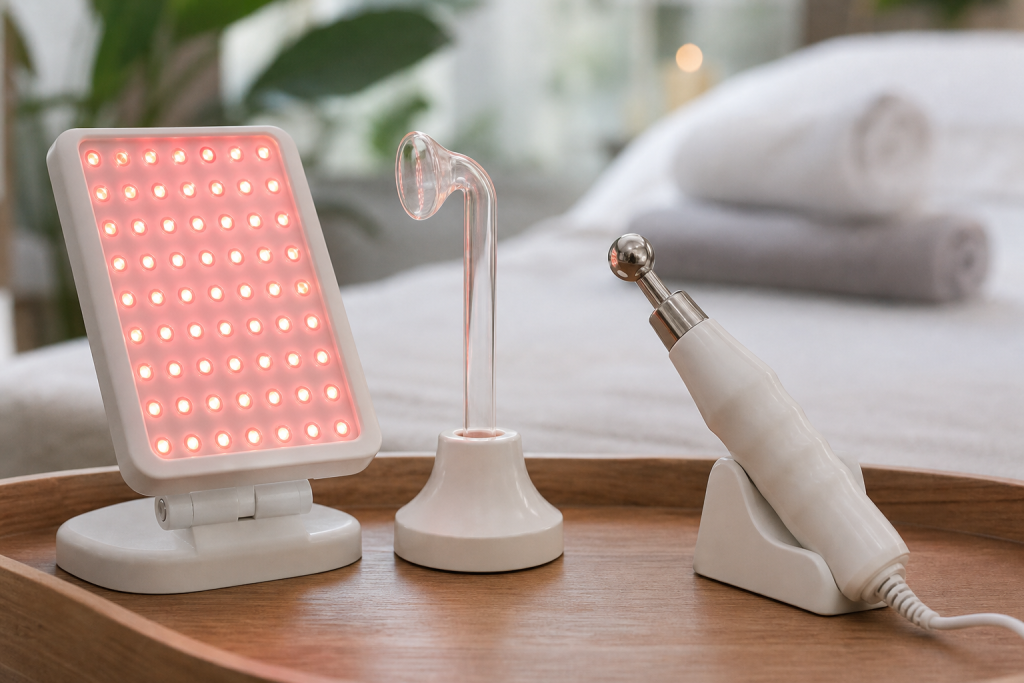
- LED/Photobiomodulation (PBM) — non‑thermal visible light (commonly red, near‑infrared, or blue) applied to skin. Research trials report benefits for some conditions, but studies vary in wavelengths, dose, and treatment schedules [2].
- High‑frequency — a glass electrode device producing a localized oscillating current; used topically for short periods to refresh skin between steps and may produce mild ozone at the electrode tip. Professional protocols and contraindications are described in esthetic training materials [4].
- Galvanic — a low‑level direct current used for ionic infusion or desincrustation to help deliver charged serums or loosen surface oils and buildup; proper technique and contraindication screening are important [4].
What the science and guidance actually confirm
Confirmed facts:
- The FDA draft guidance outlines expectations for performance data, safety information, and labeling for PBM devices; it is intended for industry and FDA staff and may be updated before finalization [1].
- Systematic reviews of randomized trials find evidence supporting certain LED uses in dermatology but also highlight inconsistent reporting of dose, wavelength, and trial methods [2].
- Published critiques emphasize methodological gaps in LED research that complicate translating trial protocols to clinic practice [3].
Analysis: For clients, that means LED add-ons can be part of a safe, effective facial when the device, parameters, and technician match an evidence‑based protocol. However, inconsistencies in research and evolving regulatory expectations make clinic transparency especially important.
Common contraindications and safety checks
Professional checklists typically screen for factors that may increase risk or change expected effects. Confirmed source guidance and professional protocols note the following as important screening items [1][4]:
- Photosensitizing medications or topical agents (ask your clinician; some prescription and over‑the‑counter products increase light sensitivity) [2][3].
- Pregnancy — many protocols advise caution or avoidance for some devices; follow studio policy and medical guidance [4].
- Implanted electronic medical devices such as pacemakers or defibrillators (commonly listed contraindications for electrical devices) — disclose implants before a treatment [4].
- Open wounds, active infection, or recent aggressive resurfacing — treatments are typically postponed until healed [4].
- Epilepsy triggered by flashing lights — disclose a history of photosensitive seizures; some LED settings may be modified or avoided.
Estimate: the exact contraindication list and whether a device is suitable for you depends on device parameters, clinical protocols, and your medical history. Always disclose medications, recent procedures, and medical devices at consultation.
Practical safety steps we follow at a licensed studio (Woodland Hills)
- Pre‑treatment intake that documents medications, pregnancy status, implants, and recent skin procedures.
- Use of cleared or well‑documented devices and documented settings that match published safety recommendations when available [1].
- Patch testing or short test exposures for photosensitive clients when appropriate.
- Visual monitoring during and after device use and immediate protocol adjustments for adverse reactions.
Comparing LED, high‑frequency, and galvanic add-ons
The table below helps Woodland Hills clients decide which add‑on may pair best with their goals and constraints. These are general comparisons intended for education, not medical advice.
| Dimension | LED (PBM) | High‑frequency | Galvanic |
|---|---|---|---|
| Typical use | Red/near‑IR for recovery; blue for surface oil/bacteria | Short topical refresh; circulation/cleansing support | Desincrustation and ionic infusion of serums |
| Downtime | None | None | None |
| Session length (add‑on) | 5–20 minutes typical in clinics (varies by device) | 1–5 minutes localized per area | 5–10 minutes during infusion/desincrustation |
| Common contraindications | Photosensitizers, recent procedures, certain medical conditions [1][2] | Implanted electronics, pregnancy, open wounds [4] | Implants, recent chemical peels, broken skin [4] |
| Evidence base | Clinical trials exist but reporting varies; device parameters matter [2][3] | Professional usage described in esthetics literature; fewer RCTs | Common in esthetic practice; limited randomized data for outcomes |
How providers and clients should act now (as of October 8, 2026)
Official announcement: the FDA draft guidance is directed at manufacturers and reviewers; it is not a clinical protocol for estheticians, though it affects which devices reach the market and how they are labeled [1].
Practical next steps for clients:
- Ask whether the studio uses devices with FDA clearance, 510(k) documentation, or manufacturer safety data aligned with the draft guidance [1].
- Request a consultation and disclose medications, recent procedures, pregnancy, and implants before booking an add‑on.
- Choose experienced technicians who document settings and follow written protocols; verify the studio’s training and sterilization practices.
Estimate of availability and cost: add‑on pricing varies widely in Woodland Hills depending on clinic reputation, device type, and session length. Typical add‑on fees range from modest incremental fees to a substantial premium when bundled with VIP experiences. Ask your studio for a current menu and any package discounts.
Likely problems, how they present, and how we handle them
Education: minor, transient redness, stinging, or irritation are reported with some devices and topical combinations. In rare cases, a photosensitivity reaction or an electrical device‑related irritation may occur. Studios should stop treatment, document the reaction, and recommend follow‑up if symptoms persist.
Analysis: most adverse events reported in clinical literature are mild and self‑limited, but incomplete reporting in trials makes it harder to quantify rare events; transparency, documentation, and conservative protocols reduce risk in practice [2][3].
Alternatives and when to choose them
- If you take photosensitizing medication, consider non‑light options (facial massage, hydrating masks, manual exfoliation) until cleared by your clinician.
- For clients with implanted electronics or certain medical histories, non‑electrical add‑ons can still enhance a facial without device exposure.
- When in doubt, schedule a consultation to customize a plan that prioritizes safety and gradual treatment introduction.
What we recommend at Asal Skin Lounge (Woodland Hills)
Practice summary: Asal Skin Lounge screens clients before every device add‑on, uses documented device settings consistent with manufacturer guidance, and trains staff on contraindications and emergency steps. We prioritize conservative parameters for first‑time exposures and offer patch or test spots when needed.
Estimate: for most clients, a responsible LED session paired with a custom facial adds little time and no downtime. For those with medical complexities, we’ll design alternatives or liaise with your medical provider.
Final notes, sources, and definitions
Confirmed facts and sources used in this guide:
- FDA draft guidance on photobiomodulation devices — regulatory expectations for device submissions and safety documentation (draft, October 8, 2026) [1].
- Systematic review of LED randomized trials in dermatology — outlines evidence and variability in methods [2].
- Methodological critique of visible LED therapy reporting — highlights issues when applying research to practice [3].
- Professional esthetic guidance on galvanic and high‑frequency uses and contraindications [4].
Analysis: as regulations and evidence evolve, clinical transparency and individualized screening remain the clearest ways to protect clients. If you want an add‑on, book a consultation to review your history and expectations.
To schedule a consultation or appointment at Asal Skin Lounge in Woodland Hills, book online or call +1 (747) 746-3818. We serve clients from Woodland Hills, Tarzana, Encino, West Hills, Canoga Park, Calabasas, and nearby communities.


Frequently asked questions
Is LED therapy safe as an add-on to a professional facial?
General educational information: LED therapy can be a safe add-on when performed with appropriate device settings and client screening. The FDA’s draft guidance clarifies documentation expectations for photobiomodulation devices, and systematic reviews show benefit in some dermatologic settings while highlighting variable reporting of dose and methods [1][2][3]. Always disclose medications and recent procedures at consultation.
Can I combine LED with high-frequency and galvanic during one facial?
Combination treatments are commonly used in professional facials, but safety and sequencing depend on device parameters and your medical history. Licensed estheticians typically sequence devices to avoid overlapping electrical currents and to reduce irritation, and they screen for contraindications such as implants, pregnancy, or photosensitizing medications [4].
What should I tell my esthetician before booking an add-on?
Before booking, disclose current prescription and topical medications, recent procedures (peels, lasers), pregnancy, and any implanted electronic devices. This information helps the provider assess LED high-frequency galvanic facial add-ons safety and choose the best, safest option for your treatment.
Are these devices regulated and cleared by the FDA?
Official: the FDA has issued draft guidance on photobiomodulation devices outlining recommended content for premarket submissions and safety reporting; this guidance is directed at manufacturers and reviewers and may affect which devices are marketed and how they are described [1]. Ask your provider whether their devices have FDA clearance or manufacturer safety documentation.
What are common side effects or risks?
Most adverse effects reported in the literature are mild and transient, such as temporary redness or irritation. Rare photosensitivity reactions or device-related irritation can occur, especially with incompatible topical products or unmanaged contraindications. Clinics should stop treatment and document any reaction, and recommend follow-up if needed [2][3][4].
Need practical help?
Asal Skin Lounge — Contact us to schedule service or request a quote. Service area: Woodland Hills.
Topic in context
Sources and further reading
These links were validated and checked when possible when this article was created; some publishers limit automated requests. Facts, guidance, prices, regulations, and availability can change.
- Photobiomodulation (PBM) Devices – Premarket Notification [510(k)] Submissions – Draft Guidance for Industry and Food and Drug Administration Staff — U.S. Food & Drug Administration (FDA) — primary source
- Light‑emitting diodes in dermatology: A systematic review of randomized controlled trials — Photodermatology, Photoimmunology & Photomedicine / PubMed Central (PMC)
- Methodological issues in visible LED therapy dermatological research and reporting — PLOS ONE
- Enhancing Exfoliation with Electronics (galvanic, high frequency) — Dermalogica PRO article — Dermalogica (PRO resources)