
oily acne facial Woodland Hills — Best professional options
oily acne facial Woodland Hills: Find evidence-based oily acne facial Woodland Hills options: deep cleansing, extractions, LED, and when to see a dermatologist…
View article sections
- 01Table of contents
- 02What “oily acne facial Woodland Hills” means for local clients
- 03Core professional facial approaches for oily, congested skin
- 04Comparing facial types for oily, acne-prone skin
- 05Professional facials vs at-home care
- 06When to see a dermatologist (clear referral points)
- 07Costs, availability, and realistic expectations in Woodland Hills
- 08Practical next steps for Woodland Hills clients
- 09Example treatment pathways (estimates and analysis)
- 10Limitations and material risks
- 11Summary: choosing the right oily acne facial Woodland Hills
- 12Frequently asked questions
- 13Related guides and resources
- 14Frequently asked questions
- 15Need practical help?
- 16Topic in context
- 17Sources and further reading
- 18Related services and resources
Quick summary: This guide explains evidence-based professional facial approaches for oily, congested, and acne-prone skin in Woodland Hills, including deep cleansing, extractions, chemical exfoliation, LED, and device add-ons. It clarifies benefits, risks, realistic expectations, and clear referral points for dermatologist evaluation.
Estimated reading time: 9 minute read
Table of contents
- What “oily acne facial Woodland Hills” means for local clients
- Confirmed facts and guidance (what we know)
- Core professional facial approaches for oily, congested skin
- Deep-cleansing facial with manual extractions
- Enzyme and gentle chemical exfoliation
- Targeted serums and topical support
- LED light therapy and high-frequency
- Galvanic deep infusion and professional add-ons
- Comparing facial types for oily, acne-prone skin
- Professional facials vs at-home care
- When to see a dermatologist (clear referral points)
- Costs, availability, and realistic expectations in Woodland Hills
- Practical next steps for Woodland Hills clients
- Example treatment pathways (estimates and analysis)
- Professional safety protocols
- Limitations and material risks
- Summary: choosing the right oily acne facial Woodland Hills
- Frequently asked questions
- Related guides and resources
- Frequently asked questions
- How many sessions will I need for oily, acne-prone skin?
- Can extractions make acne worse?
- Are LED and high-frequency devices effective for acne?
- When should I see a dermatologist instead of an esthetician?
- Need practical help?
- Topic in context
- Sources and further reading
As of 2026-11-11: local demand and updated evidence-based guidance make choosing the right oily acne facial Woodland Hills increasingly important for residents seeking safe, effective care. This matters because professional facial protocols, add-ons, and the threshold for dermatology referral have clearer guidance now.
This guide explains the supported benefits and limitations of common professional approaches for oily, congested, and acne-prone skin, compares options, describes likely risks and costs, and offers clear next steps for Woodland Hills clients.
What “oily acne facial Woodland Hills” means for local clients
When people in Woodland Hills search for an oily acne facial Woodland Hills, they are usually looking for a professional treatment that reduces excess surface oil, clears clogged pores, and improves skin texture while minimizing irritation. Professional facials do not replace medical acne therapies, but they can support healthy-looking skin when combined with appropriate at-home care and medical oversight as needed [1][2].
Confirmed facts and guidance (what we know)
- Evidence-based medical guidance recommends topical retinoids, benzoyl peroxide, and in some cases oral therapies for inflammatory acne; cosmetic facials are adjunctive and should not replace dermatologist-prescribed regimens for moderate or severe acne [1][2].
- Professional extraction and cleansing protocols are commonly used in salon and clinic settings; when done correctly by trained staff they can safely remove comedones and reduce congestion, but improper technique risks scarring or infection [3].
(Sources: American Academy of Dermatology clinical guidance and professional protocols) [1][2][3].
Core professional facial approaches for oily, congested skin
Below are the most commonly offered treatments at luxury facial studios like Asal Skin Lounge, how they work, and when they may help.
Deep-cleansing facial with manual extractions
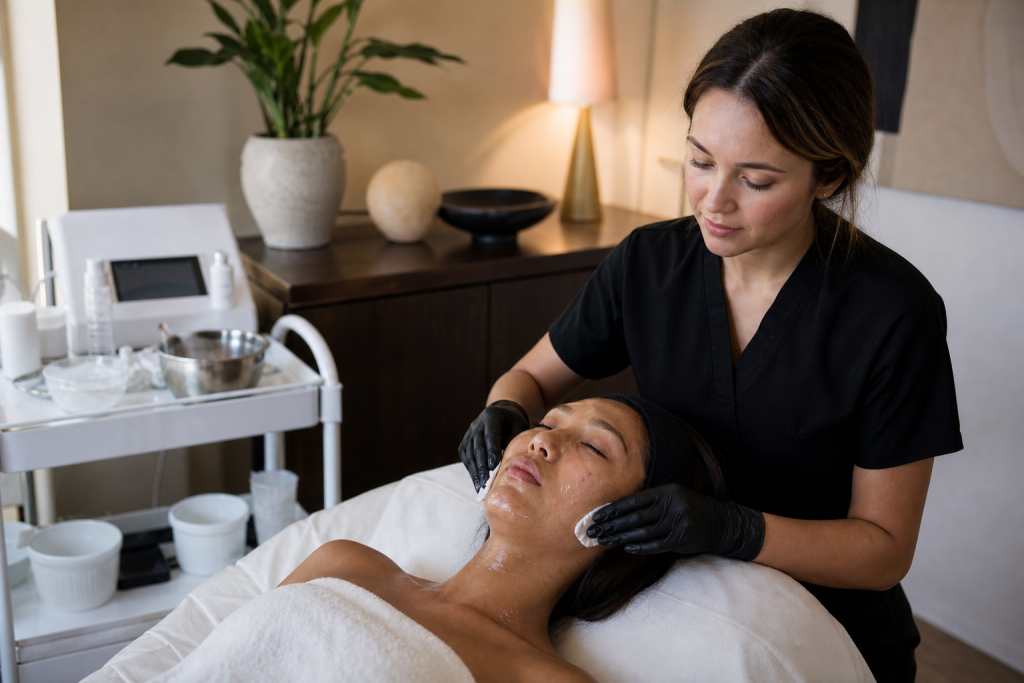
What it is: A targeted deep clean using oil-balancing cleansers, steam, and trained manual or instrument-assisted extractions to remove blackheads and whiteheads.
Benefits: Reduces visible congestion and can improve immediate texture and pore appearance. Extractions are most effective for non-inflamed comedones and when performed with sterile technique [3].
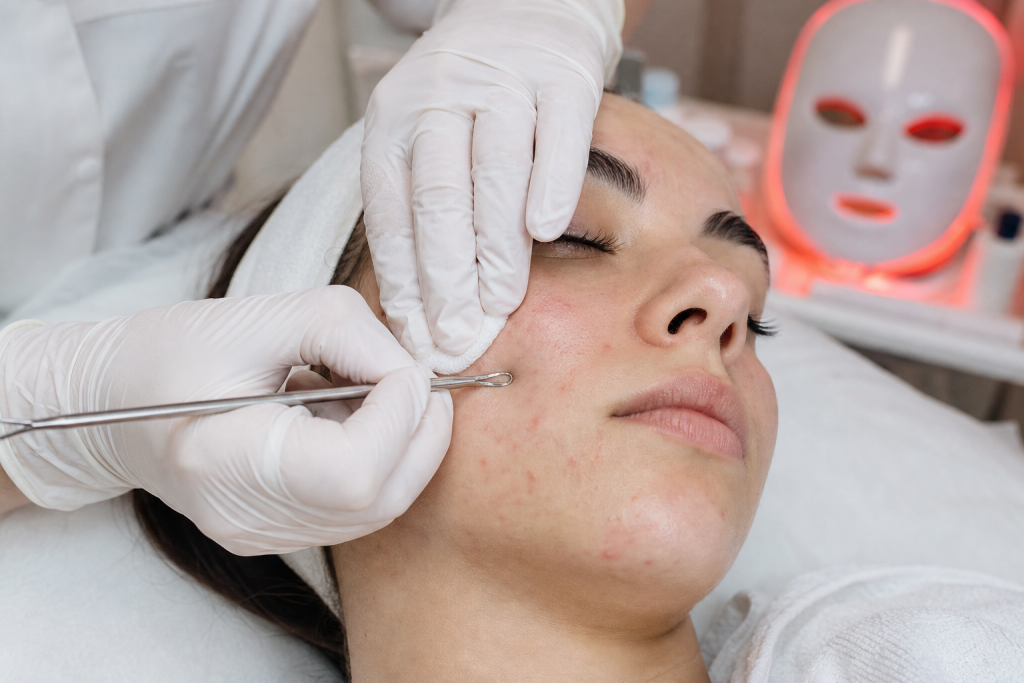
Limitations and risks: Extractions may cause temporary redness, sensitivity, or, rarely, scarring if done aggressively. For inflamed cystic lesions, extractions can worsen inflammation and should be avoided unless directed by a medical professional [1][2].
Enzyme and gentle chemical exfoliation
What it is: Enzymatic masks or light chemical exfoliants (e.g., low‑strength salicylic or mandelic acid) that dissolve dead cells and reduce pore-clogging debris.
Benefits: Helps clear surface build-up, is usually tolerable for oilier skin types, and can be combined with extractions to increase effectiveness.
Limitations: Higher-strength chemical peels should be used cautiously around active inflammatory acne and only by trained professionals; misuse increases irritation risk [1][2].
Targeted serums and topical support
What it is: In-office application of serums containing ingredients like salicylic acid, niacinamide, or azelaic acid to support oil control and reduce surface blemish formation.
Benefits: Can reinforce at-home regimens and provide immediate anti‑oil or calming benefits without systemic medication.
Limitations: Topical in-clinic products are adjunctive. For moderate-to-severe acne, prescription-strength topicals or systemic therapies may be necessary [1][2].
LED light therapy and high-frequency
What it is: Blue or combined LED treatments and high-frequency devices that target bacteria and reduce mild inflammation.
Benefits: Non-invasive options that can be added to facials to support reduction of surface bacteria and transient redness.
Limitations: Evidence suggests these modalities can provide short-term improvement for some people, but they are not a substitute for medical acne therapy in moderate-to-severe cases [1][2].
Galvanic deep infusion and professional add-ons
What it is: Electrical-assisted delivery (galvanic) used to infuse hydrating or clarifying serums deeper into the skin; also offered as add-ons like facial massage or back treatments for oilier skin on the torso.
Benefits: Can increase product uptake and comfort during treatment; available as complementary services for clients wanting a more luxurious, targeted experience.
Limitations: Not all clients will notice a clinical difference; safety depends on contraindications (e.g., pacemakers) and trained use.
Comparing facial types for oily, acne-prone skin
| Facial type | Best for | What it does | Typical add-ons |
|---|---|---|---|
| Deep-cleansing & extractions | Congested, non-inflamed comedones | Removes surface oil and debris; immediate texture improvement | LED, high-frequency, calming masks |
| Enzyme/gentle chemical exfoliation | Mild congestion, uneven texture | Dissolves dead cells; reduces pore-clogging | Galvanic infusion, calming serums |
| Acne-specialty facial (clinical protocol) | Mild-to-moderate acne alongside topical therapy | Combines cleansing, serums, noninvasive devices; coordinated with medical care | Prescription coordination, extractions per protocol |
| Hydrating facial | Oily but dehydrated skin | Restores moisture without adding pore-clogging oils | Hydrator infusion, LED |
Professional facials vs at-home care
Professional facials provide deeper cleansing and trained extraction techniques that are difficult to replicate safely at home. For example, manual extractions performed by estheticians follow sterile, evidence-based protocols to reduce complications; however, overuse of home extraction can injure skin and increase scarring risk [3].
Meanwhile, consistent at-home care — including gentle cleansing, regular chemical exfoliation when appropriate, and physician-directed prescription topicals — is essential for long-term acne management. Therefore, the best outcomes usually combine regular professional treatments with a tailored home regimen [1][2].
When to see a dermatologist (clear referral points)
- Worsening inflammatory acne with painful papules or nodules, scarring, or sudden spread—refer to a dermatologist for possible prescription therapy [1][2].
- Acne not responding to consistent topical regimens and professional facials over several months—medical assessment recommended [1][2].
- Complications after a facial (persistent redness, pus, fever, or new pain)—seek medical evaluation promptly.
These recommendations align with clinical practice guidance and are intended as general education, not individualized medical advice [1][2].
Costs, availability, and realistic expectations in Woodland Hills
As of 2026-11-11, typical professional facials in the Woodland Hills area range widely depending on service level, provider experience, and add-ons. Expect higher prices for clinic-level acne protocols and medical esthetician services that coordinate with dermatologists.
Availability: Luxury studios often offer dedicated acne facial slots; book in advance if you prefer a specific clinician or add-on like LED or galvanic infusion. Asal Skin Lounge offers customized acne-focused appointments and recommended follow-up plans for ongoing maintenance.
Expectations: Professional facials can reduce visible congestion and improve skin comfort, but they are not a cure for medically significant acne. Multiple sessions plus appropriate home care typically achieve the best visible improvements over time [1][2].
Practical next steps for Woodland Hills clients
- Schedule a consultation: Ask about the provider’s extraction training, sterile technique, and whether they coordinate with dermatology when needed.
- Bring your current skincare list: Include prescription and over-the-counter products so the esthetician can avoid contraindicated in-office procedures.
- Start conservatively: Choose a deep-cleansing or enzyme facial with optional LED as a first visit to assess tolerance.
- Plan follow-up: For ongoing congestion, schedule serial treatments and implement an evidence-based at-home routine recommended by a clinician or dermatologist [1][2].
Example treatment pathways (estimates and analysis)
For mild congestion: Begin with a deep-cleansing facial (with careful extractions) every 4–6 weeks plus daily salicylic-acid cleanser as tolerated.
For moderate inflammatory acne under medical therapy: Coordinate facials that avoid aggressive peels; use LED and gentle infusions to complement prescription topical or oral medications under dermatology supervision [1][2].
For oily skin with dehydration: Alternate clarifying facials with hydrating galvanic infusions to balance oil production and barrier repair.
Professional safety protocols
Confirmed procedures include sterile extraction technique and minimizing aggressive manipulation to reduce scarring risk. Many professional protocols, such as those published for extraction sequences, emphasize training and post-care to avoid complications [3].
Limitations and material risks
Material risks of professional facials include temporary redness, irritation, infection, and, rarely, scarring when extractions are performed incorrectly. Chemical exfoliants and peels can cause burns or hyperpigmentation if misapplied. Therefore, choose a licensed, experienced provider who follows established protocols and consult a dermatologist for moderate-to-severe acne [1][2][3].
Summary: choosing the right oily acne facial Woodland Hills
In Woodland Hills, an effective oily acne facial Woodland Hills program combines trained extraction and deep-cleansing techniques, gentle exfoliation, targeted serums, and optional device-based add-ons. However, these services are adjunctive to medical acne treatment when indicated. If your acne is inflamed, painful, scarring, or unresponsive to consistent care, seek dermatology evaluation [1][2].
For a practical first step, book a consultation at Asal Skin Lounge to review your skin history, current products, and goals. A trained esthetician will recommend a tailored facial pathway and appropriate add-ons based on evidence-based protocols and safety considerations [3].
To book online or by phone, schedule at Asal Skin Lounge in Woodland Hills or call +1 (747) 746-3818.
Frequently asked questions
Q: How many sessions will I need?
A: Treatment frequency depends on your skin and goals. Many clients notice reduced congestion after one professional session, but a course of 3–6 sessions spaced 3–6 weeks apart is common for sustained improvement. This is an estimate and not medical advice.
Q: Can extractions make acne worse?
A: Extractions performed by trained professionals on non-inflamed comedones can help, but attempting to extract inflamed cysts at home or having aggressive in-office extractions can worsen inflammation and risk scarring [3].
Q: Are LED and high-frequency devices effective?
A: These devices can reduce bacteria and transient inflammation for some clients and are useful adjuncts. They are not a replacement for prescription acne treatments when medically indicated [1][2].
Q: When should I see a dermatologist instead of an esthetician?
A: See a dermatologist if you have painful nodules, scarring, rapidly worsening acne, or if over-the-counter and professional facials do not improve symptoms after several months. Dermatologists can prescribe systemic or stronger topical therapies supported by clinical guidelines [1][2].


Frequently asked questions
How many sessions will I need for oily, acne-prone skin?
Many clients see reduced congestion after one professional session, but a course of 3–6 sessions spaced 3–6 weeks apart is common for sustained improvement. Individual needs vary; consult your esthetician and dermatologist for a tailored plan.
Can extractions make acne worse?
Extractions done by trained professionals on non-inflamed blackheads and whiteheads can help clear congestion. However, attempting to extract inflamed cysts at home or aggressive in-office extractions can worsen inflammation and increase scarring risk [3].
Are LED and high-frequency devices effective for acne?
LED and high-frequency therapies can reduce bacteria and temporary inflammation for some clients and are useful adjuncts to facials. They are not a substitute for dermatologist-prescribed treatments for moderate-to-severe acne [1][2].
When should I see a dermatologist instead of an esthetician?
See a dermatologist for painful nodules, scarring, rapidly worsening acne, or acne that does not improve with consistent professional facials and at-home care. Dermatologists can prescribe systemic or stronger topical therapies per clinical guidelines [1][2].
Need practical help?
Asal Skin Lounge — Contact us to schedule service or request a quote. Service area: Woodland Hills.
Topic in context
Sources and further reading
These links were validated and checked when possible when this article was created; some publishers limit automated requests. Facts, guidance, prices, regulations, and availability can change.
- Acne: Diagnosis and treatment — American Academy of Dermatology (AAD) — primary source
- Guidelines of care for the management of acne vulgaris — PubMed / NCBI (AAD guideline summary) — primary source
- Dermalogica PRO Clear (extraction & professional protocols) trade brochure — Dermalogica (professional materials)