
LED light therapy facial add-on safety Woodland Hills
LED light therapy facial add-on safety Woodland Hills: An evidence-based guide to LED light therapy facial add-on safety Woodland Hills: what changed on Oct 14…
View article sections
- 01LED light therapy facial add-on safety Woodland Hills — quick summary
- 02What the evidence actually shows (confirmed facts and analysis)
- 03How in‑office LED add‑ons differ from at‑home devices
- 04Safety considerations and common contraindications
- 05Practical steps for Woodland Hills clients
- 06Cost, availability, and scheduling (estimates and local context)
- 07Alternatives and complementary options
- 08Comparison: When to choose an in‑office LED add‑on vs at‑home device (analysis)
- 09Regulatory context (confirmed fact)
- 10Key takeaways for Woodland Hills clients
- 11Next steps — how to proceed at Asal Skin Lounge (Woodland Hills)
- 12Frequently asked questions
- 13Related guides and resources
- 14Frequently asked questions
- 15Need practical help?
- 16Topic in context
- 17Sources and further reading
What changed (confirmed fact): On October 14, 2026 a systematic review of at‑home light‑emitting diode (LED) photobiomodulation for facial rejuvenation was published, consolidating recent clinical trials and reigniting questions about in‑office versus consumer devices — why this matters to Woodland Hills clients is covered below. LED light therapy facial add-on safety Woodland Hills is the focus because many local clients ask whether professional add‑ons are worth it after new at‑home evidence became available [1].
LED light therapy facial add-on safety Woodland Hills — quick summary
(Official announcement) The systematic review published October 14, 2026 reported that short‑term use of LED devices in home trials showed modest improvements in appearance and a generally favorable safety profile, while noting variability in study design, device parameters, and outcome measures [1].
(Independent reporting) Professional guidance from dermatology and device regulators stresses that results vary by device wavelength, dose, and clinical protocol; eye protection and screening for light sensitivity are important safety steps [2][3].
Why the October 14, 2026 review matters to you
The review updated the evidence base used to compare professional LED add‑ons delivered during facials with lower‑power consumer devices. As a Woodland Hills client, you should know the review improved understanding of benefits and risks, but it also highlighted limits in the data that affect how results translate to a single salon visit [1].
What the evidence actually shows (confirmed facts and analysis)
Confirmed fact: The published systematic review synthesized randomized and controlled trials of at‑home LED photobiomodulation and found modest, short‑term effects on skin appearance in several trials, but study quality and protocol differences limited strong conclusions about long‑term benefit [1].
Analysis: That finding does not automatically mean every professional LED add‑on will produce measurable change after one session. Professional protocols often rely on cumulative treatments, device irradiance, and adjunct procedures (such as exfoliation or serums) to improve outcomes.
Official guidance from dermatology sources recommends consulting a licensed clinician before starting light therapy if you have light-sensitive conditions, are taking photosensitizing medications, or have a history of skin cancer, because individual risks vary [2].
Confirmed fact: U.S. device regulation requires manufacturers of radiation‑emitting products to meet federal requirements; this affects claims, labeling, and market entry for professional and consumer LED devices [3].
How in‑office LED add‑ons differ from at‑home devices
In practice, differences fall into four categories: device power and wavelength control, treatment supervision and protocol customization, integration with professional facial techniques, and regulatory oversight.
| Dimension | Professional (in‑office) | At‑home (consumer) |
|---|---|---|
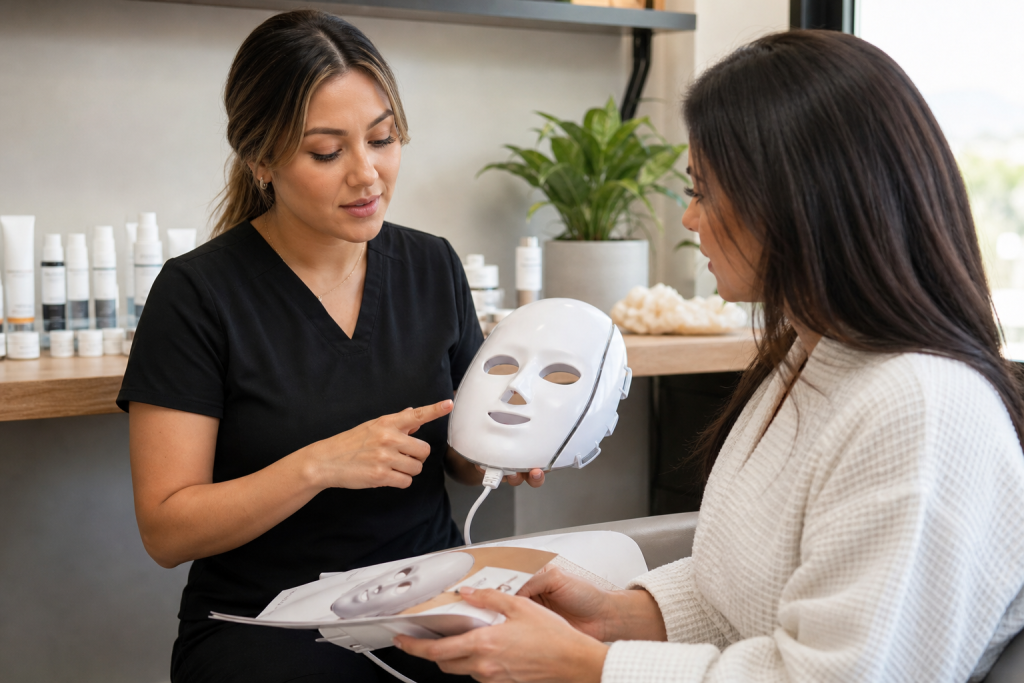
| Power & wavelength | Higher irradiance, clinician‑selected wavelengths and timed dosing | Lower power, fixed settings for safety and ease |
| Protocol | Customized to skin type, often part of a multi‑step facial | Standardized, user‑dependent adherence |
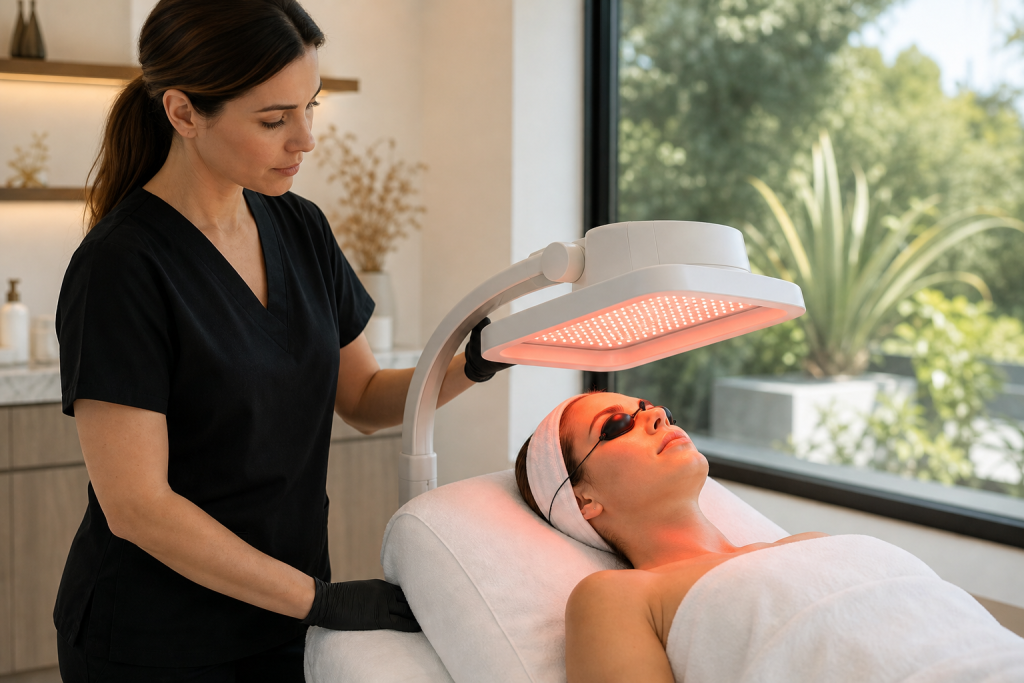
| Supervision | Delivered by trained staff with screening and eye protection | Self‑administered; variable adherence and safety steps |
| Regulation & claims | Often medical‑grade devices with controlled use | Wide range from cleared devices to unregulated gadgets |
Analysis: For many clients, the primary trade‑off is convenience versus control. In‑office add‑ons let estheticians integrate LED with cleansing, extraction, and serums, which can improve comfort and short‑term appearance. However, long‑term clinical benefit typically depends on repeated treatments and home maintenance [1][2].
Safety considerations and common contraindications
Confirmed fact: LED therapy is generally well tolerated in trials, but safety depends on appropriate patient selection, device parameters, and procedure setup [1].
- Eye protection: Use goggles or shielded devices to prevent direct retinal exposure, especially with near‑infrared wavelengths [2].
- Photosensitivity: Discuss current medications (like some antibiotics, retinoids, or photosensitizing drugs) with your provider because they can increase sensitivity to light [2] (official guidance).
- Active infection or open wounds: Defer LED until skin is healed to avoid irritation or unpredictable responses (analysis).
- Pregnancy and implants: Data are limited; consult your healthcare provider and your esthetician to weigh risks and benefits (analysis).
- Device misuse: Consumer devices with unclear labeling or excessive exposure times can increase heat or irritation risk; regulated devices include instructions and safety features [3].
Practical steps for Woodland Hills clients
1. Disclose medical history and medications during booking so staff can screen for photosensitivity risks (best practice).
2. Ask which wavelengths and treatment time the salon uses and how it integrates LED with the facial. Wavelengths in the red and near‑infrared ranges are commonly used, but dosing matters more than color alone [1].
3. Expect eye protection and a documented consent or intake form for in‑office LED treatments; those are standard safety practices (professional standard).
4. If you already own an at‑home device, bring the device information to your appointment to discuss compatibility and whether in‑office treatment is recommended instead or in addition (analysis).
Cost, availability, and scheduling (estimates and local context)
Estimate: Professional LED add‑ons are typically offered as low‑cost upgrades to a facial or as part of a series. Prices and package availability vary by studio and device type (estimate). Asal Skin Lounge in Woodland Hills offers luxury custom facials that can include LED add‑ons; availability and add‑on pricing change seasonally, so contact the studio to confirm current options.
Practical next step: Book a consultation or mention LED interest when scheduling so staff can reserve appropriate time and complete a health intake before treatment.
Alternatives and complementary options
If LED is not suitable, consider these salon or at‑home approaches that address similar concerns in different ways:
- Professional exfoliation or resurfacing (mechanical or chemical) performed by licensed staff for texture and tone (professional option).
- Topical serums with clinically studied actives (e.g., peptides, antioxidants) that support skin health when used consistently (evidence varies).
- At‑home routines paired with periodic professional facials to maintain results (common maintenance strategy).
Comparison: When to choose an in‑office LED add‑on vs at‑home device (analysis)
| Priority | Choose in‑office add‑on | Choose at‑home device |
|---|---|---|
| Supervision & safety | Prefer if you have complex skin, are on medications, or need screening | Acceptable for low‑risk individuals seeking convenience |
| Consistency | Good for scheduled, adjunct treatments | Better for daily, ongoing use if you will reliably follow instructions |
| Cost | Higher per session, often bundled | Higher initial cost but lower per‑use over time |
Regulatory context (confirmed fact)
Confirmed fact: The U.S. Food and Drug Administration regulates radiation‑emitting products and provides guidance on getting such products to market; compliance affects labeling, claims, and safety features of LED devices used in professional and consumer settings [3].
Key takeaways for Woodland Hills clients
- Confirmed fact: The October 14, 2026 systematic review updated the evidence for at‑home LED use and reinforced that while short‑term effects have been reported, study variability limits firm conclusions about long‑term benefit [1].
- Analysis: In‑office LED add‑ons remain valuable for clients who want supervised application, integration with professional facials, and customized protocols.
- Official guidance: Screen for photosensitivity, use eye protection, and consult your provider about medications or conditions that increase light sensitivity [2].
Next steps — how to proceed at Asal Skin Lounge (Woodland Hills)
Book a consultation so we can review your skin history, medications, and goals. If cleared, a trained esthetician will explain the LED protocol, provide eye protection, and integrate the add‑on into a customized facial. Availability and pricing change, so contact Asal Skin Lounge to confirm current options and packages.
As of 2026-11-10 this article summarizes peer‑reviewed evidence, dermatology guidance, and federal regulation to help clients make informed decisions; it does not provide personalized medical advice. If you have a specific medical concern, consult a healthcare provider (disclaimer).
To schedule an appointment at our Woodland Hills studio, book online or call +1 (747) 746-3818.
Frequently asked questions
Q: Is LED therapy painful or does it cause downtime?
A: Most clients report no pain and minimal to no downtime after LED sessions, whether in‑office or at home. Mild warmth or temporary redness is possible, depending on device and skin sensitivity (analysis).
Q: How many sessions are needed to see a difference?
A: The scientific literature reports modest short‑term changes with repeated use, but protocols vary widely; many professional plans recommend multiple sessions spaced over weeks for cumulative effects [1]. This article provides general educational information, not a guarantee.
Q: Can I combine LED with other facial treatments?
A: Yes. Salons commonly pair LED with cleansing, masks, serums, and extractions. A trained esthetician will sequence procedures to minimize irritation and maximize comfort (professional practice).
Q: Are at‑home LED devices safe?
A: Many consumer devices are designed for safety and have a favorable short‑term profile in trials, but product quality and labeling vary. Consult guidance if you take photosensitizing medications or have light‑sensitive conditions [1][2][3].


Frequently asked questions
Is LED light therapy safe to use during a facial?
General educational answer: LED light therapy is generally well tolerated when provided by trained staff who screen for photosensitivity, use proper eye protection, and follow device instructions. The October 14, 2026 systematic review found a favorable short‑term safety profile in at‑home trials but highlighted variability across studies [1][2]. If you have a light‑sensitive condition or take photosensitizing medication, consult your healthcare provider before treatment [2].
How does professional LED compare to at‑home LED devices?
Analysis: Professional LED sessions use higher irradiance, clinician‑selected protocols, and integration with other facial steps. At‑home devices prioritize safety and convenience with lower power and fixed settings. The best option depends on your goals, risk profile, and willingness to follow a consistent routine; the 2026 review updated evidence for at‑home use but did not replace the need for individualized professional guidance [1].
Are there any medical conditions that rule out LED therapy?
Official guidance: Conditions that cause light sensitivity, current use of photosensitizing medications, or active skin infection are common reasons to defer LED therapy. Always disclose your medical history on intake forms and consult a healthcare provider for concerns related to skin cancer, pregnancy, or implants [2].
Will one LED add-on session produce lasting results?
Estimate and analysis: Single sessions can improve immediate appearance for many clients, but most evidence points toward cumulative benefits from repeated treatments. The systematic review emphasized variability in protocols and outcomes, so expect the strongest, longer‑lasting changes with a planned series and home maintenance rather than one standalone visit [1].
What should I ask about before booking an LED add-on at Asal Skin Lounge?
Practical next steps: Ask about screening for photosensitivity, the wavelengths and treatment duration used, eye‑protection measures, how LED is sequenced with your facial, and current pricing or package options. Mention any at‑home devices or medications you use so staff can tailor recommendations.
Need practical help?
Asal Skin Lounge — Contact us to schedule service or request a quote. Service area: Woodland Hills.
Topic in context
Sources and further reading
These links were validated and checked when possible when this article was created; some publishers limit automated requests. Facts, guidance, prices, regulations, and availability can change.
- Efficacy and Safety of At‑Home Light‑Emitting Diode Photobiomodulation for Facial Rejuvenation: A Systematic Review — Springer / Aesthetic Plastic Surgery (2026-10-14) — primary source
- Is red light therapy right for your skin? — American Academy of Dermatology Association
- Getting a Radiation Emitting Product to Market: Frequently Asked Questions — U.S. Food & Drug Administration (FDA)