
Facials for Oily Acne-Prone Skin Woodland Hills
facials for oily acne-prone skin Woodland Hills: Find evidence-based advice on facials for oily acne-prone skin Woodland Hills, safe extraction steps, add-ons,…
View article sections
- 01facials for oily acne-prone skin Woodland Hills
- 02Why this matters now for Woodland Hills clients
- 03Confirmed facts, reporting, and analysis
- 04What to expect from a professional facial for oily, acne-prone skin
- 05Safe extraction: when and how
- 06Common professional add-ons and when to choose them
- 07Facial comparison: choosing the right session
- 08Professional facials vs. at-home care
- 09Costs, availability, and practical next steps (estimates and local notes)
- 10When to see a dermatologist instead of—or in addition to—a facialist
- 11Recommended routine after a facial
- 12Local considerations for Woodland Hills and neighboring communities
- 13Book a consultation
- 14Sources and dates
- 15Related guides and resources
- 16Frequently asked questions
- 17Need practical help?
- 18Topic in context
facials for oily acne-prone skin Woodland Hills
This dated, source-based update separates verified details, limitations, and practical next steps.
What changed (2026-09-09): As southern California clients return from summer months, many report increased facial oiliness and clogged pores. This article explains what that means for facials for oily acne-prone skin Woodland Hills clients need now, why professional assessment and staged treatment matter, and how to choose safe extraction and resurfacing steps. This is independent reporting and analysis, not an official clinical guideline. (As of 2026-09-09.)
Why this matters now for Woodland Hills clients
After prolonged sun exposure, humidity, and summer skin routines, oily and acne-prone skin often becomes more congested. Many people notice increased blackheads, whiteheads, or sudden breakouts when they return to routine professional care. A careful professional facial can reduce congestion and help skin-calming measures, but timing and technique matter to avoid irritation or spreading bacteria. This guide focuses on practical, evidence-based options for facials for oily acne-prone skin Woodland Hills clients seeking safe, effective professional care.
Confirmed facts, reporting, and analysis
- Confirmed facts: Acne develops when hair follicles become clogged with oil and dead skin cells; bacteria and inflammation can follow. This is explained by major dermatology sources. [1][2]
- Independent reporting: Local post‑summer congestion trends and client return-to-care patterns are based on studio observations and industry context; these are presented as independent analysis rather than official data. (Verification note: no direct primary source supplied for this local trend.)
- Professional guidance: Industry professional guidance supports staged care, conservative extractions, and targeted serums for adult acne management in spa/clinic settings. [3]
What to expect from a professional facial for oily, acne-prone skin
Asal Skin Lounge and similar professional studios typically begin with a full skin assessment, including current medications, recent topical treatments, and recent sun exposure. Following an assessment, a typical sequence for facials for oily acne-prone skin Woodland Hills clients includes:
- Double cleanse to remove oil, sunscreen, and surface debris without over-stripping the skin.
- Skin analysis under magnification to identify comedones (blackheads/whiteheads), inflamed papules, and sensitive areas.
- Enzymatic or gentle chemical resurfacing choices (AHA/BHA) where appropriate, chosen by skin type and inflammation level. Beta hydroxy acid (salicylic acid) is commonly used for oily, acne-prone skin because it penetrates oil-filled follicles. [1][3]
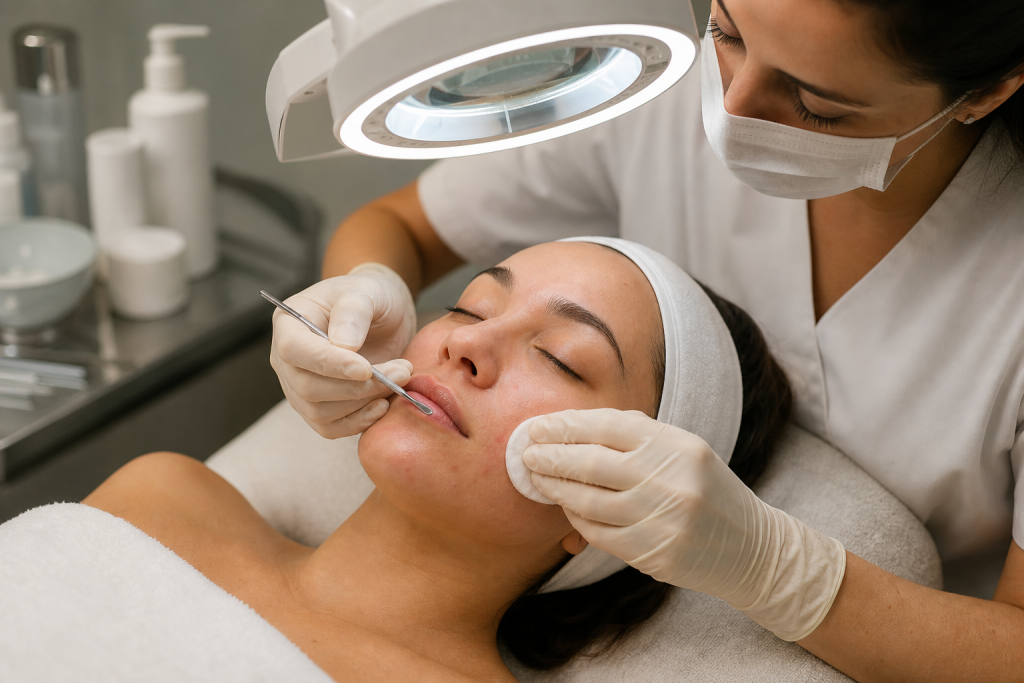
- Careful, professional extractions when indicated and safe. Overly aggressive extractions can cause scarring or spread bacteria, so licensed estheticians or clinicians follow conservative protocols.
- Targeted serums (niacinamide, azelaic acid, low-strength retinoids, or salicylic-based boosters) and hydration to rebalance skin without clogging pores. [3]
- Soothing modalities and post-treatment guidance to minimize irritation and recurrence.
Key benefits and realistic limitations
Professional facials can reduce surface congestion, improve skin texture, and relieve oil build-up when matched to client needs. However, facials are not a cure for moderate-to-severe acne and cannot replace medical assessment for inflammatory or cystic acne. If breakouts are severe, persistent, or leaving scars, dermatology referral may be appropriate. [1][2]
Safe extraction: when and how
Extractions are one of the most requested steps during facials for oily acne-prone skin Woodland Hills clients. When performed properly, extractions remove comedones and reduce visible congestion. Yet, there are risks: improper technique can push bacteria deeper into follicles, increase inflammation, or cause scarring. For safety:
- Extractions should be done after softening skin with steam or gentle enzymatic treatment.
- Licensed professionals use disposable tools and gloves and follow sterile technique.
- Only non-inflamed comedones and fully mature whiteheads are typically extracted; tender or deep inflamed lesions are left for medical treatment. This minimizes complications. [3]
Common professional add-ons and when to choose them
Add-ons can amplify results for oily and acne-prone skin, but not every add-on suits every client. Consider the following options:
- High-frequency: helps reduce surface bacteria and calm mild inflammation; often safe as an adjunct after extractions.
- LED light therapy: blue light targets acne-associated bacteria, and red light may help reduce inflammation. LED can be useful as a noninvasive add-on. [3]
- Galvanic deep infusion: helps push hydrating or anti-inflammatory serums deeper; useful when skin tolerates conductive modalities.
- Chemical boosters (salicylic, mandelic, or lactic acid peels): low-to-moderate strength peels can reduce comedones and improve texture but must be chosen conservatively after assessment, especially post-sun exposure. [1][3]
When to avoid aggressive resurfacing
If skin shows active, inflamed cysts, widespread broken skin, or recent strong retinoid use, avoid aggressive chemical peels and deep mechanical treatments. Instead, staged gentler approaches and coordination with a dermatologist are safer. [1][2]
Facial comparison: choosing the right session
| Service | Best for | Typical steps | When not to choose |
|---|---|---|---|
| Deep Cleansing Facial | Oily, congested skin with comedones | Double cleanse, steaming, targeted extractions, salicylic booster, calming mask | Active cystic acne or recent abrasive treatments |
| Acne-Focused Facial | Recurrent breakouts, adult acne management | Assessment, gentle resurfacing, LED, high-frequency, personalized home plan | Severe nodulocystic acne without medical clearance |
| Hydrating + Balancing Facial | Oily skin that’s dehydrated or post-treatment | Hydrator infusion, calming serums, gentle exfoliation | Major surface congestion needing extractions |
| Back Treatment | Acne on upper back/shoulders | Exfoliation, extractions, antibacterial mask | Open wounds or cystic lesions requiring medical care |
Professional facials vs. at-home care
Professional facials offer diagnostic skill, sterile extraction technique, and in‑office devices that are unavailable at home. Conversely, consistent at-home regimens prevent recurrence and maintain results between visits. For many clients, a combined approach gives the best balance:
- Schedule regular professional deep-cleansing or acne-focused facials every 4–8 weeks as advised by your esthetician, depending on skin needs.
- Use dermatologist- or esthetician-recommended home products: a gentle cleanser, oil-free moisturizer, sunscreen, and targeted treatments (salicylic acid, niacinamide, or azelaic acid) as tolerated. [1][3]
- Because adult acne often requires medical therapies, coordinate with a dermatologist if over-the-counter measures and professional facials do not control inflammation. [1][2]
Potential risks and how we reduce them
Treatment risks include irritation, post-inflammatory hyperpigmentation, infection, or scarring if improperly performed. To reduce these risks, licensed professionals follow infection control, conservative extraction protocols, and avoid aggressive resurfacing on sun-exposed or retinoid-treated skin. If you are on prescription acne medications (oral or topical), disclose them during assessment, because some combinations increase sensitivity. [1][3]
Costs, availability, and practical next steps (estimates and local notes)
Costs for facials for oily acne-prone skin Woodland Hills vary by studio, treatment length, and add-ons. Asal Skin Lounge offers tiered options, add-on modalities, and memberships to support ongoing care. For accurate pricing and availability, contact the studio directly; pricing and appointment times can change seasonally. (Estimate: local professional facials in the Los Angeles region typically range across tiers, but confirm current rates with the provider.)
Next steps before booking:
- Prepare a brief medical and skincare history for your consultation, including current prescriptions and recent procedures.
- Avoid intense at-home exfoliation for 3–7 days before your appointment, especially after sun exposure.
- Discuss desired outcomes and tolerance for downtime with your esthetician to build a staged plan with measurable checkpoints.
When to see a dermatologist instead of—or in addition to—a facialist
Seek dermatology care if you have:
- Deep, painful cysts, rapidly spreading lesions, or scarring acne.
- Recent use of oral acne medications (like isotretinoin) or complex medical history that can affect wound healing.
- Failure to improve after a consistent regimen of professional facials and topical care. [1][2]
Recommended routine after a facial
To keep improvements, follow a maintenance plan that includes gentle cleansing twice daily, non-comedogenic hydration, oil-control as needed, and daily sunscreen. Use active ingredients as advised by your clinician, and avoid mixing strong actives without professional guidance. If you experience prolonged redness, pain, or new lesions after a facial, contact your provider promptly. [1][3]
Local considerations for Woodland Hills and neighboring communities
Woodland Hills and adjacent valleys experience seasonal shifts that affect oiliness and congestion. Post-summer, schedule an assessment rather than an aggressive single-session fix. Asal Skin Lounge offers consultations tailored to clients from Tarzana, Encino, West Hills, Canoga Park, Calabasas, and nearby areas, balancing visible improvement and skin safety.
Summary: choosing the right appointment
For facials for oily acne-prone skin Woodland Hills clients should prioritize an initial assessment, conservative extractions when appropriate, and evidence-based add-ons such as LED or high-frequency. Coordinate care with a dermatologist for inflammatory or scarring acne, and maintain results with a personalized home routine. This article synthesizes dermatology resources and professional guidance into practical steps for post-summer return-to-care. [1][2][3]
Book a consultation
If you live in Woodland Hills or nearby neighborhoods and want a personalized plan, book online or call +1 (747) 746-3818 to schedule a consultation at Asal Skin Lounge. Our team will assess your skin, recommend a staged facial plan, and advise on safe add-ons and home care.
Sources and dates
- American Academy of Dermatology: Acne Resource Center — overview of acne causes, triggers, and general care. [1]
- Mayo Clinic: Acne — symptoms and causes (background clinical information). [2]
- Dermalogica Professional guidance: How to treat adult acne — professional protocols and treatment considerations. [3]
- Note: Local post-summer congestion trends are presented as independent reporting and analysis; this is not an official epidemiological report. (As of 2026-09-09.)
Labeling: Confirmed facts are cited to dermatology sources [1][2]; professional protocol guidance is supported by industry guidance [3]; local trend statements are independent reporting/analysis per the verification note.
Frequently asked questions
How often should I get professional facials for oily, acne-prone skin?
Frequency depends on your skin’s condition and treatment goals. Many clients start with appointments every 4–6 weeks to remove congestion and then move to monthly or bi-monthly maintenance. Your esthetician will recommend a schedule based on assessment and response.
Are extractions safe for acne-prone skin?
When performed by a trained professional using sterile tools and conservative technique, extractions can safely remove comedones and reduce surface congestion. However, inflamed cysts or deep nodules should not be manually extracted and may require dermatology care. [3]
Can I combine LED therapy with chemical exfoliation?
Yes, LED therapy is often used alongside gentle chemical resurfacing, but timing and intensity matter. Providers often perform LED after extractions and mild resurfacing to reduce inflammation and support healing. Discuss your full skincare regimen with the provider to avoid irritation. [3]
When should I see a dermatologist instead of booking a facial?
See a dermatologist if you have painful cysts, rapidly worsening acne, scarring, or if topical and professional measures don’t control inflammation. Dermatologists can prescribe systemic or higher‑strength therapies not available in spa settings. [1][2]
Do professional facials replace daily skincare?
No. Professional facials and in‑office modalities complement a consistent, dermatologist- or esthetician-recommended home routine. Maintaining results requires daily cleansing, appropriate actives, and sunscreen; professional visits help manage congestion and provide targeted interventions.
Need practical help?
Asal Skin Lounge — Contact us to schedule service or request a quote. Service area: Woodland Hills.
Topic in context
Sources and further reading
These links were validated and checked when possible when this article was created; some publishers limit automated requests. Facts, guidance, prices, regulations, and availability can change.
- Acne Resource Center — American Academy of Dermatology (AAD)
- Acne – Symptoms and causes — Mayo Clinic
- How to treat adult acne (Dermalogica professional guidance PDF) — Dermalogica (Professional) (2021-01-01)