
LED high-frequency galvanic facial add-ons safety evidence
LED high-frequency galvanic facial add-ons safety evidence: As of 2026-10-14, an independent review on at-home LED devices prompts updated guidance on LED high…
View article sections
- 01Quick summary for clients
- 02Why the 2026 review matters to Woodland Hills clients
- 03What the evidence says about LED high-frequency galvanic facial add-ons safety evidence
- 04How LED, high‑frequency, and galvanic add‑ons differ (short comparisons)
- 05Professional treatments vs. at‑home devices
- 06Common contraindications and safety checks (what to expect before your add‑on)
- 07How Asal Skin Lounge approaches device safety (Woodland Hills practice note)
- 08Practical next steps for clients in Woodland Hills
- 09Costs, availability, and appointment planning
- 10Labeling confirmed facts, guidance, and analysis used in this article
- 11When to consult a medical provider
- 12FAQ
- 13Final notes and booking
- 14Related guides and resources
- 15Frequently asked questions
- 16Need practical help?
- 17Topic in context
- 18Sources and further reading
LED high-frequency galvanic facial add-ons safety evidence is the focus of this dated, source-based update. As a result, the article separates verified details from analysis.
What changed (independent reporting): on 2026-10-14 a systematic review of at‑home LED photobiomodulation for facial rejuvenation was posted to PubMed. This independent reporting prompted renewed attention to device standards, esthetician scope, and safety communications for in‑studio add‑ons in Woodland Hills and beyond [1].
This article explains what that review and earlier systematic analyses mean for clients exploring LED, high‑frequency, or galvanic facial add‑ons. It labels confirmed facts, official guidance, independent reporting, and our analysis, and it lists practical next steps you can take before booking at Asal Skin Lounge in Woodland Hills.
Quick summary for clients
- Independent reporting: a new systematic review on at‑home LED devices was posted 2026-10-14 and is publicly accessible on PubMed [1].
- Confirmed fact: the FDA has a draft guidance for Photobiomodulation (PBM) devices that affects how manufacturers and clinics discuss device safety and claims [3].
- Confirmed fact: the California Board of Barbering and Cosmetology publishes device safety and scope guidance for skin‑care machines used in salons and spas [4].
- Bottom line: LED, high‑frequency, and galvanic add‑ons are commonly used and generally low‑risk when devices are maintained, staff are trained, and clients are screened for contraindications; however, the strength of evidence varies by device, setting, and outcome [1][2][3][4].
Why the 2026 review matters to Woodland Hills clients
Independent reporting: researchers updated the literature on at‑home LED photobiomodulation on 2026-10-14, which raises practical questions for professional providers about device selection, client counseling, and informed consent [1].
This matters in Woodland Hills because many clients compare in‑studio add‑ons with at‑home devices. New synthesis of evidence can change how we explain likely benefits, limitations, and safety practices during booking and intake.
What the evidence says about LED high-frequency galvanic facial add-ons safety evidence
Confirmed fact: multiple systematic reviews and meta‑analyses have evaluated LED photobiomodulation and related light therapies for facial skin outcomes. A July 2023 review summarized clinical trials on LED for skin therapy and found mixed but generally positive signals for some outcomes, while the October 2026 at‑home LED review focused on consumer devices and home use [2][1].
Analysis: both professional and at‑home device studies vary in quality, device parameters, and outcome measures. That variability limits how definitively we can promise results, but the literature to date indicates a low incidence of serious adverse events when LED is used as directed and devices meet safety standards [1][2].
Confirmed fact: the FDA draft guidance clarifies how manufacturers should handle premarket notifications (510(k)) for photobiomodulation devices and emphasizes labeling, performance data, and safety testing that matter for clinic and consumer products alike [3].
Key takeaways from the evidence
- Benefit signals are modest and outcome‑specific. Some studies report improvements in skin texture, erythema, or collagen markers, but effect sizes and study quality vary [2].
- Safety profiles are generally favorable for LED when used properly; however, rare events or device misuse are possible, especially with non‑regulated at‑home units [1][2].
- Professional supervision, correct wavelength and dose, eye protection, and device maintenance reduce risks. Manufacturers complying with FDA guidance are more likely to supply adequate safety data [3].
- Regulatory and scope guidance from state boards affects whether estheticians can operate certain devices and how they must document treatments [4].
How LED, high‑frequency, and galvanic add‑ons differ (short comparisons)
| Feature | LED (photobiomodulation) | High‑frequency | Galvanic |
|---|---|---|---|
| Mechanism | Non‑thermal light wavelengths (red/near‑infrared) that may influence cellular processes [2][1] | Oscillating current generating a mild, localized ozone effect and warming sensation | Low‑level direct current used for desincrustation and iontophoresis (deeper product infusion) |
| Common in‑studio use | Boosting post‑facial recovery, calming, complementing serums | Acne spot treatment, pore cleansing sensation, circulation boost | Deep infusion of charged serums, improved product uptake |
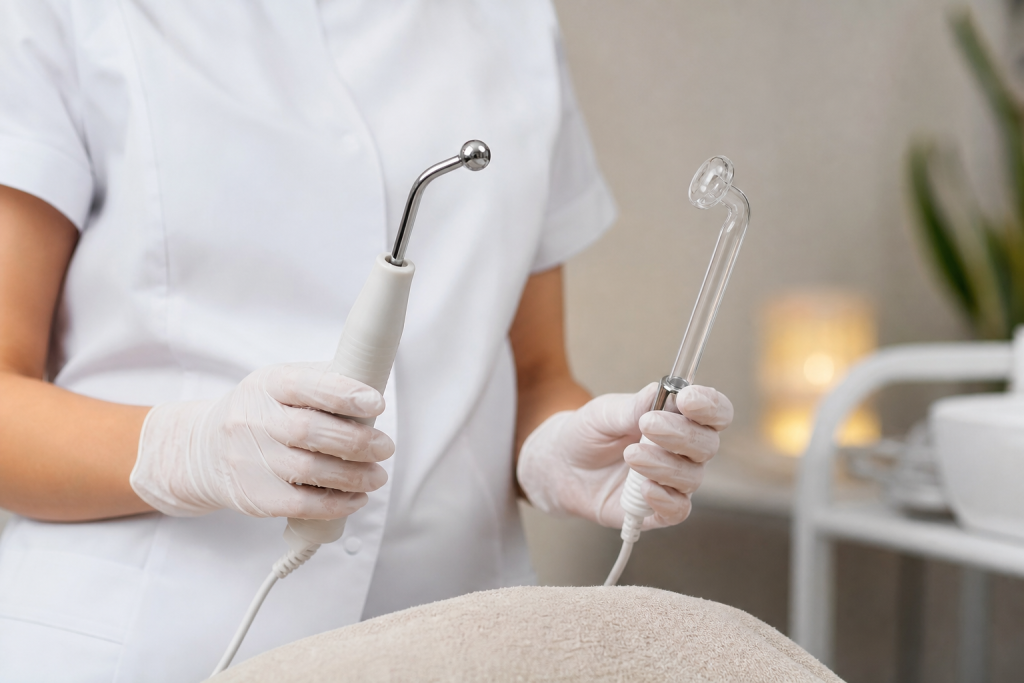
| Typical client experience | Warm, no pain; requires eye protection | Tingling, gentle zap or warmth | Mild tingling or slight prickling during product delivery |
| Evidence strength | Moderate, device‑ and protocol‑dependent; systematic reviews summarize mixed results [2][1] | Limited high‑quality RCTs for aesthetic outcomes; widely used clinically | Clinical practice supports use for product delivery; RCT evidence on long‑term outcomes is limited |
| Key cautions | Photosensitivity, uncontrolled eye exposure, unregulated at‑home devices [1][3] | Open wounds, active infections, metal implants near treatment site | Pacemakers or implanted electrical devices, broken skin, recent cosmetic injections |
Professional treatments vs. at‑home devices
Analysis: the distinguishing factors are device controls, dosing accuracy, training, and regulatory compliance. Professional units are usually calibrated, maintained, and operated by trained staff who screen clients and document treatments. At‑home devices vary in output and user adherence; the 2026 systematic review focused on these consumer units and highlighted variability in outcomes and safety reporting [1].
Confirmed fact: the FDA draft guidance and state board bulletins affect both manufacturers and clinics. Clinics should prefer devices with clear performance data and follow state scope rules [3][4].
Common contraindications and safety checks (what to expect before your add‑on)
Confirmed facts and best practices (general educational information): estheticians should screen for photosensitizing medications, pregnancy status, implanted electronic devices, epilepsy, active infection or open wounds, and recent cosmetic procedures. The California Board bulletin also advises clear documentation, device maintenance, and client consent for machine‑assisted modalities [4].
- Pre‑treatment intake: medical and medication questions, recent procedures, and skin concerns.
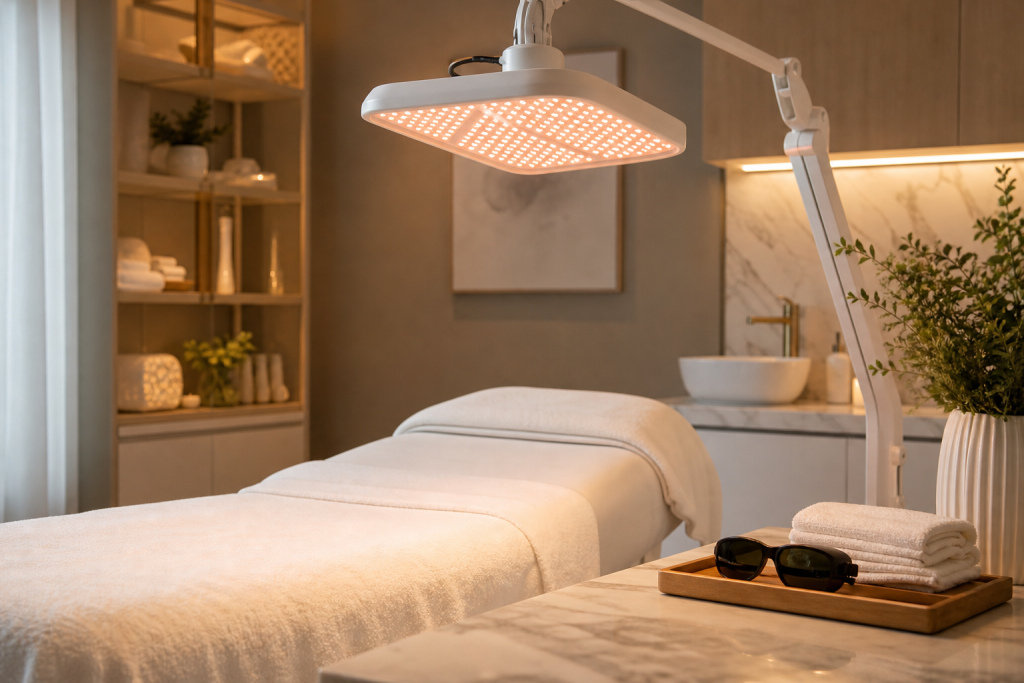
- Eye protection: mandatory for LED treatments and recommended for some light devices.
- Patch tests and gradual dosing: when in doubt, professionals may start with a shorter exposure or a lower intensity setting.
- Device maintenance and logs: clinics should keep maintenance records and follow manufacturer guidance and state rules [4].
How Asal Skin Lounge approaches device safety (Woodland Hills practice note)
Analysis and studio practice: at Asal Skin Lounge we follow evidence‑informed precautions and state guidance. We screen clients at booking, check medication and procedure history during intake, provide protective eyewear for LED sessions, and only use devices maintained according to manufacturer and state recommendations. We also document each machine‑assisted add‑on and obtain informed consent for any device treatment.
Independent reporting: because regulatory expectations evolve, we monitor FDA draft guidance and California Board updates and adjust training and documentation accordingly [3][4].
Practical next steps for clients in Woodland Hills
- Ask during booking which device model will be used and whether it is intended for professional use or is an at‑home consumer model.
- Tell your esthetician about medications, recent cosmetic work, pregnancy, pacemakers, or photosensitivity.
- Request to see eye protection and ask about post‑treatment care and expected sensations.
- If interested in at‑home devices, compare the model to the parameters used in clinical studies; ask the esthetician for guidance rather than relying solely on marketing claims [1][2][3].
- When in doubt, schedule a consultation or patch test before committing to a full add‑on.
Costs, availability, and appointment planning
Estimate (analysis): add‑on pricing and availability vary by studio and treatment menu. Because device treatments are staff‑dependent, availability may be limited during busy appointment windows. For the most accurate pricing and to reserve a slot with a trained provider, contact Asal Skin Lounge directly.
Labeling confirmed facts, guidance, and analysis used in this article
- Confirmed facts: the FDA has draft guidance for PBM devices; the California Board has published a device bulletin describing scope and safety expectations [3][4].
- Independent reporting: the 2026 systematic review on at‑home LED photobiomodulation was posted 2026-10-14 on PubMed and is publicly listed as of that date; this article interprets and integrates that independent report rather than treating it as an authoritative regulatory conclusion [1].
- Analysis: our interpretation of clinical relevance, in‑studio best practices, and how clients should prepare is editorial guidance for Woodland Hills residents and not individualized medical advice.
When to consult a medical provider
General educational information: if you have a complex medical history, recent cosmetic surgery, cardiac implants, or are taking systemic photosensitizing medications, consult your primary care physician or specialist before machine‑assisted aesthetic treatments.
FAQ
How soon can I see results from an LED or galvanic add‑on?
Answer: Response times vary by client, device, and treatment protocol. Some clients notice immediate improvements in skin tone or relaxation, while measurable textural changes typically require multiple sessions. The scientific literature reports varied timelines and effect sizes, so expect gradual improvements rather than guaranteed immediate change [1][2].
Are at‑home LED devices as safe as professional devices?
Answer: Independent reviews show at‑home devices vary in output and reporting. Professional devices are generally used under trained supervision and often have clearer safety and performance data; the 2026 at‑home review highlights variability among consumer units [1][2].
Can I combine LED, high‑frequency, and galvanic in one visit?
Answer: Many professionals layer modalities safely, but protocols differ. Your esthetician will assess skin condition, recent procedures, and contraindications before combining add‑ons. Always disclose medications and medical history during intake.
Is there a risk to my eyes with LED treatments?
Answer: Confirmed fact: eye protection is standard for LED and light‑based therapies to prevent unintended retinal exposure. Professionals provide shields or goggles as needed [3].
How do I verify a device meets safety expectations?
Answer: Ask for the device model and manufacturer, whether the device was cleared or reviewed by regulators, what safety testing was performed, and whether the clinic keeps maintenance logs. The FDA draft guidance outlines the kind of data manufacturers should provide for PBM devices [3].
Final notes and booking
Asal Skin Lounge aims to offer clear, evidence‑informed choices for clients in Woodland Hills. The phrase LED high-frequency galvanic facial add-ons safety evidence summarizes what clients ask us about most: how effective and how safe are these machine‑assisted add‑ons? Independent reporting and regulatory guidance from 2026 reinforce that safety depends on device quality, operator training, and good intake screening [1][3][4].
If you’d like a consultation to learn which add‑on fits your facial goals, book online or call Asal Skin Lounge in Woodland Hills at +1 (747) 746-3818. We will review your history, explain device selection, and recommend a safe, personalized plan.

Frequently asked questions
How soon can I see results from an LED or galvanic add-on?
Response times vary by client, device, and treatment protocol. Some clients notice immediate improvement in skin tone or a feeling of relaxation after one session. Measurable textural or regenerative changes usually require multiple sessions. Systematic reviews report mixed timelines and effect sizes, so expect gradual improvements rather than guaranteed immediate change [1][2].
Are at-home LED devices as safe as professional devices?
Independent reviews show at‑home units vary in their output, controls, and safety reporting. Professional devices are generally used under trained supervision, maintained with logs, and more likely to have manufacturer performance data. The 2026 at‑home LED review highlights variability among consumer units, so consult a professional before relying solely on a home device [1][2].
Can I combine LED, high-frequency, and galvanic in one appointment?
Many professionals safely layer modalities when appropriate, but protocols differ. Your esthetician will assess your skin, recent cosmetic work, and contraindications before combining add‑ons. Always disclose medications and medical history during intake to ensure safe sequencing.
Is there a risk to my eyes with LED treatments?
Eye protection is a standard safety practice for LED and other light therapies to prevent retinal exposure. Professional clinics provide goggles or shields and adhere to device and manufacturer safety instructions [3].
How can I verify a device meets safety expectations?
Ask for the device model and manufacturer, whether it is intended for professional use, and what safety or performance data the manufacturer provides. Clinics should keep maintenance logs and follow state board guidance for machine safety and scope [3][4].
Need practical help?
Asal Skin Lounge — Contact us to schedule service or request a quote. Service area: Woodland Hills.
Topic in context
Sources and further reading
These links were validated and checked when possible when this article was created; some publishers limit automated requests. Facts, guidance, prices, regulations, and availability can change.
- Efficacy and Safety of At-Home Light-Emitting Diode Photobiomodulation for Facial Rejuvenation: A Systematic Review — PubMed / NCBI (systematic review entry) (2026-10-14)
- Utilization of light-emitting diodes for skin therapy: Systematic review and meta-analysis — PubMed / NCBI (systematic review, July 2023)
- Photobiomodulation (PBM) Devices – Premarket Notification [510(k)] Submissions (Draft Guidance) — U.S. Food and Drug Administration (FDA)
- Industry Bulletin – Skin Care Machines/Devices (Board guidance on scope & device safety) — California Board of Barbering and Cosmetology (Industry Bulletin) (2023-08-07)