
LED vs high-frequency vs galvanic facial add-ons — Current Guide
LED vs high-frequency vs galvanic facial add-ons: A Woodland Hills guide (as of 2026-09-26) comparing LED, high-frequency, and galvanic facial add-ons—how they…
View article sections
- 01Quick primer: what each add-on is and how it works
- 02Evidence, safety, and official guidance (confirmed facts)
- 03Side effects, likely problems, and limitations (analysis)
- 04Practical benefits by skin goal
- 05Side-by-side comparison: LED vs high-frequency vs galvanic facial add-ons
- 06When to pick each add-on at Asal Skin Lounge (practical guidance)
- 07Costs, availability, and scheduling notes (estimates & local context)
- 08Alternatives to in-spa add-ons
- 09Practical next steps: what to ask before booking
- 10Summary: Which is right for you?
- 11Sources and note on evidence
- 12FAQs
- 13Related guides and resources
- 14Frequently asked questions
- 15Need practical help?
- 16Topic in context
- 17Sources and further reading
What changed and why it matters (2026-09-26): Recent systematic reviews and clinical updates through 2024–2026 clarified realistic benefits and safety guidance for in-spa light and current-based facial adjuncts. For Woodland Hills clients weighing LED vs high-frequency vs galvanic facial add-ons, this new synthesis helps set expectations and choose the right add-on for a professional facial at Asal Skin Lounge.
This article summarizes the evidence, device basics, likely benefits and limits, practical risks, alternatives, and next steps so you can pick the right add-on for your facial. It is educational only and not medical advice.
Quick primer: what each add-on is and how it works
LED (photobiomodulation)
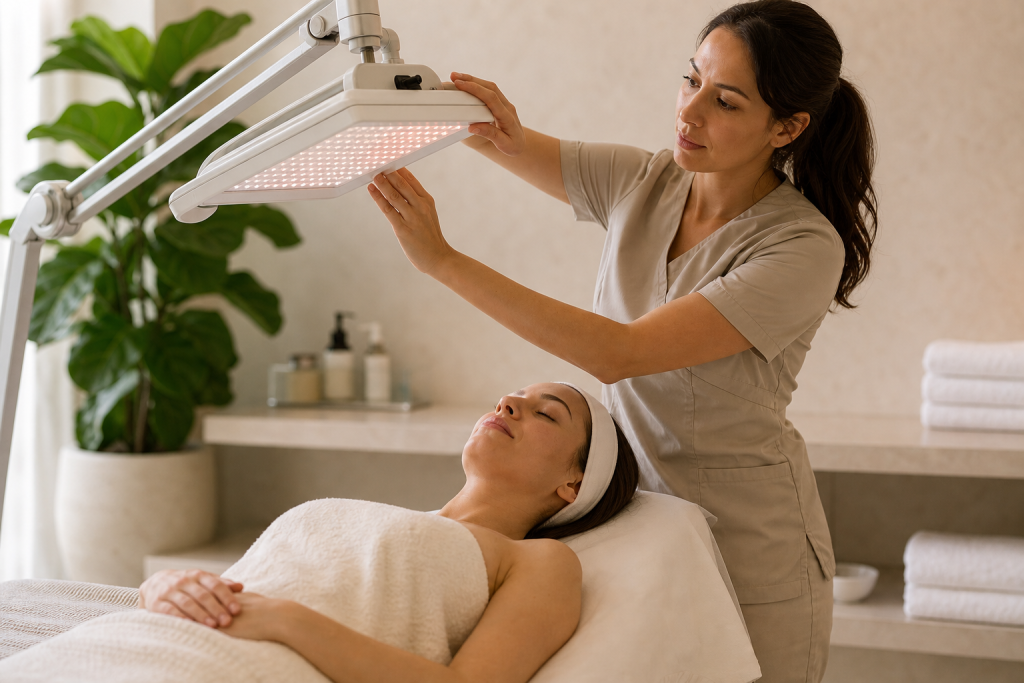
LED therapy uses narrow-band visible light (most commonly red and near-infrared) applied to the skin to trigger cellular responses called photobiomodulation. The approach is nonthermal and delivered with panels or handpieces during or after a facial. Multiple reviews find laboratory and clinical evidence that certain wavelengths can change cellular signaling and skin surface appearance metrics, though responses vary by device, dose, and skin condition [2]. The American Academy of Dermatology notes that red-light devices can be safe when used correctly, but they recommend realistic expectations and provider oversight [1].
High-frequency
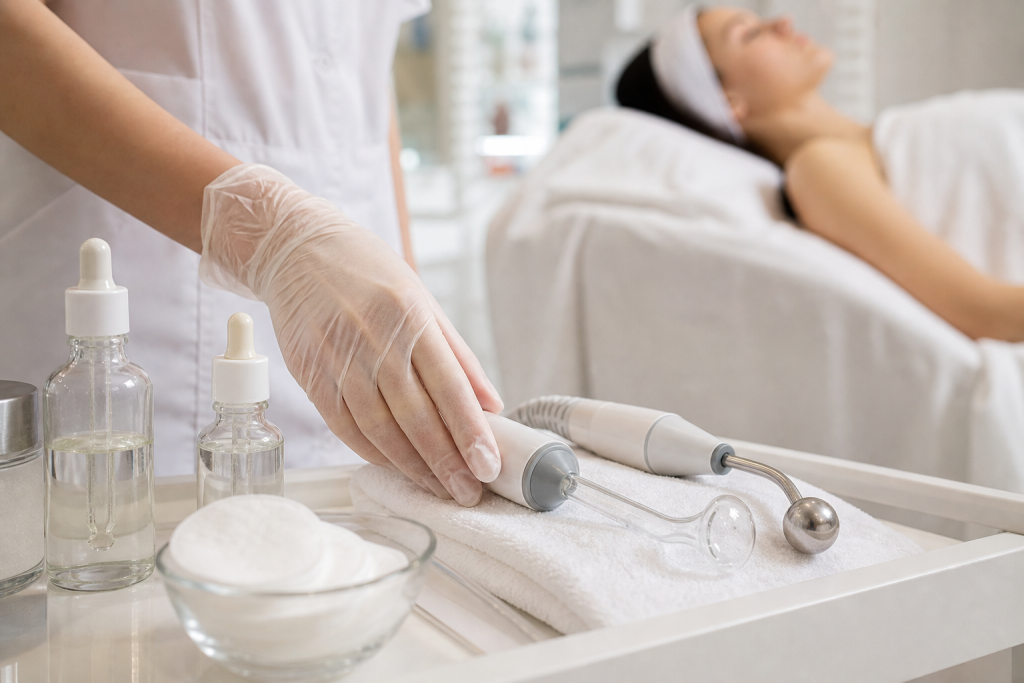
High-frequency devices create a gentle, alternating electrical current through a glass electrode that emits violet or orange glow (depending on gas fill) and produces localized ozone at the skin surface. In practice, estheticians use a wand to target congested areas, calm surface bacteria temporarily, and stimulate circulation. Details of operation and manufacturer usage instructions are documented in device manuals and user guides [3].
Galvanic (deep infusion)
Galvanic devices supply a steady, low-level direct current through probes to move charged substances into or out of superficial skin layers. Estheticians commonly use a two-step galvanic process: desincrustation (negative polarity) to loosen oil/debris and then iontophoresis (positive polarity) to help deliver hydrating or active serums. Device manuals describe settings, electrode placement, and safety checks; training is important to avoid discomfort or improper usage [3].
Evidence, safety, and official guidance (confirmed facts)
- Photobiomodulation (LED) is supported by laboratory and clinical studies showing cellular responses to specific wavelengths, but outcomes depend on dose, wavelength, and treatment schedule [2]. (confirmed fact)
- The American Academy of Dermatology advises that red-light devices can be safe with professional oversight and urges realistic expectations about results [1]. (official guidance)
- High-frequency and galvanic machines operate by electrical currents and ozone-generation principles; user manuals contain safety steps, contraindications, and recommended settings that professionals should follow [3]. (confirmed fact)
All devices have contraindications (for example, certain implanted electronic devices, some medical conditions, or active infections). Estheticians should screen clients and follow device-specific safety guidance; clients should disclose medications and medical history before add-ons.
Side effects, likely problems, and limitations (analysis)
- LED: generally low risk for properly calibrated in-clinic systems, but ineffective home devices or improper dosing may yield limited benefit. Photosensitivity medications can increase risk—disclose medications during screening [1][2]. (analysis)
- High-frequency: transient redness, mild tingling, or superficial irritation are most common. Excessive intensity or prolonged contact can cause discomfort. Ozone output is localized and short-lived when used correctly, but users should avoid overexposure [3]. (analysis)
- Galvanic: improper electrode placement or unsuitable serums may cause stinging or skin irritation. Direct-current devices require trained operators to avoid burns or discomfort; follow manufacturer contraindications [3]. (analysis)
Practical benefits by skin goal
- Hydration and product absorption: galvanic deep-infusion is designed to help charged, water-based serums penetrate superficially during facials. It’s commonly paired with hydrating or targeted masques. (analysis)
- Congestion and mild acne-prone skin: high-frequency is frequently used to address surface congestion and to help reduce bacteria on the skin surface during extractions. (analysis)
- Skin tone, texture, and post-treatment recovery: LED (particularly red/near-infrared) is chosen to support overall skin calm, circulation, and recovery after extractions and resurfacing facials. Evidence supports biological effects but not guaranteed cosmetic outcomes [1][2]. (analysis)
Side-by-side comparison: LED vs high-frequency vs galvanic facial add-ons
| Dimension | LED (photobiomodulation) | High-frequency | Galvanic (iontophoresis) |
|---|---|---|---|
| How it works | Narrow-band visible light (red/near-IR) triggers cellular signaling [2]. | Alternating current via glass electrode with local ozone formation [3]. | Low-level direct current moves charged ingredients into/out of superficial layers [3]. |
| Typical session length | 5–20 minutes as an add-on (varies by protocol). | 3–10 minutes targeted per area. | 5–15 minutes (two-step desincrustation + iontophoresis in some protocols). |
| Most common uses | Post-treatment calming, circulation, recovery support. | Congestion, spot treatments, surface bacteria reduction. | Hydration, serum infusion, pre-extraction prep. |
| Research support | Laboratory and clinical studies show photobiomodulation effects; outcomes vary by dose/wavelength [2]. | Practice-based evidence and mechanistic rationale; fewer large RCTs than LED. | Device and mechanism described in manufacturer literature; clinical outcomes depend on product choice. |
| Common risks | Photosensitivity interactions, limited benefits if under-dosed [1][2]. | Mild irritation, improper use can cause discomfort [3]. | Stinging or irritation if misused; contraindicated with some implants/meds [3]. |
| Best for | Clients seeking a gentle, noninvasive calming or recovery boost. | Clients with surface congestion or occasional blemishes needing spot work. | Clients prioritizing hydration and enhanced serum delivery during a facial. |
When to pick each add-on at Asal Skin Lounge (practical guidance)
- Choose LED when you want a low-risk, relaxing adjunct that supports recovery and overall skin appearance after a customized facial. LED is usually appropriate for most skin types unless you have photosensitizing medication; always disclose medications during your consultation [1][2].
- Pick high-frequency when your esthetician identifies surface congestion, whiteheads, or milia that would benefit from spot treatment and circulation support. High-frequency is commonly paired with extractions and is time-efficient [3].
- Use galvanic deep-infusion when your facial focus is hydration or you want professional help driving serums into the superficial skin layers. Galvanic works best with water-based, properly charged serums and an experienced operator [3].
Remember: these add-ons are complementary. Many clients receive combinations in a single session (for example, galvanic infusion followed by LED calming), depending on skin needs. Your esthetician will recommend a safe sequence and settings.
Costs, availability, and scheduling notes (estimates & local context)
Cost and availability vary by studio and session length. In Woodland Hills and nearby communities, spas commonly offer these add-ons as short options added to a custom facial. Pricing and package availability can change; contact Asal Skin Lounge for current options and membership benefits. (estimate)
As of 2026-09-26, many professional systems require operator training and routine device maintenance. Ask about your provider’s device models and staff training if you want more detail. (confirmed fact: devices require trained operators; see manufacturer guidance) [3].
Alternatives to in-spa add-ons
- At-home LED masks: some deliver benefits for committed users but vary widely by irradiance and wavelength—clinical devices are typically higher output than consumer masks [1][2].
- Topical serums and acids: professionally applied serums and peels can produce measurable surface improvements without electrical adjuncts; combine wisely with add-ons under guidance.
- Multi-session treatments: several modalities show better outcomes over multiple sessions rather than one-off use. Plan a series if your goals are substantial (analysis/estimate).
Practical next steps: what to ask before booking
- Which exact device model do you use, and is it professional-grade?
- How long is the add-on portion, and what is the expected sensation?
- Do you screen for contraindications like photosensitizing meds or implanted electronics?
- Can you combine add-ons in one session safely for my skin type?
If you want help choosing, schedule a consultation so we can assess your skin, review medications and sensitivities, and recommend an evidence-based add-on plan tailored to your goals. (analysis)
Summary: Which is right for you?
If your priority is calm, recovery-friendly support and a relaxing boost, LED is often the first choice. If you have surface congestion, occasional breakouts, or want targeted spot work during extractions, high-frequency is appropriate. If hydration and professional serum infusion are your primary goals, galvanic deep-infusion can help. Many clients benefit from a thoughtful combination ordered and delivered by a trained esthetician.
Use the decision guide above, discuss it with your esthetician at Asal Skin Lounge, and choose add-ons that match your treatment plan and screening results. (analysis)
Sources and note on evidence
- American Academy of Dermatology: guidance on red-light therapy safety and realistic expectations [1]. (official guidance)
- International Journal of Molecular Sciences review on photobiomodulation: a comprehensive review of mechanisms and clinical evidence for light-based skin therapy [2]. (independent reporting)
- Device user manual and operational guidance for combined high-frequency/galvanic equipment, including safety and operator instructions [3]. (manufacturer documentation)
As of 2026-09-26, these sources represent current professional guidance and peer-reviewed synthesis; research and device approvals may continue to evolve. (confirmed fact)
FAQs
Q: Are these add-ons safe with my prescription medication?
A: Some medications (for example, photosensitizing drugs) can interact with LED therapy, and other medical conditions can affect safety for electrical devices. Disclose your prescriptions and health history during screening so your esthetician can advise. (confirmed fact) [1]
Q: Can I get more than one add-on in a single facial?
A: Often yes. Estheticians commonly combine galvanic infusion with LED calming or pair high-frequency spot work during a deep-cleanse. The exact sequence depends on skin needs and device compatibility. (analysis)
Q: How many sessions do I need to see a change?
A: Responses vary by goal, device, and skin. Many benefits are incremental and best observed over multiple sessions. Your esthetician can propose a personalized plan. (analysis/estimate)
Q: Are at-home devices as effective as in-spa equipment?
A: Consumer home devices vary considerably in power and wavelength. Professional devices used in-clinic are typically higher output and operated by trained staff; thus, outcomes differ. Read device specs and discuss with your provider. (confirmed fact) [1][2]
Q: What should I tell my esthetician before an add-on?
A: Share medications, recent procedures, implanted devices, known allergies, and any current skin irritation so the esthetician can screen safety and select appropriate settings. (confirmed fact)
Want a personalized recommendation? Book a consultation at Asal Skin Lounge in Woodland Hills to review your skin history and goals. You can book online or call +1 (747) 746-3818.


Frequently asked questions
Are LED, high-frequency, or galvanic add-ons safe for all skin types?
These add-ons are generally safe when performed by trained professionals, but they are not universally appropriate. LED can be contraindicated for people on photosensitizing medication; high-frequency and galvanic treatments have specific contraindications (for example, implanted electronic devices). Always disclose medications and medical history during screening and follow the esthetician’s guidance. (confirmed fact) [1][3]
How soon will I see results from a facial add-on?
Timing varies by goal and device. Some clients notice immediate improvements in hydration or surface calm after a single session, while others need multiple sessions for measurable changes. Many protocols recommend a series of treatments for cumulative benefits. Your esthetician can recommend a schedule tailored to your skin. (analysis/estimate)
Can I combine LED, high-frequency, and galvanic in one appointment?
Yes—many estheticians combine add-ons in a single facial in a safe sequence, such as galvanic infusion followed by extractions with high-frequency and finishing with LED to calm the skin. Combination depends on your skin condition and device compatibility; a professional will design the sequence. (analysis)
Do at-home LED or galvanic devices work as well as in-spa treatments?
Consumer devices range widely in power and wavelength. Professional in-clinic systems are typically higher output and operated by trained staff, which can produce different outcomes than consumer devices. Evaluate home devices carefully and consult a professional if you’re unsure. (confirmed fact) [1][2]
What should I tell my provider before choosing an add-on?
Tell your esthetician about medications, recent medical procedures, implanted devices, allergies, and any current skin irritation. This information helps the provider screen for contraindications and select safe, effective settings. (confirmed fact)
Need practical help?
Asal Skin Lounge — Contact us to schedule service or request a quote. Service area: Woodland Hills.
Topic in context
Sources and further reading
These links were validated and checked when possible when this article was created; some publishers limit automated requests. Facts, guidance, prices, regulations, and availability can change.
- Is red light therapy right for your skin? — American Academy of Dermatology (AAD)
- Unlocking the Power of Light on the Skin: A Comprehensive Review on Photobiomodulation — International Journal of Molecular Sciences / PubMed Central (PMC)
- Skin Act 2-in-1 High Frequency Plus Galvanic Facial Machine — User Manual and Guide — Manuals.plus (device user manual copy)