
LED light therapy facial add-on evidence — Woodland Hills
LED light therapy facial add-on evidence: Evidence summary (as of 2026-09-22) on LED light therapy facial add-on evidence: benefits, limits, safety, and how it…
View article sections
- 01Quick takeaways
- 02How LED light therapy facial add-on evidence applies during a professional facial
- 03Safety, contraindications, and likely problems
- 04Comparisons: wavelengths, professional vs at-home devices, and add-on timing
- 05Costs, expected frequency, and availability (estimates)
- 06Alternatives and complementary options
- 07Practical next steps for Woodland Hills clients
- 08Summary
- 09References
- 10Related guides and resources
- 11Frequently asked questions
- 12Need practical help?
- 13Topic in context
- 14Sources and further reading
What changed on 2026-09-22 and why it matters: On 2026-09-22 Asal Skin Lounge prepared this concise, evidence-focused summary because client interest in red and blue LED add-ons stayed high. This update explains which wavelengths are supported by clinical reviews, how an LED add-on fits into a professional facial, and what short-term outcomes Woodland Hills clients can reasonably expect. This content is analysis and educational only; it is not personalized medical advice.
Quick takeaways
LED light therapy facial add-on evidence supports specific uses: blue light can reduce acne-related bacteria, and red or near-infrared light has modest support for improving signs of skin aging and accelerating wound repair. These findings come from clinical reviews rather than single definitive trials, and results vary by device dose, wavelength, and treatment schedule [2][3]. As of 2026-09-22, safety profiles are generally favorable when professional protocols are followed, though sensitivity and photosensitizing medications are important contraindications [1].
What the research actually shows
Clinical reviews indicate two practical areas with the strongest evidence: acne care and skin-aging support. Blue light (around 415 nm) shows antimicrobial effects versus Cutibacterium acnes and can reduce inflammatory acne when used with repeated sessions [2]. Red light (630–660 nm) and near-infrared (810–850+ nm) have shown modest improvements in fine lines, skin tone, and collagen-related markers in controlled studies, but effects are gradual and require multiple sessions over weeks to months [3]. These are independent, peer-reviewed summaries, not vendor claims.
Mechanism summaries: LED devices deliver non-ionizing light that penetrates to different skin depths depending on wavelength. Blue light acts mainly at the surface and targets bacteria. Red and near-infrared reach deeper and are thought to stimulate cellular energy pathways (mitochondrial chromophores), which can indirectly support repair processes [1][3].
How LED light therapy facial add-on evidence applies during a professional facial
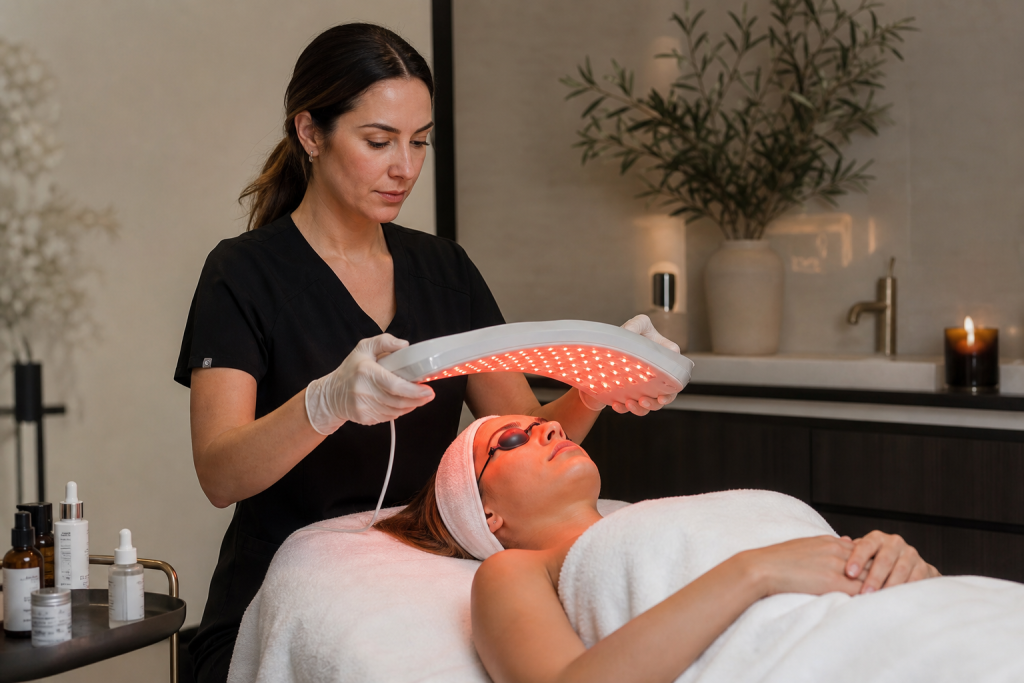
Using LED as an add-on during a facial is common: it is typically applied after extraction, serum infusion, or a mask to avoid blocking light and to target tissue that has already been cleaned and prepped. In practice, estheticians at Asal Skin Lounge use LED for 8–20 minutes per wavelength, depending on the device and goals. This timing aligns with many published protocols, although trials vary in session length and number [2][3].
Why combine LED with other facial steps? For acne-prone skin, extractions and deep cleansing remove debris while blue light treats bacteria. For aging skin, massage, serums, or galvanic deep infusion can improve product penetration before red or near-infrared exposure. However, LED alone is rarely a one-time cure; consistency matters.
Realistic outcomes and timing
- Acne: Noticeable reductions in inflammatory lesions often appear after several sessions, commonly 4–8 treatments over 4–12 weeks in reviewed studies [2].
- Aging: Modest improvements in fine lines, texture, and firmness are usually reported after multiple weeks to months of treatment, not immediately after one session [3].
- Immediate effects: Patients may notice a temporary glow or reduced redness after a session, but these short-term changes are cosmetic and transient.
As of 2026-09-22, randomized and controlled trials report group-level improvements, but individual responses vary due to baseline skin condition, device energy (fluence), and treatment schedule [2][3].
Safety, contraindications, and likely problems
Confirmed facts: LED phototherapy uses non-ionizing visible and near-infrared light and is not the same as laser resurfacing. Published safety summaries list few serious adverse events when devices are used correctly, but common transient effects include mild warmth, temporary redness, or sensitivity [1].
Contraindications and precautions (confirmed):
- Photosensitizing medications (e.g., some antibiotics, topical retinoids, or systemic photosensitizers) — discuss medications before treatment [1].
- Active skin infections or open wounds — avoid until healed.
- Photosensitive disorders or epilepsy triggered by flashing lights — avoid or consult a clinician.
Estimate: Device safety depends heavily on the operator and device certification. Professional in-clinic panels are more powerful than most at-home devices, which can mean faster effects but also higher risk of misuse. Always ask about device specs and operator training.
Side effects and risk management
Most side effects are mild and transient. If you have very sensitive skin, a patch test or shorter initial exposure reduces risk. Avoid unverified DIY combinations (for example, some essential oils or unapproved topical drugs) during LED sessions unless cleared by your esthetician or clinician.
Comparisons: wavelengths, professional vs at-home devices, and add-on timing
| Dimension | Blue (≈415 nm) | Red (630–660 nm) | Near-IR (810–850+ nm) |
|---|---|---|---|
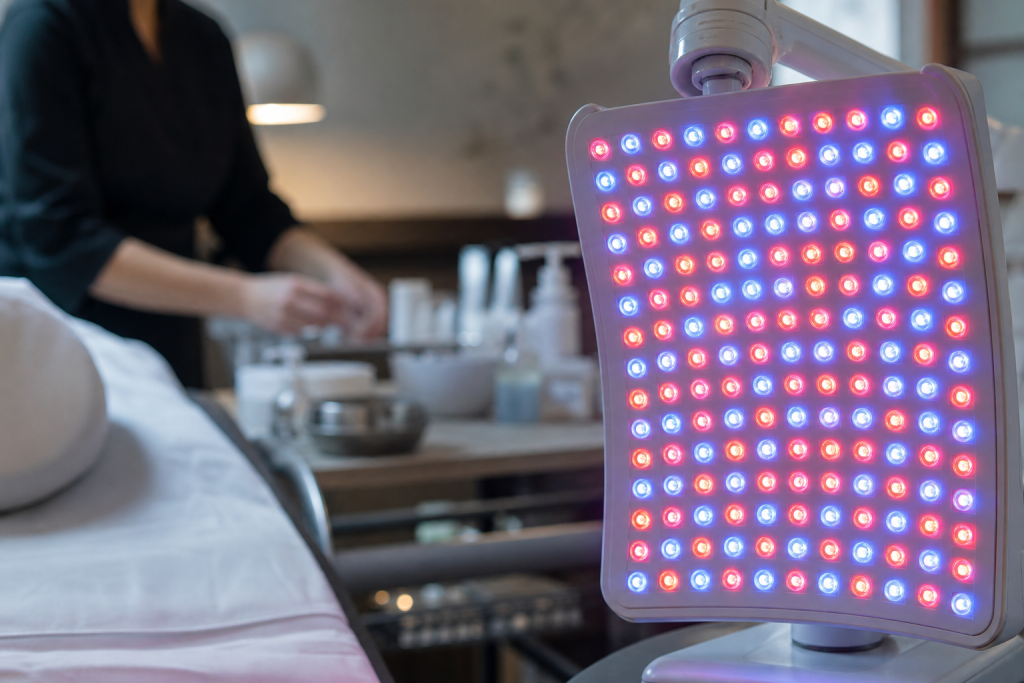
| Main effect | Antimicrobial, surface action | Cellular stimulation; collagen support | Deeper tissue penetration; anti‑inflammatory |
| Best use | Inflammatory acne | Fine lines, texture | Inflammation, deeper remodeling |
| Evidence strength | Moderate for acne when used repeatedly [2] | Modest, supportive for aging markers [3] | Some supporting studies; less standardized dosing [3] |
Professional in-clinic systems typically deliver higher irradiance and can be combined with other in-facial steps like extraction and serums. At-home devices have lower power and require longer or more frequent sessions. Comparative reviews stress protocol, dose, and cumulative exposure as key variables for outcomes [2][3].
Costs, expected frequency, and availability (estimates)
Estimate: As a facial add-on in Woodland Hills, LED sessions usually add a modest surcharge to a facial. Typical packages offer single-session add-ons or discounted multi-session series. For acne or aging goals, clinics often recommend a series—weekly or biweekly sessions for several weeks—followed by maintenance. Exact pricing varies; ask Asal Skin Lounge for current packages and series pricing (estimates change over time).
Alternatives and complementary options
- Topical retinoids and sunscreen for photoaging prevention — established first-line approaches for aging concerns.
- Prescription acne treatments for moderate-to-severe acne — combine with LED as appropriate and under clinician oversight [2].
- In-clinic energy devices (lasers, microneedling, radiofrequency) provide different mechanisms and risk/benefit profiles than LED; discuss tradeoffs with your provider.
When to choose LED as an add-on
Choose an LED add-on when you want a low-downtime complement to cleansing, extraction, and topical infusion; particularly useful for clients preferring non-ablative, gentle approaches. For active medical conditions or complex acne, consult a dermatologist in addition to a professional esthetician and consider combined care.
Practical next steps for Woodland Hills clients
- Book a consultation at Asal Skin Lounge to review your skin history and medications. This protects safety and tailors wavelength choice.
- If cleared, plan a treatment schedule. For acne, expect at least 4–8 sessions over weeks. For aging, anticipate a multi-week plan with maintenance visits [2][3].
- Ask about the device specs and operator training. Confirm that the esthetician will adjust timing for sensitivity and combine LED at the right point in the facial.
- Track results with photos under consistent lighting and allow time for group-level changes to appear.
Labeling of content: the mechanisms and safety descriptions above are confirmed facts from clinical summaries and patient guidance [1][2][3]. References to likely outcomes and suggested schedules are analysis and practical guidance based on peer-reviewed reviews and industry practice as of 2026-09-22. Cost and session-frequency statements are estimates and may vary by clinic.
Summary
Short version: LED light therapy facial add-on evidence supports specific, modest benefits when used repeatedly and on appropriate indications. Blue light has the clearest role for acne-related bacteria, while red and near-infrared wavelengths support gradual improvement in signs of aging. Safety is generally favorable with professional application, but contraindications and device dose matter [1][2][3].
If you live in Woodland Hills or nearby communities like Tarzana or Encino and are considering LED add-ons, book a consultation to review goals and medications. For appointments, book online or call +1 (747) 746-3818.
References
Primary independent sources used in this summary:
- Cleveland Clinic patient guide on LED therapy — mechanism, colors, benefits, and risks [1].
- Review: Use of light in treatment of acne vulgaris — systematic review of LED and phototherapy evidence for acne [2].
- Review: LED phototherapy for skin aging — review of red and near-infrared evidence for anti‑aging uses [3].


Frequently asked questions
How soon will I see results from an LED light therapy facial add-on?
Expect gradual changes. For acne, clinical reviews report reductions after several sessions—often 4–8 treatments over 4–12 weeks [2]. For aging concerns, modest improvements typically require multiple weeks or months of repeated treatments [3]. Immediate effects are usually temporary cosmetic improvements like a short-term glow.
Is LED light therapy safe to add to a professional facial?
When performed by trained professionals using approved equipment, LED phototherapy has a favorable safety profile. Common mild effects include warmth or brief redness. Contraindications include photosensitizing medications, active infections, and certain photosensitive conditions, so share your medications and medical history before treatment [1].
Should I choose blue, red, or near-infrared LED during my facial?
Blue light (~415 nm) is most supported for acne-related antimicrobial effects. Red (630–660 nm) and near-infrared (~810–850 nm) target deeper tissue and have modest evidence for improving signs of aging and inflammation. Your esthetician will recommend a wavelength based on skin concerns and safety [2][3].
Can I use at-home LED devices instead of a professional add-on?
At-home devices are generally lower-power and can be useful for maintenance, but they require more frequent use and provide smaller effects than professional panels. For clinical goals like moderate acne or anti-aging improvements, in-clinic treatments offer stronger, faster dosing combined with professional facial steps.
How many LED sessions will I need and how much will it cost?
Recommended session counts vary by goal. For acne, many protocols use weekly or biweekly sessions for several weeks. For aging, expect a multi-week plan plus maintenance. Pricing varies by clinic and package; contact Asal Skin Lounge for current packages and estimates.
Need practical help?
Asal Skin Lounge — Contact us to schedule service or request a quote. Service area: Woodland Hills.
Topic in context
Sources and further reading
These links were validated and checked when possible when this article was created; some publishers limit automated requests. Facts, guidance, prices, regulations, and availability can change.
- LED Light Therapy: How It Works, Colors, Benefits & Risks — Cleveland Clinic (patient information) (2019-02-14)
- The use of light in the treatment of acne vulgaris — a review — PubMed / Journal review (indexed) (2021-12-01)
- Light Emitting Diode Phototherapy for Skin Aging — PubMed / Dermatologic review (2020) (2020-04-01)