
LED face mask safety Black Friday 2026 — Buyer Guide
LED face mask safety Black Friday 2026: Understand LED face mask safety Black Friday 2026 deals: FDA clearance, dermatologist guidance, in‑office vs at‑home li…
View article sections
- 01Key safety takeaways — quick answers
- 02What the November 20, 2026 reporting shows (independent reporting)
- 03How FDA 510(k) clearance affects safety and marketing
- 04What dermatology guidance says about risks and limits
- 05At‑home LED masks vs professional in‑office LED add‑ons
- 06What to check before buying during Black Friday sales
- 07How to use an at‑home device safely with a professional facial
- 08Common problems and how often they occur (estimates and analysis)
- 09If something goes wrong: practical next steps
- 10Buying checklist for Woodland Hills clients
- 11LED face mask safety Black Friday 2026 — final guidance
- 12Next steps: practical options for Woodland Hills clients
- 13Frequently asked questions
- 14Related guides and resources
- 15Frequently asked questions
- 16Need practical help?
- 17Topic in context
- 18Sources and further reading
LED face mask safety Black Friday 2026 is the focus of this dated, source-based update. As a result, the article separates verified details from analysis.
What changed and why it matters: On Nov 20, 2026, major Black Friday and Cyber Monday promotions drove a sharp increase in consumer purchases of at‑home LED devices, prompting questions about device quality, clearance, and safe use with professional facials. Independent reporting of wide holiday discounts documented this surge and the timing of the sales [1]. For Woodland Hills clients, knowing which devices are FDA‑cleared and how at‑home masks compare to in‑office LED add‑ons matters before you bring a new device into a facial appointment.
This article covers confirmed facts, official announcements, independent reporting, and analysis. It explains supported benefits, known limits, likely issues, and practical next steps for buyers and clients planning facials at Asal Skin Lounge in Woodland Hills.
Key safety takeaways — quick answers
- Look for FDA 510(k) clearance when a device claims medical benefits; some at‑home masks have such clearances but not all. Confirm details on the FDA record [3].
- Red and near‑infrared LED wavelengths have documented uses in dermatology, but safe, effective treatment depends on dose (irradiance), exposure time, and skin context; follow product instructions and clinician guidance [2].
- If you plan to use an at‑home device alongside a professional facial, tell your esthetician about the device brand, model, and when you last used it before a treatment.
- Reported Black Friday discounts increased purchases and returns; consider warranties, seller reputation, and real‑world reviews before buying [1].
What the November 20, 2026 reporting shows (independent reporting)
Marie Claire published an independent report on Nov 20, 2026 documenting major discounts on LED face masks during Black Friday and Cyber Monday sales, which correlated with a surge in consumer interest and purchases of these devices [1]. This reporting signals higher market activity but does not by itself validate device claims or safety.
Confirmed facts and official announcements
- Confirmed fact: The Marie Claire story is independent reporting of sales activity and promotions on Nov 20, 2026 [1].
- Confirmed fact: At least one class of LED devices received 510(k) clearance from the FDA; see the FDA 510(k) summary for a light therapy device cleared for wrinkles and acne (K261482) dated Apr 17, 2026 [3].
- Official guidance: The American Academy of Dermatology provides consumer‑facing safety information about red light therapy, including common uses and precautions (publish date Feb 1, 2024) [2].
How FDA 510(k) clearance affects safety and marketing
FDA 510(k) clearance means the device maker demonstrated that a new device is substantially equivalent to a legally marketed device. It is not the same as an FDA endorsement or comprehensive safety certification. As of Apr 17, 2026, a light therapy device 510(k) summary (K261482) is publicly available and shows the FDA process applied to at least one consumer device type; check the FDA record for model and indications before relying on clearance claims [3].
Labeling and intended use matter: a product cleared for wrinkle‑related uses may not have been evaluated for other claims. Always read the 510(k) summary and device labeling to confirm intended uses and limits [3].
What dermatology guidance says about risks and limits
The American Academy of Dermatology (AAD) notes that red and near‑infrared light therapy can be used for certain skin concerns, but effectiveness varies and not every device or wavelength is suitable for every skin type or condition. The AAD lists basic precautions, such as avoiding use over active infections, certain photosensitizing medications, and untreated suspicious lesions [2]. These are general safety points rather than individualized medical advice.
As of the AAD guidance (Feb 1, 2024), users should stop use and consult a clinician if they experience unusual redness, blistering, new pain, or other concerning reactions after using a device [2].
At‑home LED masks vs professional in‑office LED add‑ons
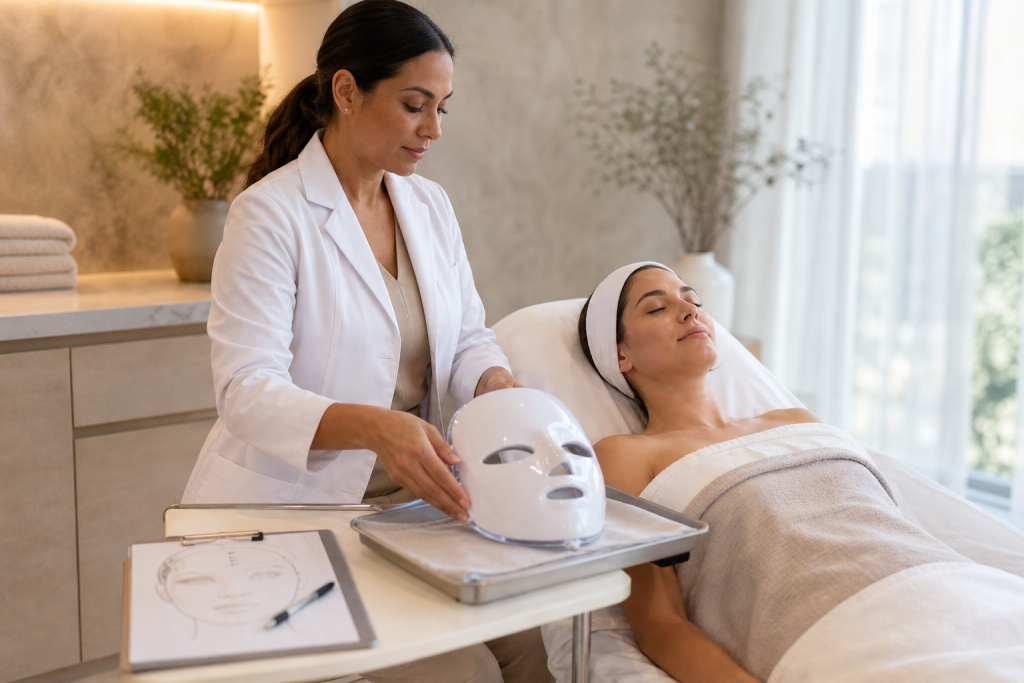
Comparing device types helps set realistic expectations. Table below summarizes practical differences relevant to Woodland Hills clients deciding whether to buy a discounted mask this Black Friday or choose an in‑office LED add‑on at Asal Skin Lounge.
| Feature | At‑home LED mask | In‑office LED add‑on |
|---|---|---|
| Typical power (irradiance) | Lower than clinical units; designed for safe consumer use | Higher, controlled settings applied by trained professionals |
| Treatment monitoring | User self‑administered; depends on following instructions | Provider monitors skin response and adjusts settings |
| Customization | Limited modes or fixed wavelengths per device | Care plan customized with other modalities (peels, extractions, serums) |
| Regulatory status | Some models hold FDA 510(k) clearance; many do not—check records [3] | Professional devices often fall under medical device oversight and clinic protocols |
| Cost | One‑time purchase; Black Friday discounts may reduce price but check returns/warranty [1] | Per‑session fee; included in many facial add‑ons at a known price |
Practical implication
At‑home masks can complement a professional skincare routine, but they usually cannot match the higher controlled doses or clinical oversight of in‑office treatments. For clients with complex concerns or who take photosensitizing prescriptions, professional guidance matters [2].
What to check before buying during Black Friday sales
- Seller reputation and return policy: Big discounts can hide limited warranties or restocking fees. Independent reporting notes increased holiday promotions and related buyer activity on Nov 20, 2026 [1].
- FDA 510(k) record: If a model claims clearance, verify the specific 510(k) number and read the summary to confirm intended uses [3].
- Wavelengths and instructions: Look for clear labeling of wavelengths (for example, 630–660 nm for red, 800–850 nm for near‑infrared) and recommended exposure times; be cautious with vague product claims [2].
- Contraindications and interactions: Check warnings for photosensitizing drugs, pregnancy notes, or active skin infections. If in doubt, consult a dermatologist or your esthetician before first use [2].
How to use an at‑home device safely with a professional facial
If you purchased a mask during the Black Friday sales and plan to use it in conjunction with a facial at Asal Skin Lounge, tell your esthetician the brand, model, and when you last used it. In addition:
- Stop use 48–72 hours before an invasive or exfoliating procedure unless your esthetician advises otherwise.
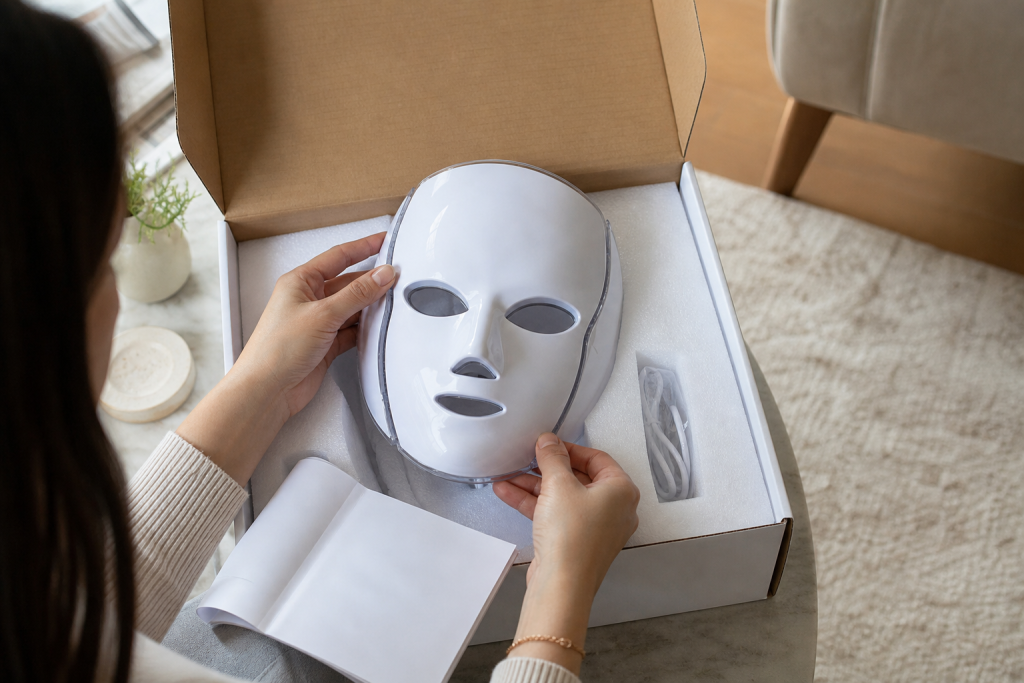
- Bring the device packaging or a photo of the label to the appointment so the clinician can identify wavelengths and intended use.
- Follow all product instructions for eye protection and session length, and report any prior adverse reactions.
These steps help your provider integrate LED safely into a facial plan and avoid overlapping treatments that could increase irritation, especially after chemical peels or microdermabrasion.
Common problems and how often they occur (estimates and analysis)
Serious harms from consumer LED masks are uncommon when users follow instructions, but minor issues such as temporary redness, tightness, or eye discomfort can occur. The AAD recommends stopping use and consulting a clinician for unexpected reactions [2]. The Black Friday surge likely increased the absolute number of users and therefore reports of minor problems, though large‑scale safety signal data are limited in the public domain (analysis).
If something goes wrong: practical next steps
- Stop using the device immediately.
- If you develop blistering, increasing pain, or signs of infection, seek medical care promptly.
- Document the device model, photos of the reaction, and timing relative to use; keep receipts for returns or warranty claims.
- Discuss the reaction with your esthetician before returning for further treatments; they can advise safe timing for follow‑up facials.
Buying checklist for Woodland Hills clients
- Confirm seller reputation and warranty (returns policy).
- Verify FDA 510(k) clearance if the device claims medical benefits and read the 510(k) summary [3].
- Check manufacturer instructions for wavelengths, exposure time, and eye protection.
- Notify your esthetician before using the device with a professional facial; stop use before invasive procedures unless cleared by your provider.
- Keep expectations realistic: at‑home devices are supportive tools, not replacements for personalized clinical treatments.
LED face mask safety Black Friday 2026 — final guidance
As holiday deals drive purchases, remember that independent reporting on Nov 20, 2026 documented increased sales activity and discounts for LED masks [1]. Confirm device claims with the FDA record when applicable [3] and follow dermatologist guidance on precautions and contraindications [2]. When in doubt, consult with your esthetician at Asal Skin Lounge before incorporating an at‑home device into your facial plan.
Next steps: practical options for Woodland Hills clients
If you already bought a mask on Black Friday, bring the model details to your next appointment at Asal Skin Lounge. If you’re considering a purchase, consider scheduling a consult or booking an in‑office LED add‑on so you can compare results under professional supervision.
Sources and dates: Independent reporting of holiday promotions (Marie Claire), Nov 20, 2026 [1]; American Academy of Dermatology consumer guidance (Feb 1, 2024) [2]; FDA 510(k) summary for light therapy device (K261482), Apr 17, 2026 [3].
Confirmed facts are labeled above; other points are analysis or practical estimates intended to help you make a safe choice.
To book a consultation or LED add‑on at our Woodland Hills studio, please book online or call +1 (747) 746-3818.
Frequently asked questions
Can I use an at‑home LED mask the same day as a professional facial?
Generally, you should inform your esthetician and avoid using an at‑home device immediately before or after invasive or exfoliating procedures. Follow product instructions and your provider’s guidance to minimize irritation [2].
Does FDA clearance mean a device is proven effective?
No. A 510(k) clearance indicates the device is substantially equivalent to a previously marketed device; it does not guarantee superior effectiveness. Review the 510(k) summary for intended uses and limits [3].
What should I tell my esthetician about a mask I bought on Black Friday?
Share the brand, model, when you last used it, and any reactions. If possible, bring the box or a photo of the label so your esthetician can identify wavelengths and settings.
Are there skin types that should avoid LED therapy?
Certain photosensitizing medications, active infections, or untreated cancerous lesions are contraindications. Consult the AAD guidance and speak with a clinician if you have medical concerns [2].
How many times should I use an at‑home mask for results?
Usage schedules vary by device and indication. Follow manufacturer instructions and consider discussing a plan with your esthetician so home use complements in‑office treatments.

Frequently asked questions
Can I use an at‑home LED mask the same day as a professional facial?
Generally, avoid using an at‑home LED mask immediately before or after invasive or exfoliating professional procedures. Tell your esthetician the brand and when you last used the device so they can advise timing and safety [2].
Does FDA 510(k) clearance mean a device is proven effective?
No. A 510(k) clearance indicates substantial equivalence to a legally marketed device, not an endorsement of superior effectiveness. Check the FDA 510(k) summary for the specific device to confirm intended uses and limits (as of Apr 17, 2026) [3].
What should I tell my esthetician about a mask I bought during Black Friday sales?
Provide the brand, model, when you last used it, and any reactions. If possible, bring the packaging or a photo of the label so your esthetician can identify wavelengths and settings before incorporating it into a facial plan.
Are there skin types or conditions that should avoid LED therapy?
Certain photosensitizing medications, active skin infections, and untreated suspicious lesions are common contraindications. Consult the American Academy of Dermatology guidance and speak with a clinician if you have medical concerns before using a device [2].
Need practical help?
Asal Skin Lounge — Contact us to schedule service or request a quote. Service area: Woodland Hills.
Topic in context
Sources and further reading
These links were validated and checked when possible when this article was created; some publishers limit automated requests. Facts, guidance, prices, regulations, and availability can change.
- My Jaw Dropped When I Saw These Major Discounts on LED Masks — Marie Claire (2026-11-20)
- Is red light therapy right for your skin? — American Academy of Dermatology (AAD) (2024-02-01) — primary source
- 510(k) Summary: Light Therapy Device for Wrinkles and Acne (K261482) — U.S. Food and Drug Administration (FDA) — CDRH (2026-04-17) — primary source