

led high frequency galvanic facial add-ons safety Woodland
led high frequency galvanic facial add-ons safety Woodland: As of 2026-11-19, learn about led high frequency galvanic facial add-ons safety Woodland with evide…
View article sections
- 01led high frequency galvanic facial add-ons safety Woodland
- 02What changed and why it matters (as of 2026-11-19)
- 03Quick summary: safe, limited, and professional
- 04Official guidance, systematic evidence, and professional practice
- 05What each add-on does, evidence, and typical uses
- 06Practical safety steps your esthetician will take
- 07Common risks and how we reduce them
- 08Comparing add-ons and at-home options
- 09How we decide which add-ons to recommend
- 10Cost, availability, and booking (local details)
- 11Labeling facts, sources, and types of statements in this guide
- 12Practical next steps for Woodland Hills clients
- 13Choosing between LED, high-frequency, and galvanic at Asal Skin Lounge
- 14What to expect during an add-on session
- 15Alternatives and complementary approaches
- 16Final note and how to book
- 17Related guides and resources
- 18Frequently asked questions
led high frequency galvanic facial add-ons safety Woodland
This dated, source-based update separates verified details, limitations, and practical next steps.
What changed and why it matters (as of 2026-11-19)
As of 2026-11-19 we summarize current evidence and U.S. device guidance so Woodland Hills clients can make informed choices about led high frequency galvanic facial add-ons safety Woodland. This matters because photobiomodulation (LED) devices and professional electrical modalities are increasingly requested as add-ons, and recent regulatory guidance and systematic reviews clarify what is known, what remains uncertain, and what licensed professionals typically screen for before use.
Quick summary: safe, limited, and professional
Short version: LED (photobiomodulation) has supportive—but not definitive—evidence for some skin outcomes in professional settings, while high-frequency and galvanic tools are established professional modalities to assist cleansing, exfoliation, and product infusion when used by trained providers. However, safety depends on correct device selection, settings, contraindication screening, and professional training; therefore led high frequency galvanic facial add-ons safety Woodland is primarily a matter of technician competence and client medical history.
Official guidance, systematic evidence, and professional practice
Confirmed fact: The U.S. Food and Drug Administration issued draft guidance on photobiomodulation (PBM) devices and premarket notification considerations in 2023; this document clarifies performance and labeling expectations for manufacturers and frames safety review for LED devices marketed for therapeutic claims [1].
Independent reporting / analysis: A systematic review and meta-analysis published in 2022 found that LED-based therapies show measurable effects for certain skin uses in clinical studies, but it also noted heterogeneity in devices, wavelengths, and endpoints, which limits broad claims about outcomes [2].
Professional practice guidance: Industry resources for licensed estheticians and clinical professionals summarize how high-frequency and galvanic devices are used safely during professional exfoliation and product infusion, and they list common contraindications to screen for before treatment [3].
Why this combination matters to Woodland Hills clients
Clients in Woodland Hills and nearby neighborhoods ask about led high frequency galvanic facial add-ons safety Woodland because these add-ons are affordable upgrades to many facials and promise faster visible improvements. For busy clients seeking hydration, reduced congestion, or enhanced product absorption, add-ons can be helpful when matched to skin needs and medical considerations. Nevertheless, outcomes vary and no modality guarantees a specific result.
What each add-on does, evidence, and typical uses
| Modality | Primary professional use | Evidence snapshot (as of 2026-11-19) | Common contraindications |
|---|---|---|---|
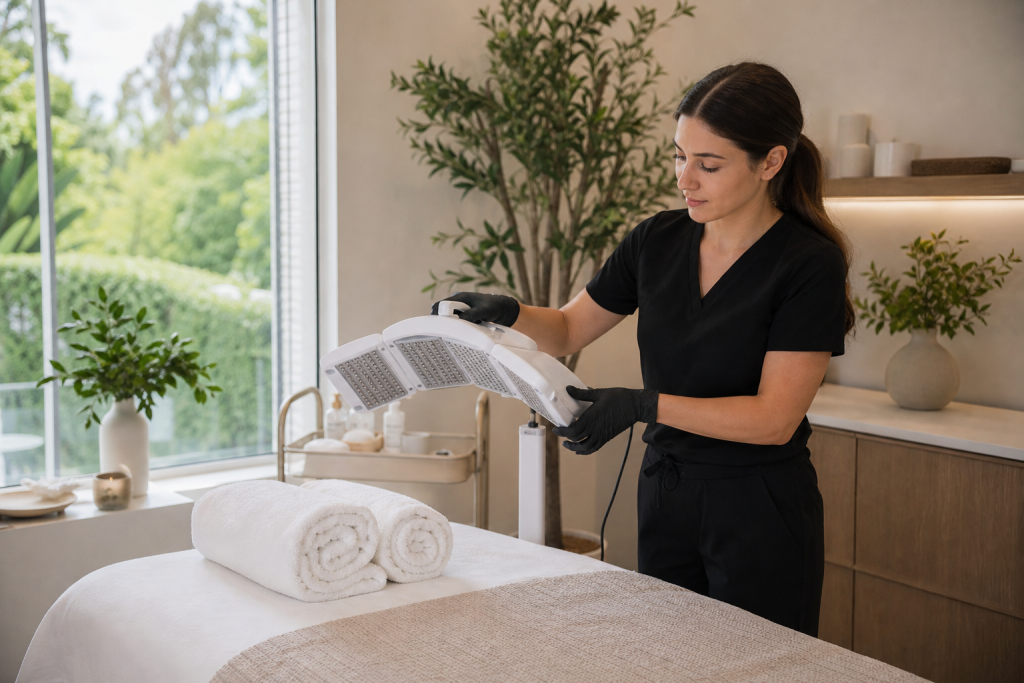
| LED (photobiomodulation) | Nonthermal light therapy to support skin tone, inflammation control, recovery after procedures | Systematic reviews show benefits in specific outcomes but study heterogeneity limits firm conclusions; FDA draft guidance outlines device review expectations [1][2]. | Photosensitizing medications, active infection at treatment site, caution with epilepsy (flashing devices), and device-specific warnings per manufacturer and clinic screening [1][2]. |
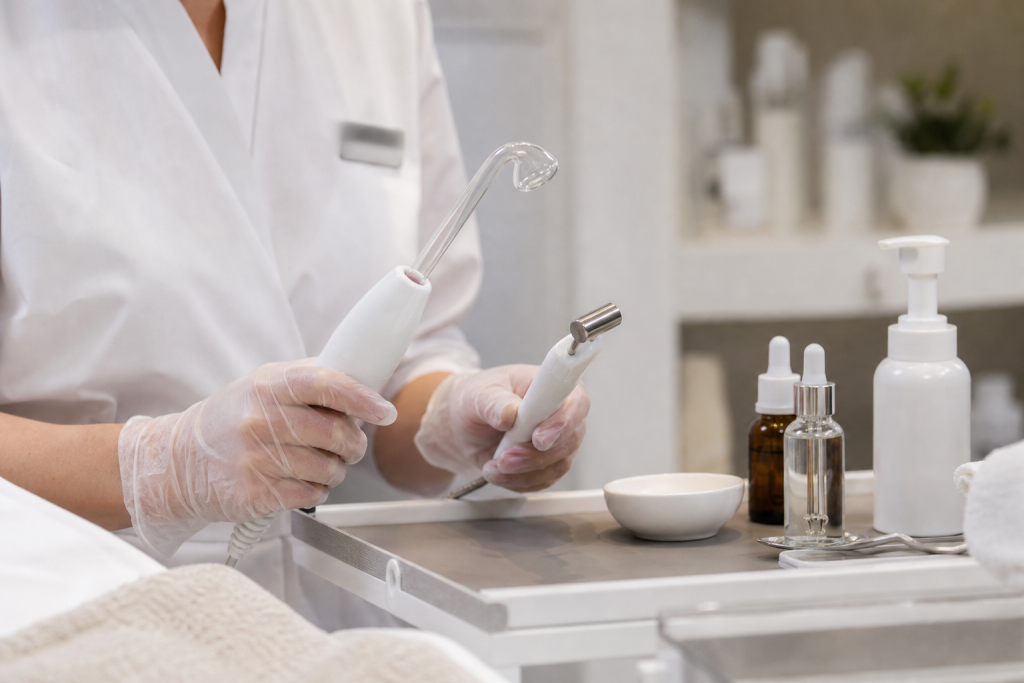
| High-frequency (Tesla current) | Surface antisepsis, congestion reduction, oxygenation sensation, calming and short-term textural smoothing | Long-standing professional tool with practice-based support; peer-reviewed clinical data are limited but professional protocols describe safe, adjunctive use for exfoliation and congestion control [3]. | Open wounds, severe rosacea flare, metal implants near treatment area, and clients with certain implants/conditions—follow professional contraindication lists [3]. |
| Galvanic (direct current) | Deep infusion of charged serums and iontophoresis to aid product delivery; desincrustation for oily/congested skin | Professional guidance supports galvanic use for product delivery and desincrustation; high-quality randomized trials are fewer, so clinical judgement matters [3]. | Pacemakers or implanted electrical devices, pregnancy (clinic-specific policies), recent chemical peels or open skin areas, and metal implants—screen per protocol [3]. |
Practical safety steps your esthetician will take
At Asal Skin Lounge we follow professional screening and manufacturer instructions. Typical steps include:
- Detailed intake and medical history review (medications, implants, pregnancy) to protect clients and ensure led high frequency galvanic facial add-ons safety Woodland.
- Patch testing or lower initial settings for first-time clients, and documentation of device serial and settings when used.
- Avoiding electrical modalities on open wounds, active infections, or immediately after certain cosmetic procedures unless cleared by a provider.
- Using certified, well-maintained devices and continuous staff training on contraindications and emergency procedures.
Common risks and how we reduce them
Material risks include transient redness, irritation, and, rarely, worsening of photosensitivity reactions if LED is applied when a client is taking photosensitizing medication. Electrical modalities may produce discomfort, minor burns, or interact with implanted devices if screening is incomplete. To reduce risk, clinics follow device labeling and professional protocols and will decline or modify treatments when contraindications exist [1][3].
Comparing add-ons and at-home options
Many clients ask whether at-home devices are a safe alternative. The short answer is: some at-home LED and microcurrent devices are cleared for consumer use, but they usually operate at lower energy and are not a substitute for professional-grade treatments when deeper product infusion or stronger electrical currents are required. Professional sessions add technician skill, tailored protocols, and immediate safety screening.
| Dimension | Professional add-on (LED/high-frequency/galvanic) | At-home device |
|---|---|---|
| Device power and control | Higher power, technician-adjusted settings | Lower power, user-set or fixed settings |
| Safety screening | Medical intake, contraindication checks, immediate technician oversight | Manufacturer warnings only; less thorough screening |
| Customization | Treatment sequences tailored to skin type and treatment goals | One-size-fits-most protocols |
| Cost over time | Per-session cost; professional expertise included | Higher upfront purchase; fewer safety supports |
How we decide which add-ons to recommend
Asal Skin Lounge uses clinical assessment, client goals, and current evidence to recommend add-ons. For example, we may suggest LED after a deeper exfoliating facial to support recovery, or galvanic infusion for clients seeking enhanced serum delivery. However, we will not recommend any modality if you have contraindications identified during intake.
Cost, availability, and booking (local details)
Estimate: cost and availability vary by package and clinician; for exact pricing and current availability call or book online. At Asal Skin Lounge in Woodland Hills we offer these add-ons as part of custom facials and VIP experiences. Please allow clinicians to assess skin and medical history before adding modalities to a session.
Labeling facts, sources, and types of statements in this guide
- Confirmed facts: The FDA published draft guidance on PBM devices in 2023; this is an official document governing device submissions [1].
- Independent reporting: Peer-reviewed systematic reviews (2022) summarize clinical studies of LED for skin therapy and note mixed quality and heterogeneity [2].
- Professional guidance: Industry resources outline typical contraindications and clinical protocols for high-frequency and galvanic use; these are practice standards rather than regulatory law [3].
- Analysis / estimate: Statements about expected clinic practices, available add-ons, and decision-making at Asal Skin Lounge reflect professional judgment and the studio’s policies as of 2026-11-19.
Practical next steps for Woodland Hills clients
- Read intake forms carefully and list medications, implants, and medical conditions before your visit.
- Request manufacturer information or device specifics if you want technical details; we can provide device labeling and how we use it safely.
- Start conservatively: try a single add-on session to assess tolerance before committing to repeated use.
- If you have complex medical history, obtain clearance from your primary care or treating physician before scheduling electrical modalities.
Choosing between LED, high-frequency, and galvanic at Asal Skin Lounge
Because local clients search for led high frequency galvanic facial add-ons safety Woodland, our clinicians will explain which add-on best matches your skin goals and safety profile. We balance scientific evidence, professional practice, and each client’s health history when recommending add-ons.
What to expect during an add-on session
Typical sequence: cleanse, consultation, optional light or electrical modality, calming serum or mask, and aftercare. Expect short-lived redness sometimes after galvanic or high-frequency work; LED sessions are usually comfortable and noninvasive. We document settings and client response to maintain safety records.
Alternatives and complementary approaches
If you or your provider advise against electrical modalities, consider these alternatives:
- Professional chemical exfoliation or enzyme treatments under supervised conditions.
- Manual lymphatic and therapeutic facial massage to improve circulation and relaxation.
- Topical formulations with clinically supported actives chosen for your skin type during a customized facial.
Frequently asked questions (FAQs)
Q: Are LED, high-frequency, or galvanic add-ons safe if I’m on medication?
A: Medications that increase photosensitivity can raise risk with LED; certain cardiac or implanted electrical devices contraindicate galvanic and other electrical modalities. Always disclose medications during intake so clinicians can confirm led high frequency galvanic facial add-ons safety Woodland and recommend alternatives if needed. (Analysis)
Q: Will an LED session cause burns or heat damage?
A: LED photobiomodulation is nonthermal in professional settings and is designed to avoid heat injury when used per device guidelines. Manufacturer labeling and device settings are followed to reduce risk [1][2]. (Confirmed fact + professional practice)
Q: How many sessions will I need to see a benefit?
A: Frequency depends on the condition and the modality. Some studies report cumulative effects over several sessions for LED, while galvanic and high-frequency effects are often immediate but may be temporary. Because evidence varies, Asal Skin Lounge recommends a personalized plan based on goals and tolerance. (Estimate)
Q: Can I combine LED with other facial treatments?
A: Often yes—LED is commonly used after exfoliating or resurfacing treatments to support recovery. However, combination decisions depend on skin sensitivity and procedural timing; technicians follow protocols and clearance criteria before combining modalities [1][3]. (Professional guidance)
Final note and how to book
We prioritize led high frequency galvanic facial add-ons safety Woodland through staff training, intake screening, and device adherence to manufacturer and regulatory guidance. For a personalized consultation at Asal Skin Lounge in Woodland Hills, please book online or call +1 (747) 746-3818 to schedule a custom facial or add-on. We will review your medical history, explain device-specific risks and benefits, and tailor a safe plan that matches your goals. (Analysis)
Sources referenced in this guide: FDA draft guidance on photobiomodulation devices (2023) [1]; systematic review and meta-analysis of LED for skin therapy (2022) [2]; professional guidance on high-frequency and galvanic protocols (Dermalogica Pro, 2020) [3].


Frequently asked questions
Are LED, high-frequency, or galvanic add-ons safe if I’m on medication?
Medications that increase photosensitivity can raise risk with LED; certain cardiac or implanted electrical devices contraindicate galvanic and other electrical modalities. Disclose medications during intake so clinicians can confirm led high frequency galvanic facial add-ons safety Woodland and recommend alternatives if needed.
Will an LED session cause burns or heat damage?
LED photobiomodulation is nonthermal in professional settings and is designed to avoid heat injury when used per device guidelines. Manufacturer labeling and device settings are followed to reduce risk [1][2].
How many sessions will I need to see a benefit?
Frequency depends on the condition and the modality. Some studies report cumulative effects over several sessions for LED, while galvanic and high-frequency effects are often immediate but may be temporary. A personalized plan is recommended.
Can I combine LED with other facial treatments?
Often yes—LED is commonly used after exfoliating or resurfacing treatments to support recovery. Combination decisions depend on skin sensitivity and procedural timing; technicians follow protocols and clearance criteria before combining modalities [1][3].
Need practical help?
Asal Skin Lounge — Contact us to schedule service or request a quote. Service area: Woodland Hills.
Topic in context
Sources and further reading
These links were validated and checked when possible when this article was created; some publishers limit automated requests. Facts, guidance, prices, regulations, and availability can change.
- Photobiomodulation (PBM) Devices – Premarket Notification [510(k)] Submissions (Draft Guidance) — U.S. Food and Drug Administration (2023-01-12)
- Utilization of light-emitting diodes for skin therapy: Systematic review and meta-analysis — Peer‑reviewed journal (systematic review) (2022-08-01)
- Enhancing exfoliation with electronics (professional high-frequency and galvanic guidance) — Dermalogica Pro (official professional resource) (2020-11-06)