
PFAS in cosmetics Woodland Hills: What to Know
PFAS in cosmetics Woodland Hills: As of Oct 15, 2026, updates on PFAS in cosmetics Woodland Hills customers should know. Learn what PFAS are, testing limits, s…
View article sections
- 01Quick summary for Woodland Hills clients
- 02Confirmed facts, reporting, and analysis (labelled)
- 03What are PFAS, and why the concern?
- 04How robust is the evidence?
- 05Which cosmetic uses create the greatest exposure potential?
- 06PFAS in cosmetics Woodland Hills: practical guidance for salon clients
- 07Professional facials vs. at‑home care: PFAS exposure comparison
- 08Costs, availability, and alternatives
- 09Testing, standards, and what to watch for
- 10Practical next steps for Woodland Hills clients
- 11Limitations and realistic expectations
- 12How Asal Skin Lounge is responding
- 13Resources and citations (selected)
- 14Final thoughts
- 15FAQs
- 16Related guides and resources
- 17Frequently asked questions
- 18Need practical help?
PFAS in cosmetics Woodland Hills is the focus of this dated, source-based update. As a result, the article separates verified details from analysis.
What changed and why it matters (Oct 15, 2026): New reporting about PFAS litigation and the U.S. Food and Drug Administration’s MoCRA‑mandated PFAS review have renewed attention on PFAS in personal care products. Woodland Hills clients should understand what the literature and regulators currently say, which products are most likely to contain PFAS, and practical steps they can take when choosing salon and at‑home products.
Quick summary for Woodland Hills clients
On October 15, 2026, national reporting highlighted fresh litigation over so‑called “forever chemicals,” and the FDA’s Dec. 30, 2025 assessment concluded it currently has insufficient data to determine PFAS safety in cosmetics [1][2]. Independent scientific sampling in California has also found measurable PFAS in some cosmetic products, including types commonly used in salons [3]. Consequently, consumers and professionals in Woodland Hills may prefer to prioritize ingredient transparency and PFAS‑free options when possible.
Confirmed facts, reporting, and analysis (labelled)
- Official announcement: The FDA published an assessment on December 30, 2025, saying there is insufficient data to determine the safety of PFAS in cosmetic products as of that date [2].
- Independent reporting: National coverage on Oct. 15, 2026 drew attention to new PFAS litigation and local lawsuits in several jurisdictions; this reporting underscores public and legal scrutiny but does not by itself prove widespread consumer harm [1].
- Scientific analysis: A peer‑reviewed study sampling products sold in California detected measurable PFAS in certain cosmetic categories and estimated the total mass present in the tested sample set; however, the study also noted limitations and the need for broader surveillance [3].
- Interpretation / analysis: Taken together, these items show evidence of PFAS presence in some products and regulatory uncertainty about their safety in cosmetics, but they do not establish specific health outcomes from typical cosmetic use.
What are PFAS, and why the concern?
PFAS stands for per‑ and polyfluoroalkyl substances, a large family of synthetic chemicals valued for water‑, oil‑, and stain‑resistance. They are sometimes called “forever chemicals” because some PFAS break down very slowly in the environment. For consumers, the concern centers on potential build‑up in the body and the environment, plus limited data on dermal exposure from cosmetics [2].
Where PFAS show up in cosmetics
Laboratory surveys in California detected PFAS in a range of product types, with a higher likelihood in long‑wear or waterproof formulations (for example, some foundations, primers, mascaras, and sunscreens), as well as in certain color cosmetics and primers [3]. However, not every product in these categories contains PFAS, and labels do not always disclose PFAS explicitly.
How robust is the evidence?
The FDA has said that, as of its Dec. 30, 2025 bulletin, available data are insufficient to determine safety of PFAS in cosmetics and that more testing is needed [2]. Meanwhile, peer‑reviewed research sampled commercially available products and found measurable PFAS mass in some items sold in California, but sampling size and methods vary between studies [3]. Therefore, scientists and regulators call for broader monitoring and standard testing methods before drawing definitive, population‑level conclusions.
Which cosmetic uses create the greatest exposure potential?
- Products applied near mucous membranes (lips, eyes) may present a different exposure profile than facial moisturizers applied elsewhere.
- Long‑wear, transfer‑resistant, or waterproof formulations are more commonly associated with PFAS in sampling studies [3].
- Frequency and amount of use affect potential cumulative exposure over time; nevertheless, current regulatory sources emphasize that data gaps prevent precise exposure‑to‑risk calculations [2].
PFAS in cosmetics Woodland Hills: practical guidance for salon clients
If you are a client at Asal Skin Lounge in Woodland Hills and are concerned about PFAS, here are concrete steps you can take.
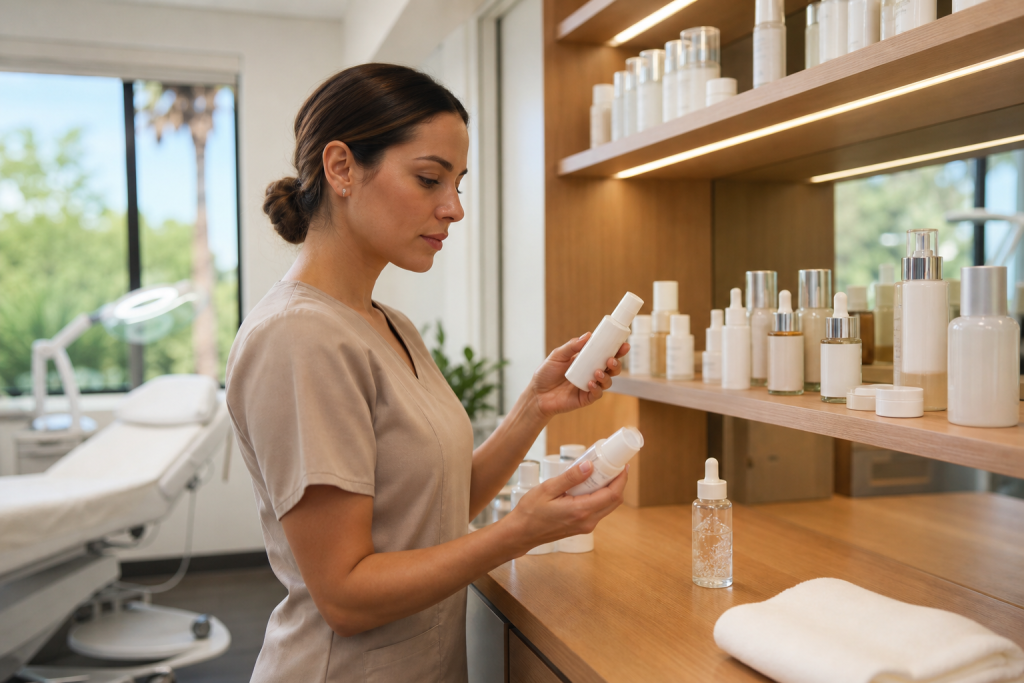
- Ask us which professional products are PFAS‑free: Our staff can share suppliers’ ingredient statements and reasonable assurance that a chosen professional product is not formulated with PFAS, when that information is available.
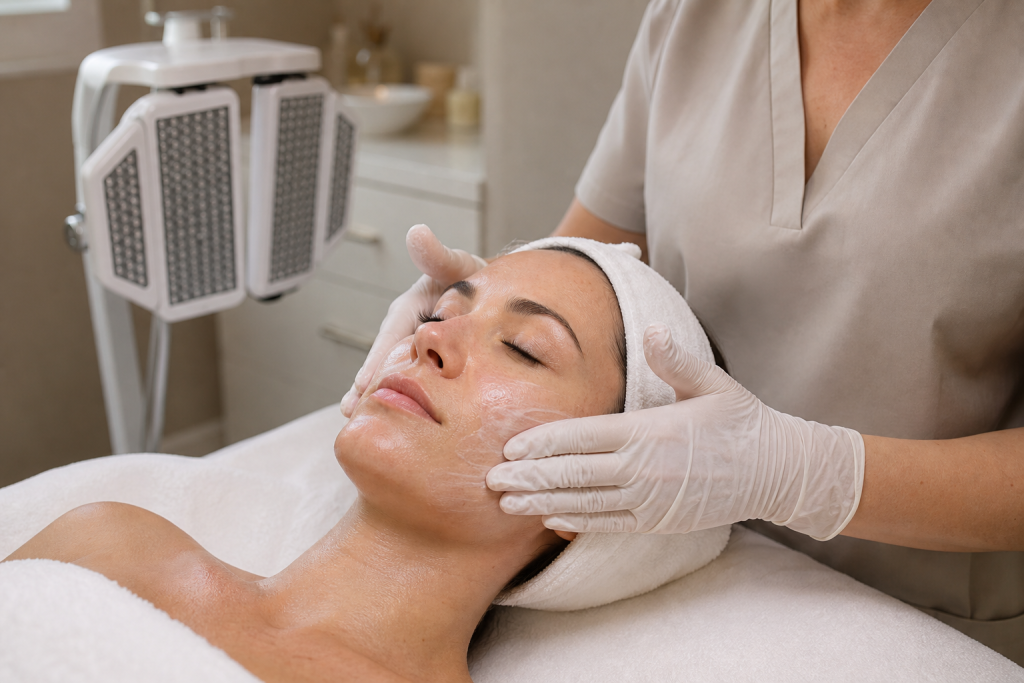
- Choose treatments that limit unknown chemical transfers: For example, select hydration facials, LED light therapy, and high‑frequency add‑ons that do not require long‑wear cosmetic layers during the service.
- Request patch testing: For sensitive skin, request a small patch test of a new product so you can gauge tolerance before full‑face application.
- Prefer clear labeling: When buying at home, look for products that disclose full ingredient lists and avoid vague terms like “proprietary blend” when possible.
Choosing products at home and in salon
In addition, when shopping, consider these practical tips: look for products labeled PFAS‑free, avoid products listing ingredients that include “fluoro” or “perfluoro” prefixes or PTFE‑related terms if you wish to be cautious, and contact manufacturers for confirmation if labels are unclear. Keep in mind the FDA has said more data are needed, so manufacturer transparency currently matters more than regulatory labeling in many cases [2][3].
Professional facials vs. at‑home care: PFAS exposure comparison
| Feature | Professional facial (Asal Skin Lounge) | At‑home routine |
|---|---|---|
| Product sourcing | We can select supplier‑verified PFAS‑free professional formulations upon request. | Consumers must rely on label disclosures and manufacturer replies; product availability varies. |
| Ingredient transparency | Estheticians can review ingredient lists and share them before use. | Ingredient lists are available on packaging, but some items may omit PFAS descriptors. |
| Application control | Controlled dosing and trained application reduce unnecessary coverage. | Users may over‑apply or layer multiple long‑wear products unintentionally. |
| Exposure risk (relative) | Lower if PFAS‑free products are requested; otherwise depends on product choice. | Depends on purchased product types; risk may be higher with long‑wear items if PFAS present. |
Costs, availability, and alternatives
PFAS‑free formulations are increasingly available but can cost more than commodity long‑wear formulas. For salons, switching to verified PFAS‑free professional lines may mean renegotiating supplier terms and sometimes paying higher wholesale prices. For clients, reasonable alternatives include choosing hydrating, non‑transfer products or scheduling treatments that do not require application of long‑wear cosmetics during the service.
Testing, standards, and what to watch for
Regulators and researchers are calling for standardized tests and broader surveillance so that safety determinations can be made with confidence [2][3]. As of Oct. 18, 2026, consumers can monitor FDA updates and peer‑reviewed studies; meanwhile, prioritize ingredient transparency and supplier verification when possible.
Practical next steps for Woodland Hills clients
- Ask at booking if your treatment can be performed with PFAS‑free product options.
- Bring your own PFAS‑free makeup or moisturizer if you prefer; we can work around client preferences.
- If you use long‑wear cosmetics daily, consider alternating with gentler, non‑long‑wear formulations several days per week.
- Stay informed: check FDA notices and peer‑reviewed research summaries for new testing and guidance [2][3].
Limitations and realistic expectations
It is important to be clear about what is known and not known. The FDA’s December 2025 assessment concluded available data are insufficient to determine safety of PFAS in cosmetics as of that date [2]. Meanwhile, sampling studies have found PFAS in some products sold in California, but sampling scope and methods vary, and evidence does not provide precise exposure‑to‑health‑outcome links for routine cosmetic use [3]. Therefore, taking reasonable risk‑mitigation steps—such as prioritizing ingredient transparency—offers a practical balance between caution and everyday life.
How Asal Skin Lounge is responding
Asal Skin Lounge in Woodland Hills is following regulatory guidance and scientific updates and can offer PFAS‑free product alternatives on request. Our estheticians can review product ingredient statements with clients, perform patch tests for new products, and recommend treatments that minimize unnecessary exposure to unknown ingredients.
Resources and citations (selected)
- FDA bulletin: Finds insufficient data to determine safety of PFAS in cosmetic products (Dec. 30, 2025) — official agency announcement [2].
- Independent reporting on renewed PFAS litigation and public attention (Oct. 15, 2026) — national coverage [1].
- Peer‑reviewed sampling of California cosmetics identifying measurable PFAS mass in some products (2024) — scientific analysis [3].
Final thoughts
PFAS in cosmetics Woodland Hills clients should know that evidence shows PFAS can be present in some cosmetic products and that regulators currently call for more data before making safety determinations [2][3]. Therefore, the most practical course is to seek ingredient transparency, ask your esthetician for PFAS‑free professional options, and choose products and treatments that align with your comfort level. If you’d like, we can discuss PFAS‑free alternatives when you book your next facial.
FAQs
Can PFAS be listed clearly on product labels?
Not always. Some PFAS appear under chemical names that do not include “PFAS” in the ingredient list. Therefore, manufacturers’ full ingredient disclosures and supplier documentation are often necessary to confirm absence of PFAS [2][3].
Are certain product types more likely to contain PFAS?
Yes. Sampling studies have shown a higher detection frequency in long‑wear, transfer‑resistant, and waterproof formulations such as some primers, foundations, mascaras, and sunscreens; nonetheless, presence varies by brand and formula [3].
Should I stop using all long‑wear cosmetics?
This article provides general information, not medical advice. If you are concerned, consider reducing frequency of long‑wear product use and choose verified PFAS‑free alternatives. For personalized recommendations, speak with our estheticians during a consultation.
Does Asal Skin Lounge use PFAS in salon treatments?
By default, we select clinically effective professional products. If you prefer PFAS‑free options, request them when booking and we will use verified alternatives whenever possible.
Where can I find more technical or regulatory updates?
Monitor FDA announcements and peer‑reviewed literature for the latest assessments and testing data; these sources are actively updating as more surveillance and standardized methods become available [2][3].
If you want help choosing PFAS‑free options or reserving a tailored facial that limits unknown chemical exposure, book online or call Asal Skin Lounge in Woodland Hills at +1 (747) 746-3818.
Frequently asked questions
What exactly are PFAS and why are they called ‘forever chemicals’?
PFAS are a broad class of synthetic chemicals used for water- and oil-repellency. They are sometimes called ‘forever chemicals’ because some PFAS break down slowly in the environment. Regulatory and scientific reviews stress data gaps in cosmetic safety assessments, so ongoing monitoring is important [2][3].
Are PFAS in cosmetics regulated or banned?
As of the FDA’s Dec. 30, 2025 assessment, the agency concluded there were insufficient data to determine the safety of PFAS in cosmetics and called for more testing and information from manufacturers [2]. That means regulation is evolving and not all PFAS uses are specifically banned in cosmetics as of that date.
How can I reduce my exposure to PFAS from beauty products?
Practical steps include choosing verified PFAS‑free products, avoiding unnecessary long‑wear or waterproof products when concerned, asking manufacturers for ingredient confirmation, and requesting PFAS‑free professional options at your salon. At Asal Skin Lounge, we can use supplier‑verified alternatives upon request.
Does having detectable PFAS in a product mean it is unsafe?
Detectable PFAS indicate presence but do not by themselves establish that a product is unsafe. The FDA and scientists emphasize that more data are needed to link typical cosmetic use to specific health outcomes. Therefore, choosing ingredient transparency and verified PFAS‑free options is a reasonable precaution [2][3].
Can Asal Skin Lounge perform treatments without PFAS-containing products?
Yes. If you prefer PFAS‑free formulations, notify us when booking and we will use verified alternatives whenever feasible. Our estheticians can also provide ingredient lists and perform patch tests for added reassurance.
Need practical help?
Asal Skin Lounge — Contact us to schedule service or request a quote. Service area: Woodland Hills.
Topic in context
Sources and further reading
These links were validated and checked when possible when this article was created; some publishers limit automated requests. Facts, guidance, prices, regulations, and availability can change.
- Des Moines explores new “forever chemical” lawsuits — Axios (2026-10-15)
- FDA Finds Insufficient Data to Determine Safety of PFAS in Cosmetic Products — U.S. Food and Drug Administration (FDA) (2025-12-30)
- The Total Mass of Per- and Polyfluoroalkyl Substances (PFASs) in California Cosmetics — PubMed / NIH (ACS Environmental Science & Technology paper available via PMC) (2024-06-27)