
high frequency vs galvanic vs LED add-ons Woodland Hills
high frequency vs galvanic vs LED add-ons Woodland Hills: Compare high frequency vs galvanic vs LED add-ons Woodland Hills: learn safety, common contraindicati…
View article sections
- 01Table of contents
- 02high frequency vs galvanic vs LED add-ons Woodland Hills
- 03Opening summary (quick answer)
- 04How each add-on works and what it’s commonly used for
- 05Confirmed facts, official announcements, and key manufacturer points
- 06Common contraindications — practical screening checklist (use before booking)
- 07Risks, limitations, and realistic expectations
- 08How Asal Skin Lounge screens and documents device use (what to expect)
- 09Quick comparison table: high-frequency vs galvanic vs LED
- 10Alternatives when an add-on is contraindicated
- 11Practical next steps for Woodland Hills clients
- 12Sources and verifiable guidance
- 13Confirmed vs. analysis vs. estimates
- 14Final recommendations
- 15FAQs
- 16Related guides and resources
- 17Frequently asked questions
- 18Need practical help?
Quick summary: This guide compares high-frequency, galvanic, and LED facial add-ons and highlights confirmed safety points, common contraindications, and studio screening practices. It explains how each modality works and what Woodland Hills clients should disclose and expect before booking at Asal Skin Lounge.
Estimated reading time: 10 minute read
Table of contents
- high frequency vs galvanic vs LED add-ons Woodland Hills
- Opening summary (quick answer)
- Opening 100 words with focus keyphrase
- How each add-on works and what it’s commonly used for
- High-frequency (what it is and common uses)
- Galvanic (what it is and common uses)
- LED light therapy (what it is and common uses)
- Confirmed facts, official announcements, and key manufacturer points
- Common contraindications — practical screening checklist (use before booking)
- Risks, limitations, and realistic expectations
- How Asal Skin Lounge screens and documents device use (what to expect)
- Quick comparison table: high-frequency vs galvanic vs LED
- Alternatives when an add-on is contraindicated
- Practical next steps for Woodland Hills clients
- Sources and verifiable guidance
- Confirmed vs. analysis vs. estimates
- Final recommendations
- FAQs
- Related guides and resources
- Frequently asked questions
- Are high-frequency, galvanic, or LED add-ons safe for everyone?
- How should I prepare for a facial with an electrical or light add-on?
- Do manufacturers or the state require special training to use these devices?
- If I can’t have one add-on, what are safe alternatives?
- Need practical help?
- Topic in context
- Sources and further reading
What changed, when, and why it matters: On 2026-10-17, this guide summarizes current device guidance and local safety practices so Woodland Hills clients can choose appropriate electrical or light add-ons for facials. It reflects device manuals and state board guidance that emphasize trained screening, following manufacturer instructions, and documenting contraindications — steps that affect who can safely receive high-frequency, galvanic, or LED treatments in a professional studio.
This article compares three common professional facial add-ons, explains confirmed safety points and limits, lists practical screening steps, and gives alternatives for sensitive cases — all to help you decide before booking at Asal Skin Lounge in Woodland Hills.
high frequency vs galvanic vs LED add-ons Woodland Hills
This dated, source-based update separates verified details, limitations, and practical next steps.
Opening summary (quick answer)
The short answer: high-frequency, galvanic, and LED add-ons use different energies and target different concerns. High-frequency uses a low-current, high-frequency electrode for increased circulation and surface clearing. Galvanic therapy uses direct current for deep infusion of charged serums. LED uses specific light wavelengths to target inflammation and cellular signaling. For safety, trained screening and strict adherence to manufacturer contraindications and California Board rules are required; therefore, ask about screening before adding these services to your facial.
Opening 100 words with focus keyphrase
Choosing between high frequency vs galvanic vs LED add-ons Woodland Hills starts with safety screening and clear expectations. At Asal Skin Lounge, licensed technicians evaluate medical history, current medications, and local skin condition before recommending an add-on. For example, pregnancy, implanted electrical devices, active infection, or recent aggressive resurfacing often rule out one or more modalities. In addition, manufacturers and the California Board require compliant practices and written informed consent for device use, so clients should expect a brief intake and documented clearance before treatment.
How each add-on works and what it’s commonly used for
High-frequency (what it is and common uses)
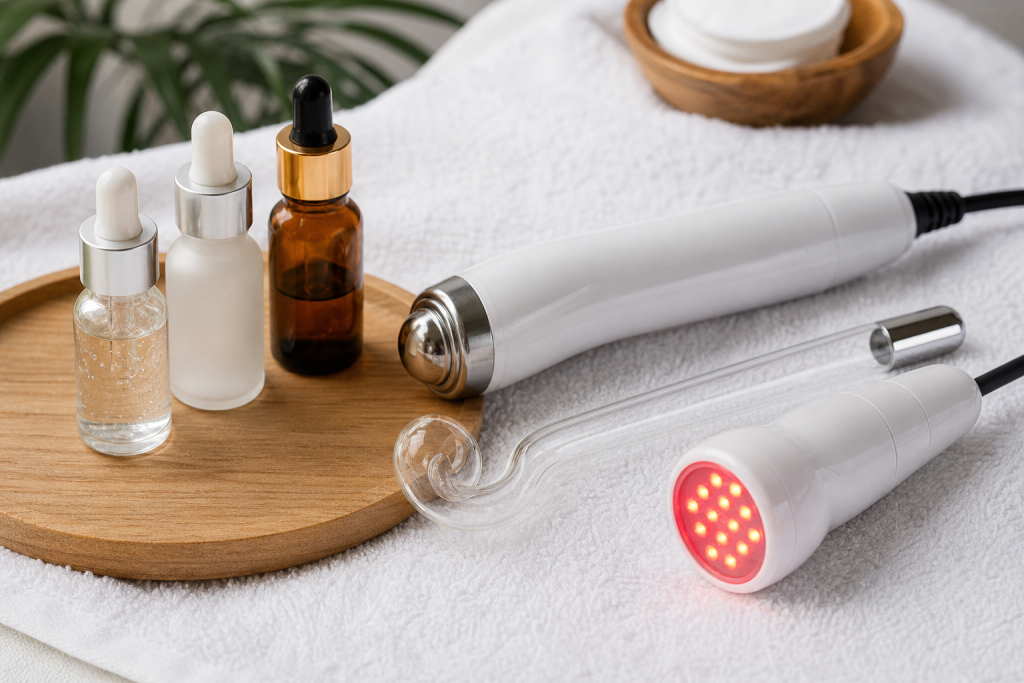
High-frequency devices deliver a mild alternating current through a glass electrode filled with inert gas. The result is a gentle warming, localized oxygenation effect, and a mild antiseptic action on the skin surface. Estheticians commonly use it to support pore clearing, reduce surface oiliness, and calm minor congestion during extractions or finishing steps [3].
Galvanic (what it is and common uses)
Galvanic therapy uses a steady direct current to promote iontophoresis and desincrustation. In practice, galvanic devices help drive charged serums deeper into the skin (iontophoresis) and soften sebum buildup (desincrustation). Manufacturers’ product manuals list explicit contraindications and operator instructions that clinics must follow [1].
LED light therapy (what it is and common uses)
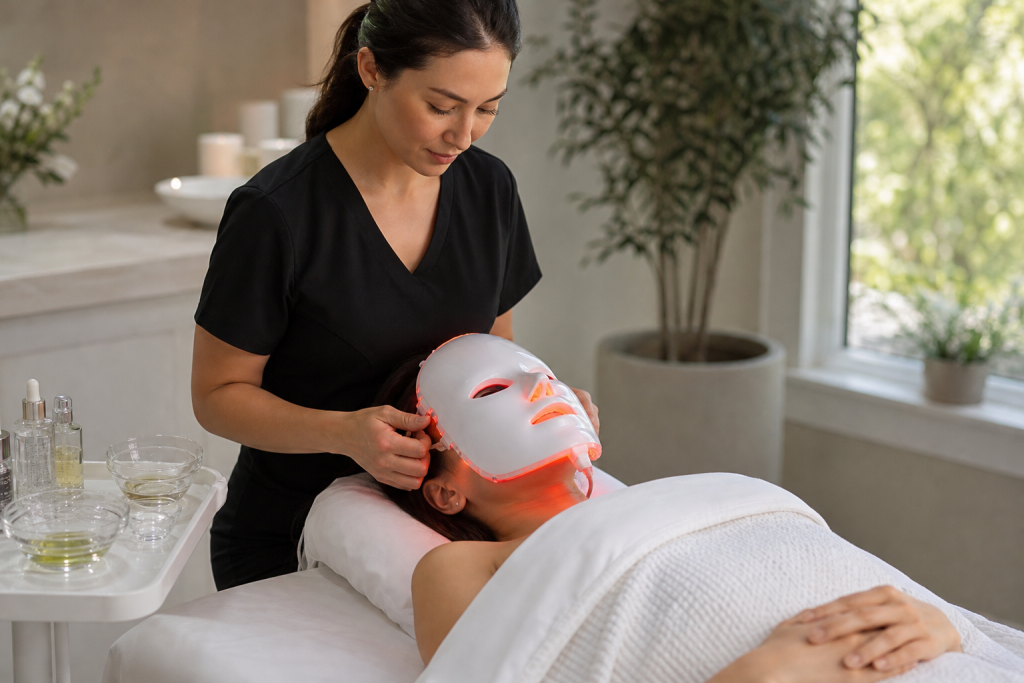
LED devices emit specific wavelengths (commonly red or blue) to influence skin cells and surface bacteria. Red light is frequently used to address visible signs of aging and to support repair, while blue light is used selectively for surface-level bacteria control. LED is noninvasive and does not use electrical current through the body in the same way as galvanic or high-frequency tools.
Confirmed facts, official announcements, and key manufacturer points
- Official state guidance: The California Board of Barbering and Cosmetology requires that licensed providers follow device-specific manufacturer instructions and screen clients for contraindications before using skin devices; the Board bulletin clarifies that licensed facilities must maintain documentation and training records as of its 2023 industry notice [2].
- Manufacturer contraindications (galvanic): Galvanic device manuals list common contraindications — including pregnancy, implanted electrical devices (e.g., pacemakers), recent cosmetic surgery, and open infections — and require operators to follow specified probe placement and current limits [1].
- High-frequency precautions: High-frequency guides note important cautions for clients with epilepsy, implanted electrical devices, active metal implants in the treatment field, or severe photosensitivity; disposable or properly sterilized electrodes and correct grounding are emphasized [3].
These are confirmed points sourced from manufacturer materials and the state Board; they inform routine clinic screening and device selection.
Common contraindications — practical screening checklist (use before booking)
As of 2026-10-17, ask your provider to check and document the following. Items marked with a source reflect where the contraindication is explicitly noted:
- Pregnancy — may preclude galvanic and sometimes other electrical therapies (manufacturer guidance) [1].
- Pacemaker, defibrillator, or other implanted electrical device — contraindicated for galvanic and often for high-frequency devices [1][3].
- Active infection, open wounds, or inflamed cystic acne in the treatment area — avoid until resolved [1][3].
- Recent chemical peel, microdermabrasion, or ablative resurfacing — wait until the skin has healed per device and procedure instructions [1][2].
- Epilepsy or seizure disorders — high-frequency devices may pose a risk; consult your clinician [3].
- Photosensitizing medications or light-sensitive conditions — disclose before LED or any light therapy.
- Metal implants or plates in the facial area — discuss with the provider; some devices are contraindicated [1][3].
- Recent or planned pregnancy testing or fertility treatments — inform your provider; manufacturer and board guidance recommend conservative screening.
Note: This checklist is for education; the final screening is the provider’s responsibility. Always disclose full medical history and current medications.
Risks, limitations, and realistic expectations
All three add-ons are generally low-risk when administered by trained, licensed professionals who follow manufacturer specifications and state rules. However, potential problems include transient redness, mild irritation, or, rarely, burns from improper settings. For example, misuse of a galvanic device at too high current may cause localized discomfort, and touching an electrode to broken skin can increase risk of irritation [1].
Furthermore, LED light therapy is not a substitute for medical treatment; it may reduce visible inflammation for some clients but is not a cure for underlying dermatologic disease. As a result, technicians will decline add-ons when contraindications are present and recommend alternative approaches.
How Asal Skin Lounge screens and documents device use (what to expect)
At our Woodland Hills studio, expect a short intake form and verbal screening that covers the checklist above. In addition, technicians will review device-specific consent and note which add-on was used in the client record. This practice aligns with California Board expectations for documentation and training [2].
Quick comparison table: high-frequency vs galvanic vs LED
| Feature | High-frequency | Galvanic | LED |
|---|---|---|---|
| How it works | Alternating current via gas-filled electrode | Direct current for iontophoresis/desincrustation | Specific light wavelengths (red/blue) |
| Common uses | Pore clearing, circulation, surface calming | Serum infusion, deep cleansing of sebum | Reduce visible inflammation; skin rejuvenation |
| Key contraindications | Epilepsy, implanted electrical devices; active infection [3] | Pregnancy, pacemakers, open wounds, recent surgery [1] | Photosensitivity, certain medications (check history) |
| Typical session time | 5–15 minutes | 5–20 minutes | 10–30 minutes |
| Risk level (when done properly) | Low | Low to moderate (operator-dependent) | Low |
| Estimated extra cost (studio add-on) | Estimate $20–$60 | Estimate $30–$80 | Estimate $25–$75 |
Notes: Costs are estimates for Woodland Hills area add-ons and vary by provider and package; these are labeled as estimates and may change.
Alternatives when an add-on is contraindicated
- Topical mixing and professional-grade serums for hydration or calming when galvanic is not possible.
- Manual lymphatic or facial massage to improve circulation instead of high-frequency for clients with implants or seizure history.
- Non-LED calming modalities such as cold therapy or vitamin-rich masks when photosensitivity is a concern.
In many cases, technicians can tailor a facial plan that uses safe modalities to reach similar goals without crossing contraindications.
Practical next steps for Woodland Hills clients
- Before booking, review your medical history and medication list, and be ready to disclose it during intake.
- Ask which device model your esthetician uses and whether the studio follows the manufacturer manual and California Board guidance [1][2].
- Request a documented screening and informed consent for any electrical or light-based add-on.
- If in doubt, choose a conservative option or delay the add-on until cleared by a medical provider.
Sources and verifiable guidance
- Galvanic device manual — lists contraindications and operator instructions (manufacturer) [1].
- California Board Industry Bulletin — requires following manufacturer instructions and maintaining documentation for skin devices (official guidance, 2023-08-07) [2].
- High-frequency device safety guide — outlines typical precautions and contraindications for high-frequency electrodes [3].
These are the primary documents that most licensed studios and manufacturers reference when creating screening and training policies.
Confirmed vs. analysis vs. estimates
- Confirmed facts: Manufacturer manuals and the California Board bulletin require screening and adherence to contraindications [1][2].
- Official announcements: The Board’s industry bulletin (2023-08-07) is an official notice to licensees about safe device use [2].
- Analysis: Recommendations about choosing one add-on over another are interpretive and based on device mechanisms and common clinical practice.
- Estimates: Cost estimates and typical session times are approximate and vary by provider and location.
Final recommendations
If you’re unsure which add-on fits your needs, schedule a consultation and disclose your full medical history. For many clients, a gentle LED finish is low-risk and well tolerated; however, for active congestion or deep serum infusion goals, galvanic or high-frequency may be more appropriate if screening clears you. Always confirm that the studio documents screening and follows the device manual and state guidance before treatment.
FAQs
Q: Are these add-ons painful?
A: Most clients report minimal to no pain. High-frequency can feel like mild warmth and a tingling sensation; galvanic should be comfortable at proper settings. LED is typically painless. If you feel sharp pain, the operator should stop and reassess.
Q: Can I have these add-ons during pregnancy?
A: Pregnancy is often listed as a contraindication for galvanic devices and may lead studios to avoid some electrical modalities. Always disclose pregnancy in intake and follow your technician’s guidance [1].
Q: How soon after a peel or laser can I use these devices?
A: Wait until the skin barrier has fully healed and follow manufacturer timelines and your treating clinician’s advice. The California Board recommends conservative clearance after resurfacing procedures [2].
Q: Are at-home devices comparable to professional add-ons?
A: At-home tools may offer milder benefits but have lower output and different safety controls. Professional devices are used with trained screening and protocols, which affects both safety and effectiveness.
If you have more questions or want a personalized recommendation, contact Asal Skin Lounge at our Woodland Hills studio. Book online or call +1 (747) 746-3818 to schedule a consultation and treatment.


Frequently asked questions
Are high-frequency, galvanic, or LED add-ons safe for everyone?
Not always. Safety depends on individual medical history and device-specific contraindications. Pregnancy, implanted electrical devices (such as pacemakers), active infections, and recent aggressive resurfacing are common reasons to avoid some add-ons. Licensed providers should screen and document clearance before use [1][2][3].
How should I prepare for a facial with an electrical or light add-on?
Disclose your full medical history and current medications during intake. Avoid heavy exfoliation before treatment, follow any pre-treatment instructions from your esthetician, and arrive with clean skin. The studio will obtain informed consent and document device choice and settings [2].
Do manufacturers or the state require special training to use these devices?
Yes. Manufacturer manuals specify operator instructions and contraindications, and the California Board bulletin advises licensees to follow these instructions and maintain training and documentation as part of compliance [1][2].
If I can’t have one add-on, what are safe alternatives?
Alternatives include topical professional serums, manual facial or lymphatic massage, cold therapy, and mask treatments. Your esthetician can tailor a safe plan that targets similar goals without using contraindicated devices.
Need practical help?
Asal Skin Lounge — Contact us to schedule service or request a quote. Service area: Woodland Hills.
Topic in context
Sources and further reading
These links were validated and checked when possible when this article was created; some publishers limit automated requests. Facts, guidance, prices, regulations, and availability can change.
- Galvanic Facial Skincare Unit — Product Manual (contraindications) — Skin+Act (device manual) — primary source
- Industry Bulletin – Skin Care Machines/Devices (Board notice) — California Board of Barbering and Cosmetology (2023-08-07) — primary source
- High Frequency Machine — Facial Guide (safety and contraindications) — EstheticianEquip