
California salon infection control waxing safety — Current Guide
California salon infection control waxing safety: Updated Oct 12, 2026: practical guidance on California salon infection control waxing safety for clients book…
View article sections
- 01Table of contents
- 02California salon infection control waxing safety: the confirmed changes and sources
- 03Practical checklist: questions to ask before waxing or extractions
- 04How MRSA and skin‑infection risks relate to waxing and extractions
- 05Salon practices that indicate good compliance (what to look for)
- 06Comparing options: licensed professional waxing vs at‑home waxing
- 07Costs and availability
- 08Reasonable next steps for clients in Woodland Hills and nearby communities
- 09Summary: what clients should remember
- 10Frequently Asked Questions
- 11Related guides and resources
- 12Frequently asked questions
- 13Need practical help?
- 14Topic in context
- 15Sources and further reading
- 16Related services and resources
Quick summary: This article summarizes confirmed changes from the California Board of Barbering and Cosmetology (consumer guidance published Oct 12, 2026) and the 2026 Act & Regulations affecting salon infection control for waxing and extractions. It provides a practical checklist of questions to ask salons, identifies indicators of good compliance, compares licensed services with at‑home options, and lists reasonable next steps for clients.
Estimated reading time: 10 minute read
Table of contents
- California salon infection control waxing safety: the confirmed changes and sources
- What these documents mean for clients (analysis)
- Practical checklist: questions to ask before waxing or extractions
- How MRSA and skin‑infection risks relate to waxing and extractions
- Salon practices that indicate good compliance (what to look for)
- Limitations and enforcement (confirmed and analysis)
- Comparing options: licensed professional waxing vs at‑home waxing
- Costs and availability
- Reasonable next steps for clients in Woodland Hills and nearby communities
- When to choose a medical professional instead
- Summary: what clients should remember
- Frequently Asked Questions
- 1. Are salons required to use single‑use waxing sticks?
- 2. Can waxing spread MRSA?
- 3. What should I do if I get an infection after a salon service?
- 4. Do I need to disclose medications or health conditions before waxing?
- 5. How can I verify a salon follows the 2026 rules?
- Related guides and resources
- Frequently asked questions
- Are salons required to use single‑use waxing sticks?
- Can waxing spread MRSA?
- What should I do if I get an infection after a salon service?
- Do I need to disclose medications or health conditions before waxing?
- How can I verify a salon follows the 2026 rules?
- Need practical help?
- Topic in context
- Sources and further reading
What changed (Oct 12, 2026) and why it matters: On October 12, 2026 the California Board of Barbering and Cosmetology published an updated consumer-facing infection-protection guidance and the Board’s 2026 Act & Regulations took effect in the state. This guidance affects how licensed salons handle single-use items, disinfection, glove and hand hygiene, and client screening for visible skin infection—practices that directly affect waxing and extractions performed in Woodland Hills and nearby communities [1][2].
In plain terms: these documents make clearer baseline expectations for safe waxing services and set stronger reference standards that salons must follow. Below you’ll find confirmed facts, practical questions to ask before a waxing or extraction appointment, comparisons with at-home options, likely risks and limits, plus sensible next steps for booking safely.
California salon infection control waxing safety is the focus of this dated, source-based update. As a result, the article separates verified details from analysis.
California salon infection control waxing safety: the confirmed changes and sources
Confirmed facts: the Board’s consumer guidance published October 12, 2026 outlines infection-protection expectations for licensed practitioners and facilities. The 2026 Act & Regulations (excerpt) clarifies legal requirements for sanitation, recordkeeping, and when instruments must be single-use or sterilized as of April 1, 2026 [1][2].
Official announcements and primary sources:
- Official consumer guidance from the California Board of Barbering and Cosmetology, published October 12, 2026 (consumer infection protection page) — confirmed [1].
- 2026 Board of Barbering and Cosmetology Act & Regulations (excerpt), published April 1, 2026 — confirmed regulatory text that underpins licensing enforcement [2].
- CDC prevention guidance for MRSA and wound-related infection control provides independent, evidence-based steps for hand hygiene, wound covering, and surface cleaning that are relevant to close-contact services like waxing and extractions — independent public health guidance (as of June 27, 2025) [3].
What these documents mean for clients (analysis)
First, licensed salons are expected to follow specific cleaning, disinfection, and single-use rules or validated sterilization procedures for reusable instruments. Second, practitioners should perform pre-service skin assessments and refuse service when a client has an active skin infection or an open wound. Third, salons should be able to explain their infection-control routine if asked. These are reasonable expectations based on the Board’s materials and the Act & Regulations [1][2].
Practical checklist: questions to ask before waxing or extractions
Recommendation (analysis): before a waxing or extraction appointment, ask the salon these short, direct questions. Staff should answer clearly or offer to show you policies or supplies.
- Do you follow the Board’s infection-protection guidance and the 2026 regulations? (If yes, they can cite the Board or show posted guidance.) [1][2]
- Are waxing sticks, gloves, and disposable sheets single-use and discarded after each client? (Single-use items are a primary prevention step.) [1][2]
- How do you disinfect non‑disposable tools and treatment surfaces between clients? (They should describe an EPA-registered or validated disinfectant and glove/hand hygiene steps.) [1][2][3]
- Will the practitioner perform a skin assessment and advise against service for active infections or open wounds? (Licensed providers are expected to screen clients.) [1][2]
- What aftercare do you provide to reduce infection risk and identify signs of infection early? (Look for written aftercare instructions.)
If staff appear uncertain or refuse to answer, consider rescheduling or using a salon that posts its infection-control policies publicly.
How MRSA and skin‑infection risks relate to waxing and extractions
Confirmed public-health facts: methicillin‑resistant Staphylococcus aureus (MRSA) is spread by direct contact with infected wounds or contaminated surfaces; good hand hygiene, covering wounds, and appropriate surface disinfection reduce transmission risk [3].
Analysis: waxing and extractions briefly break skin or remove hair from follicles and therefore carry a small risk of introducing bacteria if instruments, hands, or surfaces are contaminated. Proper glove use, single-use applicators for wax, and immediate post‑service wound care lower that risk. However, no practice reduces risk to zero; clients with recent skin infections or open lesions should delay service until healed, as recommended by public health guidance and common-sense clinical precautions [1][2][3].
Salon practices that indicate good compliance (what to look for)
- Visible, labeled disinfectants and a posted sanitation policy referencing the Board’s guidelines — indicates alignment with state rules [1][2].
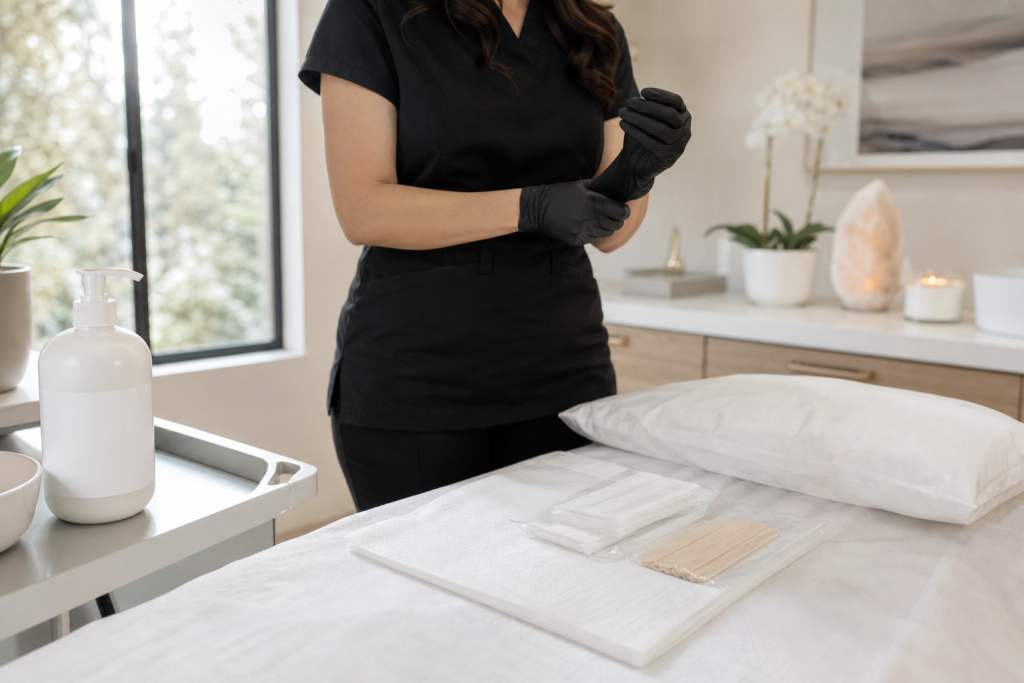
- Providers change gloves between clients and after any contact with non-intact skin — aligns with standard infection-control practice [1][2][3].
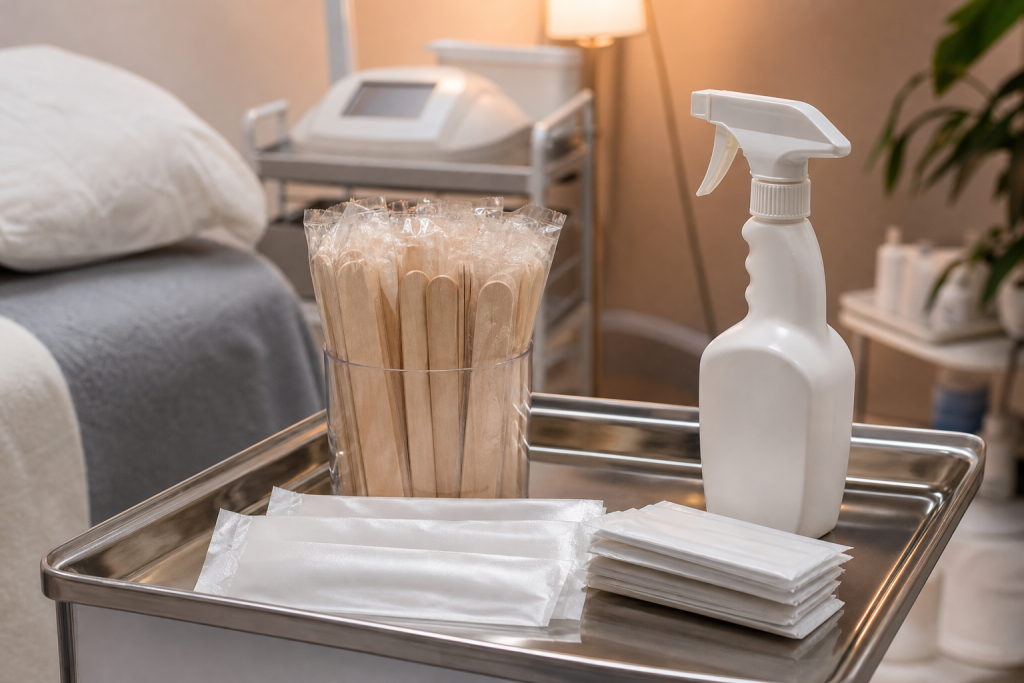
- Sealed, individually wrapped single-use wax applicators or pre-portioned hard wax beads — reduces cross-contamination risk.
- Disposable headband/treatment linens replaced for each client and laundry handled according to regulation — reduces fomite transmission risk [1][2].
- Clinician documents client consent, screens for medications/blood thinners, and gives written aftercare — good practice and often required by salon policy [1][2].
Limitations and enforcement (confirmed and analysis)
Confirmed: the Board provides rules and inspections but cannot prevent every lapse; enforcement relies on licensing inspections, consumer complaints, and salon compliance with the Act & Regulations [2].
Analysis: even with stronger rules, isolated noncompliance or human error can occur. Consumers should use the checklist above and report suspected violations to the Board. Complaints prompt investigations and are a primary enforcement tool under state law [2].
Comparing options: licensed professional waxing vs at‑home waxing
| Dimension | Licensed salon (Woodland Hills) | At‑home waxing | Prior salon practices (older/unclear compliance) |
|---|---|---|---|
| Regulatory oversight | Subject to Board rules and inspections (2026 Act & Regulations) — confirmed [2] | No licensing oversight; consumer responsible for sterilization and supplies | Variable; older rules were less prescriptive about some practices [2] |
| Single-use items | Expected and commonly used; sticks and disposable liners standard — recommended by Board guidance [1] | Depends on user; risk of reuse if supplies are limited | May have used reusable items or inconsistent disposables |
| Instrument sterilization | Validated sterilization or single-use for instruments that contact non-intact skin — per regulations [2] | Home users rarely have validated sterilizers (autoclaves) | Varied; some salons did not meet current best-practice until recent regulatory updates |
| Risk of infection | Lower when rules followed, with screening and post-care instructions | Higher if technique or hygiene is poor | Dependent on salon compliance; older lapses increased risk |
Costs and availability
Confirmed: the Board’s updated rules apply statewide and do not mandate specific pricing for services; therefore, costs for salons to meet requirements vary by business. Some salons may invest in sterilization equipment or upgraded disposables, and those costs can be reflected in service prices (estimate: small to moderate capital or supply cost increases; as of Oct 12, 2026 this varies by salon) [2].
Analysis: most reputable salons already budget for disposables and disinfectants. If a salon’s prices are substantially lower than local norms, ask whether single‑use and sterilization standards are consistently followed.
Reasonable next steps for clients in Woodland Hills and nearby communities
- Ask a salon to describe its infection-control routine before booking. Use the checklist above. (Recommendation/analysis.)
- Reschedule if you or your provider notice active infection, open wounds, or unexplained skin irritation on the treatment area. (Recommendation informed by Board guidance and public-health practice.) [1][2][3]
- Request written aftercare and follow it carefully; contact the salon if you see signs of infection (increased redness, swelling, pain, or discharge). (General educational information.)
- If you see a serious lapse in hygiene, report it to the California Board of Barbering and Cosmetology. Complaints can trigger inspections and enforcement. (Confirmed procedure) [2]
When to choose a medical professional instead
Analysis and conservative guidance: if you have active inflammatory skin disease, compromised immunity, systemic illness, or a history of recurrent skin infections, consult a licensed medical provider before elective waxing or extractions. Salons follow cosmetology rules, not medical standards, so a clinician’s clearance may be appropriate for higher-risk clients.
Summary: what clients should remember
As of October 12, 2026 the California Board’s updated consumer guidance and the 2026 Act & Regulations clarify infection-protection expectations that affect waxing and extractions [1][2]. Paired with CDC prevention advice about MRSA and surface cleaning, these documents provide a practical safety baseline for clients booking services in Woodland Hills and nearby areas [3].
Confirmed: the Board publishes the rules and guidance; enforcement depends on inspections and consumer complaints [1][2]. Analysis: asking a few direct questions and watching for basic hygiene practices gives you a sensible way to reduce risk when booking waxing or extractions.
Frequently Asked Questions
1. Are salons required to use single‑use waxing sticks?
Answer (confirmed and analysis): The Board’s infection-protection guidance emphasizes single‑use items for anything that could introduce contamination, and the 2026 regulations specify when items must be single‑use or sterilized. Ask your salon to confirm their single‑use policy for applicators and consumables [1][2].
2. Can waxing spread MRSA?
Answer (confirmed): MRSA spreads through direct contact with infected wounds or contaminated surfaces. Proper hand hygiene, covering wounds, and disinfection reduce the risk during close-contact services like waxing and extractions, per CDC guidance [3].
3. What should I do if I get an infection after a salon service?
Answer (general educational): Seek medical attention if you have increasing redness, swelling, pain, fever, or drainage. Also report the incident to the salon and consider filing a complaint with the California Board of Barbering and Cosmetology so inspectors can follow up [2].
4. Do I need to disclose medications or health conditions before waxing?
Answer (recommendation/analysis): Yes—inform your provider of blood thinners, topical prescriptions, isotretinoin use, or other conditions that affect skin healing. The practitioner should document contraindications and advise whether to proceed or defer. This is a common salon policy and consistent with safe practice [1][2].
5. How can I verify a salon follows the 2026 rules?
Answer (practical): Ask to see their written sanitation policy, licensed certificates, and receipts for EPA‑registered disinfectants or sterilization logs. If you remain unsure, you may contact the California Board of Barbering and Cosmetology for guidance on complaint procedures [1][2].
For personalized waxing, facials, and waxing-with-extractions performed with attention to the Board’s updated infection-protection guidance, consider booking at Asal Skin Lounge. We follow state guidance, perform pre-service assessments, and provide written aftercare for every waxing and extraction. To schedule in Woodland Hills, book online or call +1 (747) 746-3818.


Frequently asked questions
Are salons required to use single‑use waxing sticks?
The Board’s infection-protection guidance emphasizes single‑use items for anything that could introduce contamination, and the 2026 regulations clarify when items must be single‑use or sterilized. Ask your salon to confirm their single‑use policy for applicators and consumables [1][2].
Can waxing spread MRSA?
MRSA spreads through direct contact with infected wounds or contaminated surfaces. Proper hand hygiene, covering wounds, and disinfection reduce the risk during close-contact services like waxing and extractions, per CDC guidance [3].
What should I do if I get an infection after a salon service?
Seek medical attention for increasing redness, swelling, pain, fever, or drainage. Also report the incident to the salon and consider filing a complaint with the California Board of Barbering and Cosmetology so inspectors can follow up [2].
Do I need to disclose medications or health conditions before waxing?
Yes—inform your provider of blood thinners, topical prescriptions, isotretinoin use, or other conditions that affect skin healing. The practitioner should document contraindications and advise whether to proceed or defer, which is consistent with safe practice [1][2].
How can I verify a salon follows the 2026 rules?
Ask to see their written sanitation policy, licensed certificates, and records for disinfectant supplies or sterilization logs. If you remain unsure, contact the California Board of Barbering and Cosmetology for guidance on complaint procedures [1][2].
Need practical help?
Asal Skin Lounge — Contact us to schedule service or request a quote. Service area: Woodland Hills.
Topic in context
Sources and further reading
These links were validated and checked when possible when this article was created; some publishers limit automated requests. Facts, guidance, prices, regulations, and availability can change.
- Infection Protection – California Board of Barbering and Cosmetology — California Board of Barbering and Cosmetology (barbercosmo.ca.gov) (2026-10-12) — primary source
- 2026 Board of Barbering and Cosmetology Act and Regulations (excerpt) — California Board of Barbering and Cosmetology (barbercosmo.ca.gov) (2026-04-01) — primary source
- Preventing Methicillin-resistant Staphylococcus aureus (MRSA) — Centers for Disease Control and Prevention (CDC) (2025-06-27)