
Sensitive Reactive Skin Facial Care Woodland Hills Guide
sensitive reactive skin facial care Woodland Hills: Practical tips for sensitive reactive skin facial care Woodland Hills — safe pre/post measures, calming fac…
View article sections
- 01Why “sensitive reactive skin facial care Woodland Hills” matters now
- 02How Asal Skin Lounge approaches sensitive reactive skin facial care Woodland Hills clients
- 03Pre-facial checklist: reduce risk and optimize comfort
- 04What to expect during a calming facial
- 05Periprocedural timing and ingredient notes
- 06Comparing facial types and add-ons for reactive skin
- 07Professional facials versus at-home care for reactive skin
- 08Realistic benefits and limitations
- 09Risks and likely problems to watch for
- 10Costs, availability, and next steps
- 11Service comparisons at a glance
- 12FAQ
- 13Final practical note and booking
- 14Related guides and resources
- 15Frequently asked questions
- 16Need practical help?
- 17Topic in context
- 18Sources and further reading
What changed, on 2026-10-22, and why it matters: Seasonal shifts and broader home use of strong actives have increased flare-ups for many clients. Asal Skin Lounge updated its recommended periprocedural checklist to reduce irritation risk and prioritize calming, customizable services. This matters if you live in Woodland Hills and are seeking sensitive reactive skin facial care Woodland Hills services because small timing and product changes around a professional facial can lower the chance of post-treatment flares.
Why “sensitive reactive skin facial care Woodland Hills” matters now
Many people report heightened reactivity after increased retinoid or exfoliant use and during seasonal temperature swings. Professional guidance that focuses on pre- and post-facial measures can reduce irritation and improve comfort during a treatment [3]. (Analysis.)
Confirmed facts and official guidance
- Trigger avoidance—such as reducing heat, harsh exfoliants, and known topical irritants—can reduce flares for people with rosacea-prone or reactive skin [1]. (Confirmed fact; American Academy of Dermatology guidance.)
- Healthy skin maintenance includes gentle cleansing, regular moisturizing, and daily sunscreen to support barrier function [2]. (Official guidance; NIH.)
- Expert consensus supports using barrier-friendly, anti-inflammatory, and hydrating ingredients before and after aesthetic procedures and suggests pausing or modifying potent actives around treatments [3]. (Peer-reviewed consensus.)
How Asal Skin Lounge approaches sensitive reactive skin facial care Woodland Hills clients
At our Woodland Hills studio we start with a careful intake and skin history to identify recent use of retinoids, AHAs/BHAs, topical prescriptions, or recent waxing. This step matters because it guides safe treatment selection and the timing of your appointment. (Analysis.)
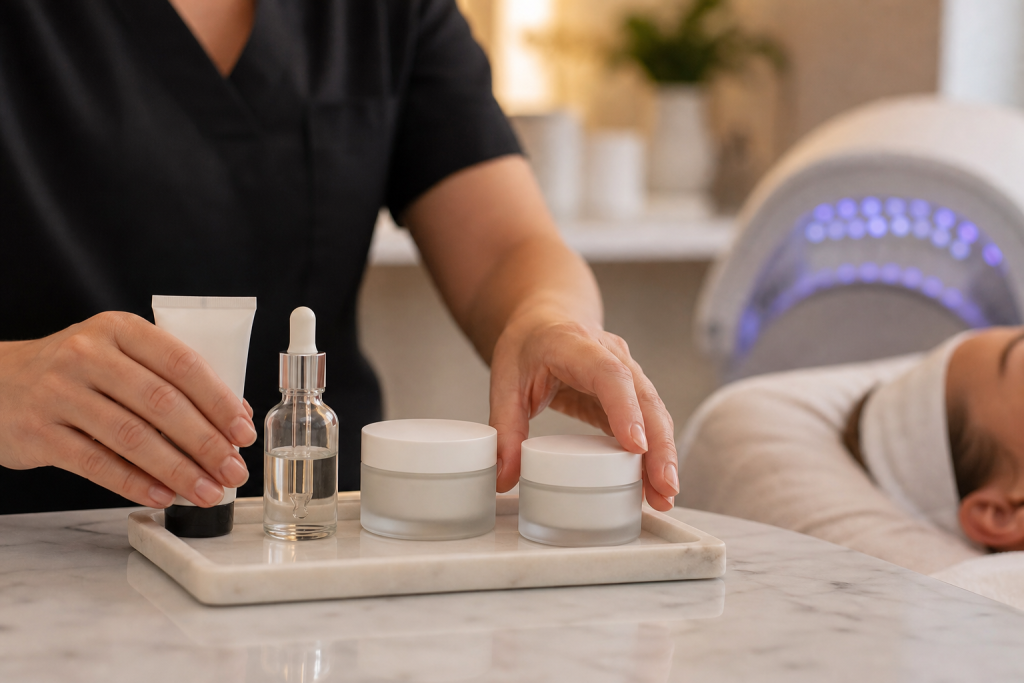
We favor calming, low-irritation options such as the Soothing Glow Facial, hydrating treatments, and manual lymphatic-style massage. When appropriate, noninvasive add-ons like low-level LED light or a brief galvanic deep-infusion using gentler serums help with hydration without introducing aggressive exfoliation.
Intake and red flags
- Recent chemical peels, microdermabrasion, or laser treatments—disclose these before booking.
- Daily use of prescription topical treatments—tell your esthetician; you may need a modified protocol.
- Severe redness, open sores, or infection—these should be addressed with a medical provider first.
Pre-facial checklist: reduce risk and optimize comfort
Follow these practical steps in the days before your appointment. (Analysis and estimate.)
- Avoid strong actives such as retinoids, concentrated AHAs/BHAs, and at-home chemical peels for several days to weeks before a professional facial, depending on the product and recent treatments; consult your esthetician for specific timing [3]. (Peer-reviewed consensus; analysis.)
- Skip waxing on the face within a few days of your facial unless instructed otherwise, and avoid aggressive shaving immediately before an appointment.
- Use a gentle fragrance-free cleanser and a barrier-repair moisturizer; continue sunscreen daily [2]. (Official guidance; NIH.)
- Note any trigger foods, beverages, or activities that increase flushing and avoid them on your appointment day—heat, alcohol, and spicy foods are common triggers for reactive skin [1]. (Confirmed fact; AAD.)
What to expect during a calming facial
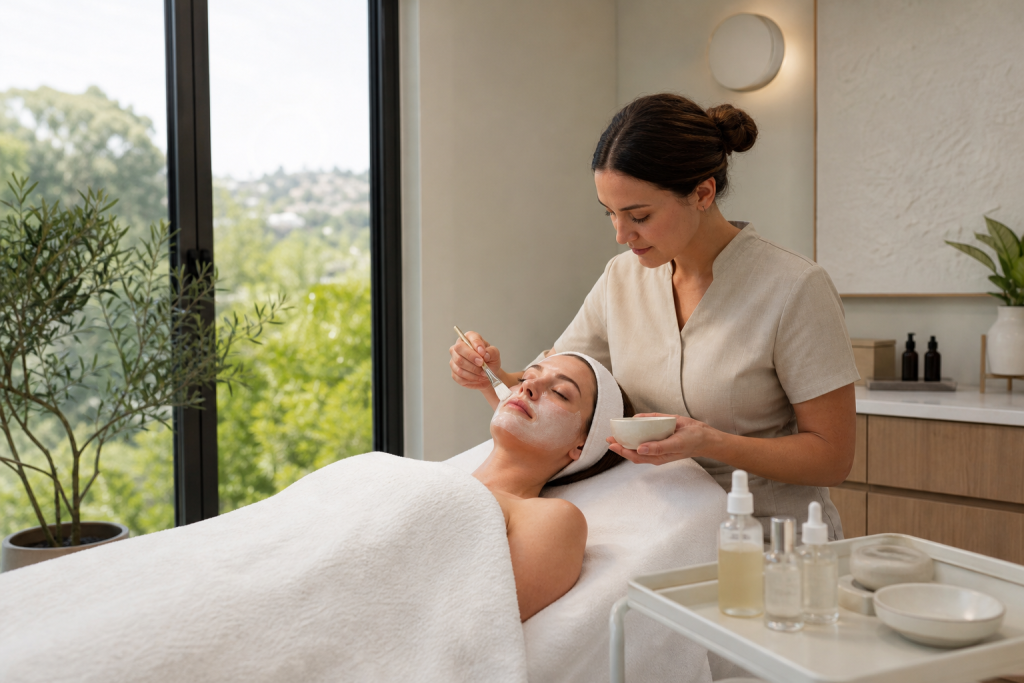
A sensitive-reactive protocol typically includes: a gentle double-cleanse with non-foaming, pH-friendly products; a light skin analysis; minimal extractions if needed; calming masks and serums rich in humectants and ceramides; and finishing sunscreen. We keep massage light and avoid aggressive mechanical or chemical exfoliation. (Analysis.)
The exact phrase you searched for—sensitive reactive skin facial care Woodland Hills—describes both the service aim and the local context. We customize pressure, products, and add-ons to your reactivity level. For example, LED light therapy is often recommended because it can reduce inflammation and supports recovery without physical abrasion. However, it may not be right for every case; we choose add-ons selectively.
Common calming ingredients used by estheticians
- Hyaluronic acid for hydration and immediate plumping effect.
- Ceramides and fatty acids to support barrier repair [3]. (Peer-reviewed consensus.)
- Niacinamide and azelaic acid as anti-inflammatory and tolerance-friendly options in low concentrations [3].
- Broad-spectrum mineral sunscreen applied after treatment to protect sensitized skin [2]. (Official guidance; NIH.)
Periprocedural timing and ingredient notes
Exact timing for pausing actives depends on their strength and recent procedures. As a general approach, expect to pause potent actives for a period before and after advanced procedures. For example, the consensus recommends tailoring pre/post-treatment regimens to the procedure’s intensity and the patient’s baseline sensitivity [3]. (Peer-reviewed consensus.)
Because many clients use retinoids and exfoliants at home, we recommend disclosing those products and bringing the labels to your first visit. This helps us plan a safe appointment.
Comparing facial types and add-ons for reactive skin
| Treatment | Suitable for reactive skin? | Typical sensation | Recommended add-ons | Notes |
|---|---|---|---|---|
| Soothing/Calming Facial | Yes | Light, relaxing | LED, hydrating mask, gentle galvanic infusion | Designed to minimize irritation and support barrier repair |
| Hydrating Facial | Yes | Hydrating, cooling | Hyaluronic infusion, facial massage | Focuses on moisture and barrier restoration |
| Deep Cleansing / Acne-focused | Use caution | May include extractions; moderate pressure | High-frequency in short bursts, gentle peel alternatives | Modify extraction and avoid strong peels if very reactive |
| Chemical Peel / Microdermabrasion | Usually not recommended | Can sting or burn | Not advised for highly reactive skin | Consider a test spot or defer to dermatologist for sensitive skin |
(Analysis.) The table summarizes practical differences and safety considerations. Always consult your esthetician about tailoring treatment intensity.
Professional facials versus at-home care for reactive skin
Professional facials provide controlled environments, trained touch, and professional-grade devices. They can deliver calming modalities like controlled LED therapy or galvanic infusion more safely than most at-home attempts. On the other hand, consistent at-home barrier support—gentle cleanser, moisturizer, and sunscreen—remains essential for long-term stability [2]. (Official guidance; NIH.)
In short: professional facials can complement at-home care. They do not replace daily barrier support or medical care when needed. (Analysis.)
When to delay or skip a facial
- Active infection, open lesions, or sunburn—seek clinical care first.
- Recent aggressive procedures—follow the specific provider’s timeline and we will coordinate with your clinician when appropriate [3]. (Peer-reviewed consensus.)
Realistic benefits and limitations
Benefits of sensitive reactive skin facial care Woodland Hills clients can expect include immediate comfort, temporary reduction in redness, and improved hydration. However, outcomes vary and are not guaranteed. Persistent or medically complex conditions such as severe rosacea, dermatitis, or acne should be evaluated by a dermatologist before elective aesthetic procedures. (Analysis; medical caution.)
Risks and likely problems to watch for
- Short-term redness or tightness immediately after treatment—common and often transient.
- Flare of existing conditions if strong actives were used too close to treatment—this risk is reducible with proper pre-facial planning [3]. (Peer-reviewed consensus.)
- Post-inflammatory hyperpigmentation in prone individuals after aggressive treatment—avoid harsh procedures if you are reactive. (Analysis.)
Costs, availability, and next steps
Prices and availability change seasonally and by provider. Asal Skin Lounge offers consultations to match your skin’s sensitivity with a safe plan. For current pricing and to reserve an intake consultation, contact us directly. (Estimate.)
Practical next steps:
- Collect a list or photos of your current skincare products and any recent professional treatments.
- Book an initial consultation so we can review triggers, prescriptions, and recent procedures.
- Follow the tailored pre-facial checklist provided at booking to reduce irritation risk.
Service comparisons at a glance
Choose a gentle Soothing Glow or Hydrating Facial if you prioritize comfort and barrier repair. Consider targeted deep-cleansing only if congestion is present and reactivity is controlled. We avoid aggressive peels or mechanical resurfacing on highly reactive skin and instead offer calming alternatives and dermatologist coordination as needed. (Analysis.)
Labeling of content statements
- Confirmed facts: AAD tips on rosacea triggers and avoidance strategies [1]; NIH healthy skin basics [2].
- Peer-reviewed consensus: Guidance on pre/post aesthetic ingredient strategies and selecting barrier-friendly products [3].
- Analysis and estimates: Recommendations on timing, treatment selection, and likely outcomes—these reflect professional judgement and local practice patterns and should not replace medical advice.
FAQ
Q: How soon before a facial should I stop using retinoids or exfoliants?
A: Timing depends on the product strength and recent procedures. The international consensus suggests customizing pauses for potent actives; please bring product labels to your consultation so we can advise specific timing [3]. (Peer-reviewed consensus.)
Q: Can LED light or galvanic infusion help sensitive skin?
A: Low-level LED is often chosen for its anti-inflammatory support and minimal mechanical impact; galvanic infusion can help hydration delivery when used with barrier-friendly serums. We select these add-ons case-by-case to avoid provoking reactivity. (Analysis.)
Q: Are professional facials safe if I have rosacea?
A: Many esthetic treatments can be adapted for rosacea-prone skin, but trigger avoidance and gentle protocols are key. Follow AAD guidance on trigger management and consult a dermatologist for medical therapy if needed [1]. (Confirmed fact; AAD.)
Q: How often should I get a calming facial if my skin is reactive?
A: Frequency depends on your baseline sensitivity and goals. Many clients start with monthly sessions and then space appointments as barrier function improves, while keeping daily at-home barrier care consistent [2]. (Official guidance; NIH; analysis.)
Q: What should I tell my esthetician at check-in?
A: Disclose recent product use (retinoids, acids), recent procedures, allergies, and any prescription topicals. This helps create a safe, individualized plan for sensitive reactive skin facial care Woodland Hills appointments. (Analysis.)
Final practical note and booking
Asal Skin Lounge specializes in customizable, calming treatments for clients in Woodland Hills and nearby neighborhoods like Tarzana, Encino, West Hills, Canoga Park, and Calabasas. If your priority is gentle, evidence-informed care for sensitive reactive skin facial care Woodland Hills, schedule a consultation so we can plan a safe protocol tailored to your history and goals.
For appointments, book online or call +1 (747) 746-3818. (As of 2026-10-22.)

Frequently asked questions
How soon before a facial should I stop using retinoids or exfoliants?
Timing varies by product strength and recent clinical treatments. The international expert consensus recommends customizing pauses for potent actives; bring product labels to your consultation so your esthetician can advise specific timing [3].
Can LED light or galvanic infusion help sensitive skin?
Low-level LED is often chosen for its anti-inflammatory support and minimal mechanical impact, and galvanic infusion can enhance hydration when used with gentle serums. Both are selected case-by-case to avoid provoking reactivity (analysis).
Are professional facials safe if I have rosacea?
Many esthetic treatments can be adapted for rosacea-prone skin, but trigger avoidance and gentle protocols are essential. Follow AAD trigger-management guidance and consult a dermatologist for medical therapy when appropriate [1].
How often should I get a calming facial if my skin is reactive?
Frequency depends on baseline sensitivity and goals. Some clients begin with monthly sessions then space appointments as barrier function improves, while maintaining consistent daily at-home care [2].
What should I tell my esthetician at check-in?
Disclose recent product use (retinoids, acids), recent procedures, allergies, and any prescription topicals so your esthetician can create a safe, individualized plan for sensitive reactive skin facial care Woodland Hills.
Need practical help?
Asal Skin Lounge — Contact us to schedule service or request a quote. Service area: Woodland Hills.
Topic in context
Sources and further reading
These links were validated and checked when possible when this article was created; some publishers limit automated requests. Facts, guidance, prices, regulations, and availability can change.
- 7 rosacea skin care tips dermatologists recommend — American Academy of Dermatology (AAD)
- Healthy Skin (NIH consumer guidance) — National Institutes of Health (NIH)
- International Expert Consensus on Integrated Skincare Active Ingredients for Pretreatment and Posttreatment Use With Medical Aesthetic Procedures — PubMed Central (peer-reviewed consensus)