
Professional extractions safe expectations Woodland Hills
professional extractions safe expectations Woodland Hills: Clear guidance on professional extractions safe expectations Woodland Hills: who should perform extr…
View article sections
- 01What changed on 2026-09-20 and why it matters
- 02What are extractions and when are they appropriate?
- 03Who should perform extractions: scope, credentials, and safety
- 04What to expect during a professional extraction appointment
- 05Typical recovery timelines and realistic outcomes
- 06Risks, complications, and when to seek medical care
- 07Aftercare: practical steps supported by clinical guidance
- 08Cost and availability in Woodland Hills (estimates as of 2026-09-20)
- 09Comparing options: professional facials with extractions vs at-home care
- 10Add-ons that may reduce irritation after extractions
- 11Alternatives to extraction
- 12Practical next steps for Woodland Hills clients
- 13Labeling: what parts of this article are confirmed, official, or analysis
- 14Booking and contact
- 15Frequently asked questions
- 16Related guides and resources
- 17Frequently asked questions
- 18Need practical help?
Updated 2026-09-20: Local demand for deep-cleansing facials and targeted extractions is high, and Woodland Hills clients deserve clear, evidence-backed guidance on when extractions are appropriate and how to expect recovery to progress. This article explains what to expect from professional extractions safe expectations Woodland Hills, who should perform them, typical timelines, material risks, and practical aftercare.
What changed on 2026-09-20 and why it matters
As of 2026-09-20, salons and clinics in Woodland Hills report increasing client requests for aggressive pore clearing. For residents seeking immediate help with congested skin, understanding professional extractions safe expectations Woodland Hills matters because it clarifies who can safely perform extractions and when to seek medical care.
Confirmed facts and expert sources
- Dermatology guidance warns that squeezing pimples can increase scarring and infection risk; dermatologists, not casual poppers, should handle certain lesions [1]. (Confirmed fact, American Academy of Dermatology.)
- Clinical acne-management guidelines emphasize conservative care first and list procedural options for persistent or severe lesions; trained clinicians should assess when in‑office procedures are appropriate [2]. (Official guidance, JAAD.)
- Practical safety tips for at-home and in-clinic care are summarized by established health systems; these include gentle cleansing, avoiding aggressive manual popping, and seeking professional help for painful, inflamed, or cystic acne [3]. (Independent reporting and clinical guidance.)
What are extractions and when are they appropriate?
Extractions are manual or instrument-assisted removal of comedones (blackheads and whiteheads), milia, or occasionally superficial pustules. When done correctly, they clear blockages that contribute to congestion. However, not every blemish should be extracted; inappropriate attempts can worsen inflammation and cause scarring.
As a rule, a trained clinician evaluates lesion type and skin condition before beginning. For non-inflamed comedones, controlled extractions during a deep‑cleansing facial are often appropriate. For painful, deep, or cystic acne, extraction is usually contraindicated and medical evaluation is recommended [2][1].
Who should perform extractions: scope, credentials, and safety
In Woodland Hills, licensed estheticians at reputable studios like Asal Skin Lounge perform cosmetic extractions within their scope—limited to superficial, non-inflamed comedones—and combine them with professional cleansing, steam, and sanitary technique. For inflamed or complex lesions, dermatologists or other medical providers should evaluate and treat [1][2].
In short: professional extractions safe expectations Woodland Hills include knowing the provider’s license, the type of lesions they treat, and referral practices for medical issues. If a procedure sounds like medical treatment (incision, drainage, intralesional injection), it should be handled by a medical clinician [1].
Confirmed facts: provider roles (as of 2026-09-20)
- Licensed estheticians: cosmetic extractions on superficial comedones; part of facials and skincare service.
- Dermatologists/medical providers: inflamed, cystic acne, or when scarring, infection, or systemic treatment is possible [1][2].
What to expect during a professional extraction appointment
At Asal Skin Lounge in Woodland Hills, an extraction session is integrated into a customized facial. Typical steps include:
- Consultation and skin assessment to identify lesion types and contraindications.
- Deep cleansing and gentle exfoliation to soften pores.
- Steam or warm compress to open follicles, when appropriate.
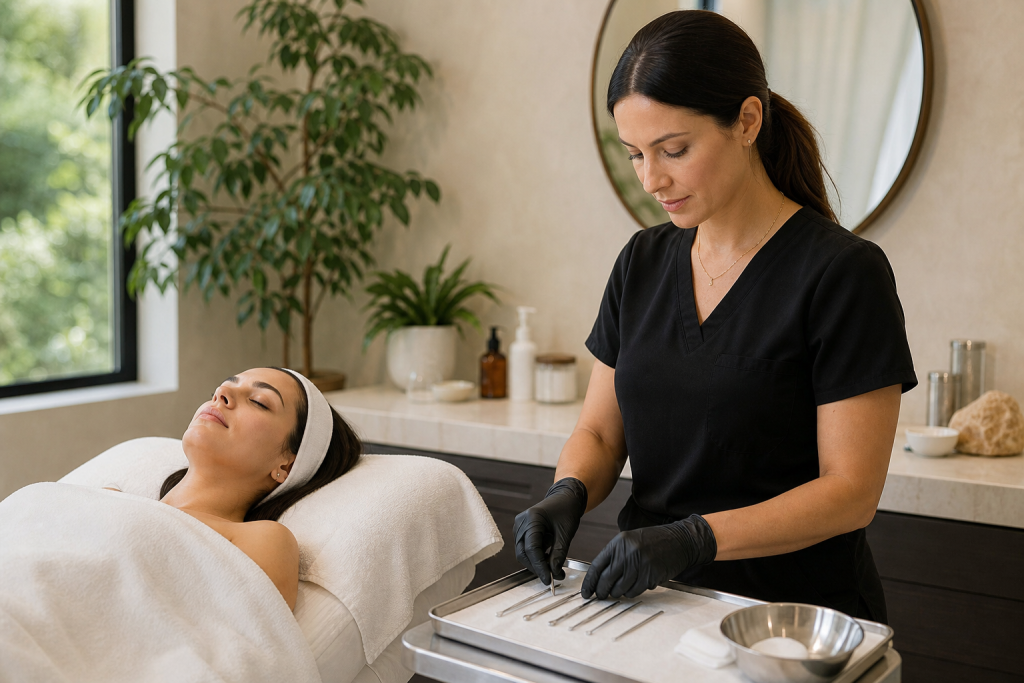
- Sanitary manual or instrument-assisted extractions using gloved hands, single‑use tools, or sterilized metal extractors.
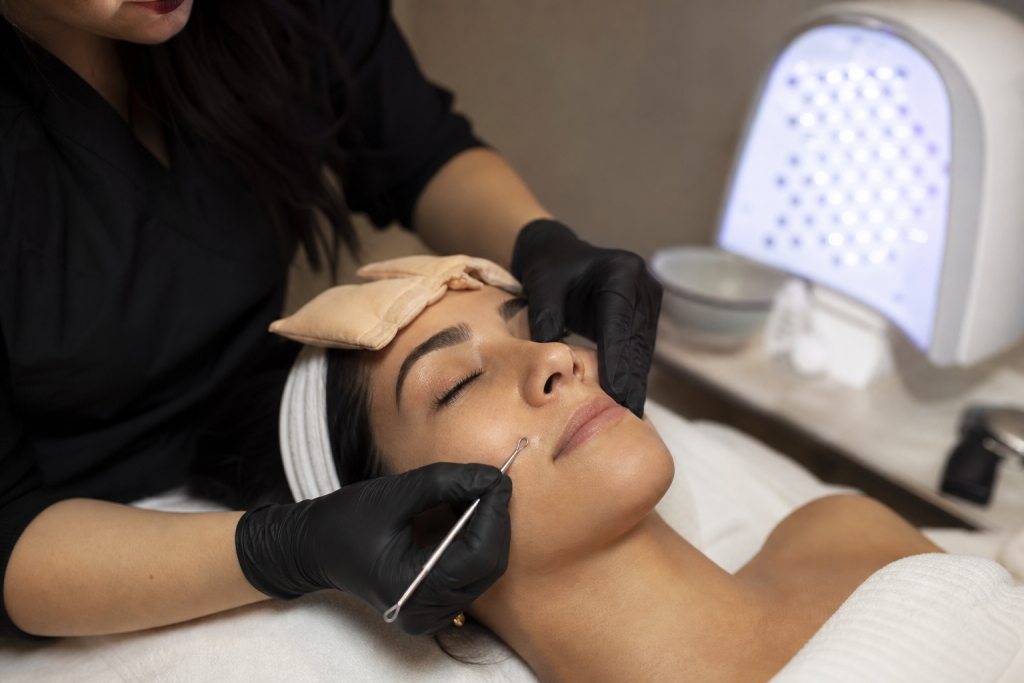
- Post-extraction soothing serums, LED or high‑frequency add-ons to reduce redness, and a tailored aftercare plan.
Clients should be told in advance about possible temporary redness, mild swelling, and pinpoint bleeding. For these typical responses, clinicians provide product recommendations and timeline expectations.
Typical recovery timelines and realistic outcomes
Recovery after supervised extractions is usually short. Expect redness and minor swelling for 24–72 hours. Pinpoint scabs or tiny crusts can persist for a few days. With proper aftercare, signs of extraction typically resolve within one week. Nevertheless, healing time varies by skin type, lesion depth, and individual healing response.
Remember: professional extractions safe expectations Woodland Hills do not include instant permanent elimination of acne or guaranteed scar-free results. Extra care and follow-up treatments often improve long-term outcomes, and medical therapies may be necessary for inflammatory acne [2].
Risks, complications, and when to seek medical care
Common, usually minor risks include temporary redness, tenderness, and transient hyperpigmentation in darker skin tones. More serious complications—infection, persistent scarring, or widened pores—are less common but possible if extractions are done improperly or on inappropriate lesions.
Seek medical evaluation promptly for increasing pain, spreading redness, fever, or worsening lesions after treatment. If you have a history of keloids, active oral isotretinoin use within the past 6–12 months, or immune suppression, mention this during booking; some procedures may be contraindicated [2].
Aftercare: practical steps supported by clinical guidance
Post-care focuses on protection, gentle healing, and infection prevention. Practical steps include:
- Keep treated areas clean and avoid touching for 24–48 hours.
- Use gentle, fragrance-free cleansers; avoid exfoliating acids for several days unless advised otherwise.
- Apply an antiseptic or soothing serum as recommended by your clinician.
- Use SPF daily; sun exposure can worsen hyperpigmentation after extractions.
- Avoid heavy makeup on extraction sites for 24 hours when possible.
These practical aftercare tips align with general clinical advice and consumer health recommendations [3].
Cost and availability in Woodland Hills (estimates as of 2026-09-20)
Pricing varies by provider, treatment length, and added services. In general:
- Extraction-inclusive deep-cleansing facials at a boutique studio typically range from entry-level to premium tiers depending on customization and add-ons.
- Add-ons such as LED light therapy or high-frequency tools may increase the session cost but can help reduce redness and bacterial load after extractions.
- Medical extraction or incision-and-drainage by a dermatologist is billed differently and may involve a higher fee and potential insurance coding if medically necessary [2].
Comparing options: professional facials with extractions vs at-home care
| Feature | Professional facials with extractions | At-home attempts |
|---|---|---|
| Provider training | Licensed esthetician or clinician; sanitary technique | Consumer-level care; variable technique |
| Lesion selection | Assessment before extraction; medical referral if needed | Often indiscriminate squeezing; higher risk for scarring |
| Equipment | Sterile tools, gloves, add-on devices | Fingers, home tools, or unverified devices |
| Aftercare | Tailored recommendations, calming treatments | Often missing or inconsistent |
| Risks | Lower when done properly; still possible | Higher risk of infection, scarring, hyperpigmentation |
Add-ons that may reduce irritation after extractions
Clinically informed add-ons include LED light therapy and high-frequency treatment. These modalities can be offered after extractions to help soothe tissue and reduce bacterial presence, though they are adjuncts, not a replacement for proper technique and assessment [3].
At Asal Skin Lounge, these add-ons are matched to skin type and sensitivity. Always disclose recent treatments, medications (including isotretinoin), and any skin conditions at booking.
Alternatives to extraction
- Topical retinoids and consistent medical regimens for clogged pores (under clinician direction) [2].
- Professional chemical exfoliation or enzyme facials to reduce comedone formation.
- Prescription therapies for inflammatory or cystic acne; these should be managed by a medical provider [2].
Practical next steps for Woodland Hills clients
- Ask about the provider’s license and experience with extractions during booking.
- Describe your skin history, current products, and recent medications (especially isotretinoin).
- Choose conservative, staged treatment if you have sensitive or acne-prone skin.
- Follow aftercare instructions and return for follow-up if problems arise.
Professional extractions safe expectations Woodland Hills: quick checklist
- Provider performs assessment before extraction.
- Only non-inflamed comedones are targeted by estheticians.
- Dermatologist referral for inflamed, cystic, or recurrent lesions [1][2].
- Expect 24–72 hours of redness and up to one week for full surface healing.
Labeling: what parts of this article are confirmed, official, or analysis
- Confirmed facts: Dermatology societies advise caution with pimple popping and recommend medical evaluation for complex lesions [1][2].
- Official guidance: JAAD acne-management guidelines outline conservative care and when procedural approaches may be used [2].
- Independent reporting: Health systems summarize safe at-home and in‑clinic practices [3].
- Analysis and estimates: Local cost and availability statements and service descriptions are estimates based on typical practice patterns in Woodland Hills as of 2026-09-20.
Booking and contact
If you live in Woodland Hills or nearby communities and want a safe, evidence-informed approach to pore clearing and skin maintenance, schedule a consultation. At Asal Skin Lounge, our licensed estheticians blend clinical technique and luxury care to set realistic expectations for extractions and recovery.
Book online or call +1 (747) 746-3818 to request an appointment and discuss whether professional extractions safe expectations Woodland Hills apply to your skin concerns.
Frequently asked questions
Q: Will extractions prevent future breakouts?
A: Extractions remove existing blockages but do not stop new comedones from forming; a tailored home care plan and, when appropriate, medical therapies are needed to reduce recurrence [2].
Q: Are extractions painful?
A: Most clients feel pressure and mild discomfort during extractions. Techniques like steam, topical calming serums, and add-ons (LED) can improve comfort during and after the service.
Q: Can anyone get extractions after using isotretinoin?
A: Recent isotretinoin use alters healing and raises the risk of scarring; disclose isotretinoin history because some procedures may be delayed for safety [2].
Q: How soon can I wear makeup after extractions?
A: When possible, avoid heavy makeup for 24 hours. If you must use makeup, choose non-comedogenic products and apply gently to minimize irritation.
Q: What should I do if redness or pain worsens after a facial?
A: Contact your provider immediately. Seek medical care if you develop fever, spreading redness, or increasing pain, as these signs suggest infection.


Frequently asked questions
Will extractions prevent future breakouts?
Extractions remove existing blockages but do not stop new comedones from forming. Reducing recurrence typically requires a tailored home-care regimen and, if needed, medical therapies under clinician guidance [2].
Are extractions painful?
Most clients feel pressure and mild discomfort. Professionals use steam, gentle technique, and calming serums to improve comfort. Temporary redness or pinpoint bleeding can occur.
Can I have extractions if I recently used isotretinoin?
Recent isotretinoin use can increase the risk of scarring and alter healing. Disclose isotretinoin history at booking; some procedures may be delayed for safety [2].
What should I do if redness or pain worsens after a facial?
Contact your provider immediately. Seek medical care if you develop fever, spreading redness, or increasing pain, as these signs may indicate infection.
How soon can I wear makeup after extractions?
Avoid heavy makeup for 24 hours when possible. If makeup is necessary, choose non-comedogenic products and apply gently to treated areas to reduce irritation.
Need practical help?
Asal Skin Lounge — Contact us to schedule service or request a quote. Service area: Woodland Hills.
Topic in context
Sources and further reading
These links were validated and checked when possible when this article was created; some publishers limit automated requests. Facts, guidance, prices, regulations, and availability can change.
- Pimple popping: Why only a dermatologist should do it — American Academy of Dermatology (AAD) — primary source
- Guidelines of care for the management of acne vulgaris — Journal of the American Academy of Dermatology (JAAD)
- Pimple Popping: Is It Safe To Do? — Cleveland Clinic (Health Library)