
LED light therapy facial add-on: Evidence & safety
LED light therapy facial add-on: Learn evidence, safety, limits, and how to choose an LED light therapy facial add-on for your next Woodland Hills facial. Book…
View article sections
- 01Quick summary in plain language
- 02How this guide is organized
- 03What the 2026 systematic review actually found (confirmed)
- 04What major medical groups say (independent reporting)
- 05Is an LED light therapy facial add-on right for you?
- 06Safety, contraindications, and practical risks
- 07How LED works in basic terms
- 08Comparing an LED light therapy facial add-on with common facial add-ons
- 09Choosing a device and a treatment plan (practical)
- 10Cost and availability in Woodland Hills (estimates)
- 11What to expect during an LED light therapy facial add-on
- 12When to consider other options instead
- 13Practical next steps for Woodland Hills clients
- 14Labelled summary (confirmed facts, official announcements, and analysis)
- 15Frequently asked questions
- 16Related guides and resources
- 17Frequently asked questions
- 18Need practical help?
What changed (and why it matters): On 2026-10-14, an open-access systematic review summarized randomized and controlled studies of at‑home and in‑clinic LED photobiomodulation for facial rejuvenation. This review clarifies what controlled evidence supports and where uncertainty remains, making late‑2026 the right time for Woodland Hills clients to evaluate an LED light therapy facial add-on for their next facial appointment [1].
Quick summary in plain language
The new review found modest, short-term benefits in some studies for skin tone, texture, and fine lines, but results vary by device, settings, and study quality [1]. Major dermatology and medical organizations note that LED is generally low-risk but not a miracle treatment; it is best used as one part of a consistent skincare plan [2][3].
How this guide is organized
- What the 2026 evidence says and what is confirmed vs. estimated
- Safety, risks, and who should avoid an LED add-on
- Practical comparisons with other facial add-ons and at‑home devices
- Costs, session planning, and next steps for Woodland Hills clients
What the 2026 systematic review actually found (confirmed)
Confirmed fact: An open-access systematic review published 2026-10-14 evaluated randomized and controlled trials of at‑home LED photobiomodulation for facial rejuvenation and summarized efficacy and safety across studies [1].
Key confirmed points from that review (paraphrased):
- Some randomized trials reported improvements in skin texture, fine lines, and overall appearance after multi‑week LED use, but effect sizes were generally small to modest [1].
- Outcomes depended on wavelength, energy dose, device design, and treatment schedule; many studies used different protocols, limiting direct comparisons [1].
- Adverse events reported in trials were uncommon and usually mild (transient redness or irritation) [1].
Official analysis: The review concluded evidence quality varied and larger, standardized trials are still needed to define optimal settings and long-term benefits [1].
What major medical groups say (independent reporting)
The American Academy of Dermatology (AAD) states red and near‑infrared light therapies have potential skin benefits but emphasizes that evidence quality varies; they recommend discussing expectations and risks with a licensed provider [2].
The Cleveland Clinic describes LED light therapy as noninvasive, with different colors targeting different concerns, and notes possible side effects include eye strain if eyes aren’t protected and temporary redness [3].
Is an LED light therapy facial add-on right for you?
If you want a low‑risk enhancement to a professional facial aimed at improving tone, mild texture irregularities, or overall glow, an LED light therapy facial add-on can be appropriate. For more advanced structural concerns or deep wrinkles, combine LED with targeted professional treatments and medical-grade home care instead of relying on LED alone [1][2][3].
Benefits supported by evidence (confirmed and plausible)
- Modest improvements in fine lines and skin texture in some randomized trials [1].
- Noninvasive, quick addition to a clinic facial, usually painless [1][3].
- Low rate of significant adverse events in trials; common minor effects are transient redness or warmth [1].
Limitations and realistic expectations (analysis)
Do not expect dramatic, instantaneous change. The review shows improvements are typically gradual and modest, and outcomes depend heavily on device parameters and treatment frequency [1]. In other words, LED is supportive care, not a replacement for more intensive dermatologic or procedural interventions when those are indicated.
Safety, contraindications, and practical risks
Confirmed safety points:
- Most clinical trials report few serious adverse events; minor irritation or temporary redness are the most common issues [1].
- The AAD and medical sources recommend eye protection during treatments and caution around active photosensitizing medications and conditions that increase light sensitivity [2][3].
Who should discuss risks with their physician before choosing an LED add-on (estimates; general educational information only):
- People using prescription photosensitizing drugs (for example, certain antibiotics or acne medications).
- Clients with a history of light-triggered conditions, such as lupus or photodermatoses.
- Anyone with active infection, open wounds, or uncontrolled skin inflammation at the treatment site.
If in doubt, consult your prescribing clinician or our licensed provider at Asal Skin Lounge before booking an LED light therapy facial add-on (as of 2026-11-23).
How LED works in basic terms
LED devices deliver narrow bands of visible or near‑infrared light to skin. Different wavelengths are thought to interact with cells and tissue in different ways: red light (around 630–660 nm) is commonly used for skin rejuvenation, and near‑infrared light penetrates deeper tissues. These effects are collectively called photobiomodulation [3].
Comparing an LED light therapy facial add-on with common facial add-ons
| Feature | LED light therapy facial add-on | High‑frequency | Galvanic deep infusion |
|---|---|---|---|
| Primary benefit | Supportive skin rejuvenation, tone, minor texture improvement | Antimicrobial, pore‑refining, temporary lift | Enhanced product penetration and hydration |
| Comfort | Usually painless; warm sensation possible | Tingly, slight warmth | Gentle tingling |
| Evidence level | Randomized trials show modest benefits; review notes variable quality [1] | Long clinical use; fewer large RCTs for anti‑aging claims | Clinical support for increased infusion; direct anti‑aging evidence limited |
| Risks | Minor irritation; eye protection needed; caution with photosensitizers [2][3] | Surface irritation, not for broken skin | Irritation if used on inflamed or broken skin |
Choosing a device and a treatment plan (practical)
Because outcomes depend on wavelength, dose, and device design, pick a reputable clinic with medical‑grade devices and trained staff. At Asal Skin Lounge, we pair LED with your customized facial base so the add-on complements cleansing, exfoliation, and targeted serums.
Typical clinic approach (estimate, as of 2026-11-23): multiple short sessions over several weeks often yield better results than a single session. Our team recommends a series tailored to your skin type, concerns, and schedule.
Cost and availability in Woodland Hills (estimates)
Costs for an LED light therapy facial add-on vary by clinic and package. Asal Skin Lounge offers add-ons that can be paired with luxury facials; please contact us for current pricing and package discounts. These are estimates only and may change over time (as of 2026-11-23).
What to expect during an LED light therapy facial add-on
- We complete your custom facial steps first (cleansing, extractions if needed, tailored serums).
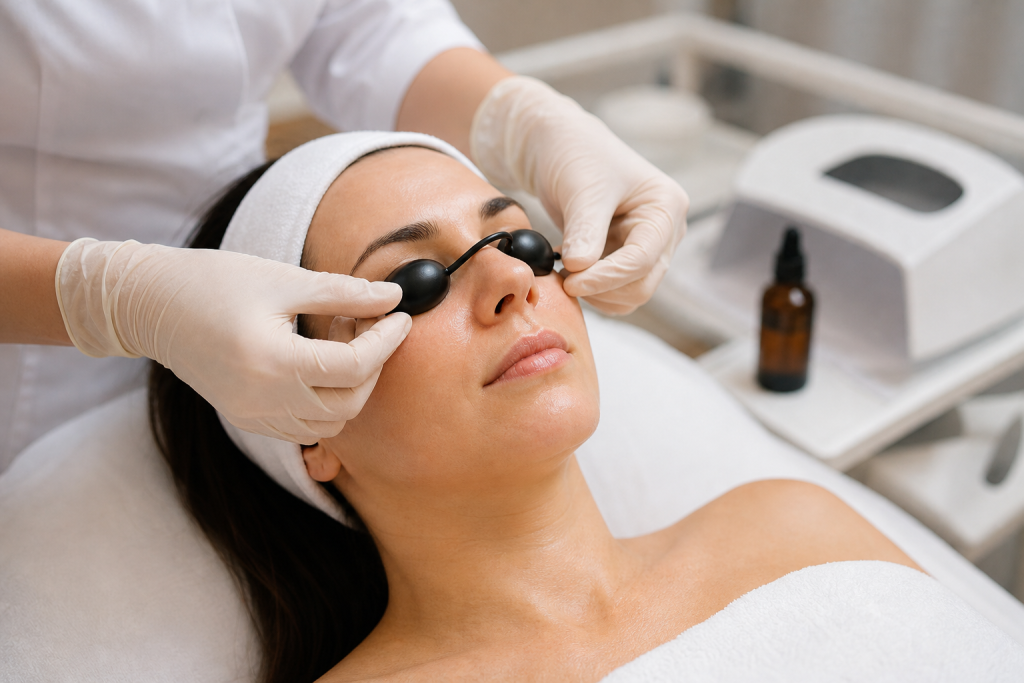
- During the LED add-on, you will wear eye protection and relax under the LED panel for a prescribed number of minutes.
- After treatment, we finish with sunscreens or calming products as appropriate.
When to consider other options instead
If you have deeper volume loss, significant sagging, or advanced photoaging, consult with a dermatologist or plastic surgeon about medical or procedural alternatives. LED can help as an adjunct but usually won’t replace injectables or energy‑based devices when those are clinically recommended [1][3].
Practical next steps for Woodland Hills clients
- Book a consultation at Asal Skin Lounge to review medications, skin history, and goals.
- Discuss a recommended series and whether an LED light therapy facial add-on fits your customized facial plan.
- Follow pre‑ and post‑treatment instructions, including sun protection and avoiding new photosensitizing products around sessions.
Labelled summary (confirmed facts, official announcements, and analysis)
- Confirmed fact: A systematic review published 2026-10-14 summarized randomized and controlled evidence for at‑home LED photobiomodulation and reported modest benefits with low rates of serious adverse events [1].
- Official guidance (independent reporting): The AAD and major medical centers recommend discussion with a licensed provider, eye protection during treatment, and caution for people on photosensitizing drugs [2][3].
- Analysis: LED is a low‑risk, supportive add-on best used as part of an ongoing skincare plan rather than a standalone cure for deeper or structural aging concerns.
Frequently asked questions
How many sessions do I need to see results from an LED light therapy facial add-on?
Answer: Clinical trials and practical experience suggest multiple sessions over weeks are more likely to produce measurable improvement than a single session. Exact frequency depends on device settings and your skin goals; discuss a plan during consultation [1].
Will LED light therapy make my acne worse?
Answer: Some wavelengths (blue light) target acne‑causing bacteria and can be helpful, while red light is used for inflammation and healing. However, LED should complement—not replace—medical acne care. Always tell your provider about active acne treatments or medications [2][3].
Is LED safe if I’m using retinoids or other active serums?
Answer: Many clients safely combine LED with topical actives, but if you use prescription retinoids or photosensitizing medications, consult your prescriber and our clinician before adding LED to your facial [2].
Can I get LED at home instead of as a facial add-on?
Answer: The 2026 review included at‑home devices; some randomized trials showed benefit, but results depend on device quality, dosage, and user adherence. At‑home use can be convenient, but in‑clinic medical‑grade devices and technician supervision often ensure more consistent dosing and safety [1].
To schedule a consultation or add an LED light therapy facial add-on to your custom facial in Woodland Hills, book online or call Asal Skin Lounge at +1 (747) 746-3818. Our clinic will review your skin history, medications, and goals to design a safe, evidence‑informed plan (as of 2026-11-23).
Sources: Systematic review (Aesthetic Plastic Surgery) 2026-10-14 [1]; American Academy of Dermatology guidance 2024-09-13 [2]; Cleveland Clinic LED overview (accessed 2026) [3].


Frequently asked questions
How many LED sessions does it usually take to notice a difference?
Multiple sessions over several weeks are commonly needed to notice modest improvements; randomized trials and clinical practice suggest a series yields more reliable change than a single session [1]. Discuss a customized schedule with your provider.
Is LED light therapy painful or uncomfortable?
Most clients report no pain; some feel mild warmth or tingling. Eye protection is required to prevent strain, and reported adverse events in trials were usually minor and transient [1][3].
Can LED be combined with other facial treatments and actives?
Yes. LED is often paired with cleansing, serums, and other add-ons. However, if you use prescription photosensitizing drugs or have active skin conditions, consult your prescriber and our clinician before combining treatments [2][3].
Is at‑home LED as good as the clinic version?
Some at‑home devices showed benefit in trials, but outcomes depend on device quality, wavelength, dose, and consistent use. In‑clinic, medical‑grade devices and technician oversight provide more controlled dosing and safety [1].
Are there reasons I might not be eligible for an LED light therapy facial add-on?
You may need to avoid LED if you use photosensitizing medications, have certain light-sensitive medical conditions, or have open wounds or active infection at the treatment site. Always disclose medications and medical history during consultation [2][3].
Need practical help?
Asal Skin Lounge — Contact us to schedule service or request a quote. Service area: Woodland Hills.
Sources and further reading
These links were validated and checked when possible when this article was created; some publishers limit automated requests. Facts, guidance, prices, regulations, and availability can change.
- Efficacy and Safety of At‑Home Light‑Emitting Diode Photobiomodulation for Facial Rejuvenation: A Systematic Review — Springer Nature (Aesthetic Plastic Surgery) (2026-10-14) — primary source
- Is red light therapy right for your skin? — American Academy of Dermatology (AAD) (2024-09-13)
- LED Light Therapy: How It Works, Colors, Benefits & Risks — Cleveland Clinic