

LED high-frequency galvanic facial add-ons comparison
LED high-frequency galvanic facial add-ons comparison: Compare LED, high-frequency, and galvanic facial add-ons: mechanisms, safety, evidence, and booking guid…
View article sections
- 01Table of contents
- 02Quick overview: what changed and why it matters
- 03Definitions and what each add‑on does
- 04What the science and device listings say
- 05Practical sequencing and safety: how to combine add‑ons in a single appointment
- 06Risks, contraindications, and what to disclose before you book
- 07Cost, availability, and how to choose at Asal Skin Lounge (Woodland Hills)
- 08Alternatives and older practices
- 09Decision checklist before you book
- 10Evidence and source notes
- 11Next steps for Woodland Hills clients
- 12Related guides and resources
- 13Frequently asked questions
- 14Need practical help?
- 15Topic in context
- 16Sources and further reading
- 17Related services and resources
Quick summary: This article compares LED phototherapy, esthetic high‑frequency electrodes, and galvanic currents as facial add‑ons, explaining mechanisms, evidence, contraindications, and practical sequencing. It gives Woodland Hills clients actionable safety guidance, booking considerations, and alternatives such as staggered sessions or at‑home maintenance devices.
Estimated reading time: 10 minute read
Table of contents
- Quick overview: what changed and why it matters
- Definitions and what each add‑on does
- LED high-frequency galvanic facial add-ons comparison: side‑by‑side
- What the science and device listings say
- Practical sequencing and safety: how to combine add‑ons in a single appointment
- Risks, contraindications, and what to disclose before you book
- Cost, availability, and how to choose at Asal Skin Lounge (Woodland Hills)
- Alternatives and older practices
- Decision checklist before you book
- Evidence and source notes
- Next steps for Woodland Hills clients
- FAQs
- Related guides and resources
- Frequently asked questions
- Can I get LED, high-frequency, and galvanic in the same facial?
- Are LED treatments FDA‑cleared?
- Is galvanic safe if I have a pacemaker?
- How many sessions of LED or galvanic are recommended?
- Need practical help?
- Topic in context
- Sources and further reading
As of 2026-08-24: clients increasingly ask whether electrical and light‑based add‑ons can be safely combined in a single facial appointment. New clinical reviews and clearer regulatory listings make a consolidated, clinic‑forward comparison useful for Woodland Hills clients seeking professional guidance.
This article provides an LED high-frequency galvanic facial add-ons comparison that explains how each modality works, what evidence supports their uses, common contraindications, practical safety guidance, cost and scheduling considerations, and alternatives for at‑home or combined sessions.
Quick overview: what changed and why it matters
What’s changed: recent reviews of light‑based phototherapy and clearer public listings of cleared LED devices show growing clinical interest and broader in‑clinic availability for LED therapy; at the same time, more clients are asking how to layer LED, high‑frequency, and galvanic treatments safely during a single facial [1][2].
Why it matters to Woodland Hills clients: combining add‑ons can speed visible improvements in hydration, texture, and calming responses when done properly. Conversely, inappropriate sequencing or using the wrong technologies together can increase irritation or reduce product delivery. This guide helps you and your esthetician choose combinations matched to your skin type and appointment goals.
Definitions and what each add‑on does
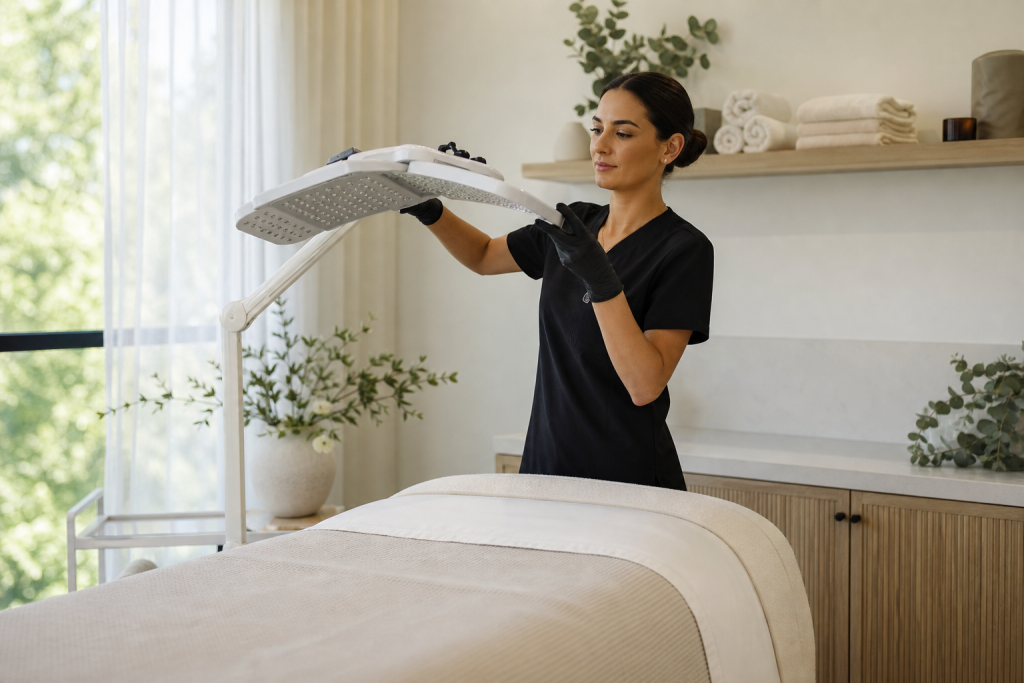
LED: Light‑emitting diode phototherapy uses narrowband visible light (commonly red and blue) to interact with skin cells. Clinical reviews summarize benefits across wound healing, acne, and signs of photoaging, although effects depend on wavelength, dose, and treatment frequency [1]. Some professional LED devices are listed with the U.S. Food and Drug Administration via 510(k) notifications for specific indications; clearance demonstrates a device is substantially equivalent to a legally marketed predicate, not a blanket guarantee of results [2].
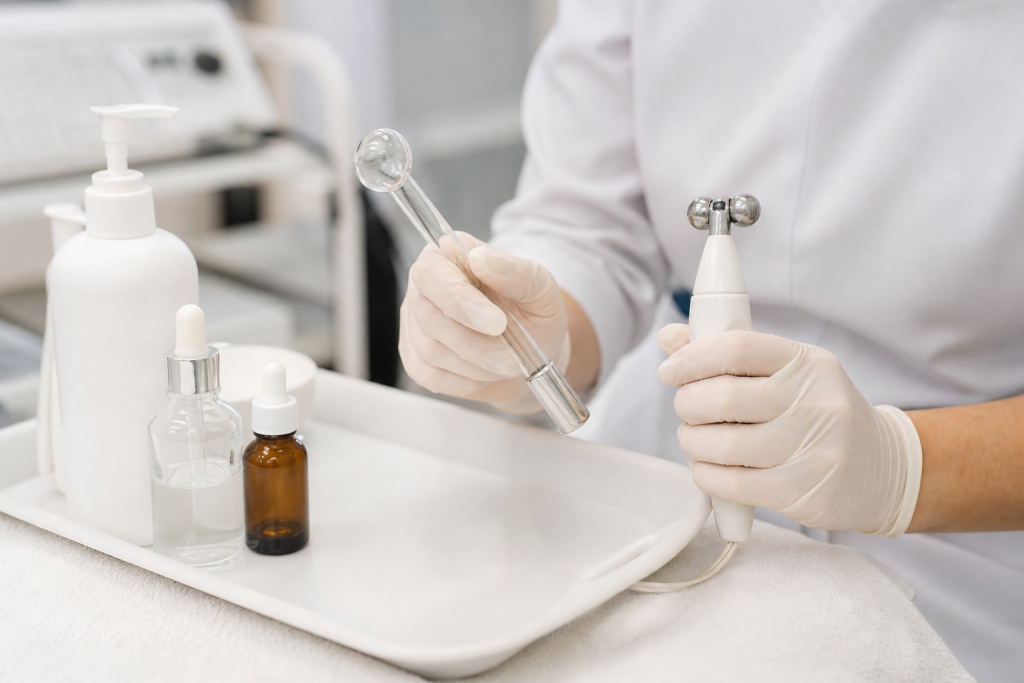
High‑frequency (esthetics use): in facials, “high‑frequency” commonly refers to a glass electrode that carries a high‑frequency alternating current and produces a gentle warming, ozone generation at the surface, and subtle antibacterial effects when applied to skin. Note: the term “high‑frequency” is also used in dermatology to describe ultrasound or other technologies; those are different modalities and should not be confused with the esthetic glass electrode version [3].
Galvanic: galvanic devices apply a direct (DC) low‑level electrical current to support two procedures commonly called desincrustation (alkaline iontophoresis to loosen sebum) and iontophoresis (to drive charged serums deeper into the skin). Manufacturer guidance and professional manuals provide safety limits, electrode placement, and contraindications for these currents [4].
LED high-frequency galvanic facial add-ons comparison: side‑by‑side
| Dimension | LED | High‑frequency (esthetic electrode) | Galvanic |
|---|---|---|---|
| Primary mechanism | Photobiomodulation: light absorbed by chromophores in skin cells [1] | High‑frequency alternating current; surface warming, mild antiseptic ozone production | Low‑level direct current to alter skin surface charge and push/pull ions in serums [4] |
| Typical in‑clinic use | Calming red LEDs for collagen support; blue LEDs for acne; 10–30 min per surface [1] | Short passes over congested areas, spot work after extractions or for surface clarity | Desincrustation before extractions and iontophoresis to infuse serums after treatment |
| Immediate effects | Reduced redness for some clients, temporary glow | Temporarily clearer, slightly warmed skin; reduced surface bacteria | Improved product absorption sensation; softer, decongested skin after desincrustation |
| Evidence level | Moderate: systematic and narrative reviews support specific uses with dose‑dependent effects [1] | Limited formal trials for the esthetic glass electrode; widespread professional use and training | Practical safety guidance from manufacturers and professional protocols; clinical literature on iontophoresis in medicine exists but esthetic outcomes vary [4] |
| Common contraindications | Photosensitivity disorders, recent photosensitizing medications (check with clinician) [1] | Open wounds, severe rosacea flares, pregnancy caution in some protocols | Pacemakers, implanted electronic devices, pregnancy, broken skin; follow device manual [4] |
| Can be combined | Usually compatible with galvanic when sequenced correctly; allow skin to return to baseline before LED session | Often used in the same facial after extractions; avoid directly combining with galvanic electrode contact | Typically used before LED or as a finishing infusion step; sequence matters to reduce irritation [4] |
What the science and device listings say
Clinical reviews of LED phototherapy report measurable effects on cellular activity and clinical endpoints—such as reduced inflammatory lesions in acne and improved wound healing with certain wavelengths and doses—but outcomes depend on device specifications and treatment schedules [1]. Some professional LED devices are 510(k)‑listed with the FDA for specific indications, which helps clinicians select regulated equipment; a 510(k) listing indicates substantial equivalence, not a guarantee of efficacy for every user [2].
High‑frequency glass electrodes have a long history in esthetic practice for surface sanitation and mild stimulation, but formal randomized controlled trials focusing on the esthetic electrode are limited compared with LED research. In dermatology literature, the phrase “high‑frequency” is used for other modalities such as ultrasound; clinicians should clarify technology before a session [3].
Galvanic currents and iontophoresis principles are well‑documented in manufacturer guidance and clinical manuals. These sources outline safe current limits, electrode placement, and contraindications—information estheticians rely on to minimize risk when driving charged serums into skin layers [4].
Practical sequencing and safety: how to combine add‑ons in a single appointment
Good sequencing reduces irritation and maximizes benefit. A conservative, commonly used sequence for a combined treatment is:
- Cleanse and consult (identify contraindications).
- Desincrustation or galvanic pre‑cleanse if heavy congestion—galvanic alkaline step to loosen sebum (follow manual limits) [4].
- Extractions and local high‑frequency spot work to calm the area.
- Iontophoresis (galvanic infusion) to drive hydrating or calming serums after extractions, when appropriate [4].
- Finish with LED phototherapy to calm inflammation and support longer‑term skin responses; allow a short rest between electrical modalities and LED treatment.
Why this order? Galvanic desincrustation loosens sebum to ease extractions, high‑frequency can help reduce surface bacteria and soothe extractions, and LED at the end minimizes risk of altering the absorption profile of serums while leveraging photobiomodulation to calm skin and support recovery [1][4].
Caveat: individual device manuals, professional training, and client health history should guide any deviation from this order. Always follow device‑specific safety instructions, including current limits, electrode care, and contraindications [2][4].
Risks, contraindications, and what to disclose before you book
Confirmed facts: pacemakers and implanted electronic devices are contraindications for galvanic and some electrical treatments; pregnancy and certain photosensitizing medications can make LED or other light therapies unsafe [2][4].
Independent reporting and analysis indicate that mild, short‑lived irritation and transient redness are the most common side effects when add‑ons are used correctly. Burns or persistent irritation are uncommon in professional settings when device manuals and protocols are followed [4].
What to disclose during booking: current medication list (especially photosensitizing drugs), pregnancy, implanted electronics, recent facial procedures (peels, lasers), and any active infections or open wounds.
Cost, availability, and how to choose at Asal Skin Lounge (Woodland Hills)
Estimate: professional add‑ons vary by device, session length, and clinic. In Woodland Hills, fees reflect licensed expertise, equipment quality, and session time. Ask for a clear menu price during booking; Asal Skin Lounge recommends combining add‑ons only when clinically appropriate and within one appointment window.
Availability: LED, high‑frequency, and galvanic options are commonly available in licensed med‑spa and esthetic clinics; ensure your provider uses professional equipment with published safety instructions and follows current infection control and training standards [2][4].
Alternatives and older practices
If you prefer fewer electrical modalities in one visit, consider spreading add‑ons across multiple appointments: perform galvanic and extractions at one visit and schedule LED in a follow‑up to support healing. At‑home LED devices and low‑current galvanic or microcurrent tools exist for maintenance, but they typically produce subtler results and differ in power and regulatory clearance from professional units [1][2].
Decision checklist before you book
- Have you completed a health intake (medications, implants, pregnancy)? If not, complete one before booking.
- Is the treatment goal clear (acne control, hydration, calming, texture)? Match the goal to the add‑on: blue LED for acne tendencies, red LED for calming or photobiomodulation, galvanic for product infusion, and high‑frequency for spot sanitation.
- Do you or your provider have the device manuals and training? Confirm device model and review 510(k) status when relevant [2][4].
- Are you willing to stagger sessions if needed? Consider separate appointments for deeper resurfacing plus LED recovery.
Evidence and source notes
- LED phototherapy: narrative and clinical reviews summarize benefits and dosing principles for dermatologic and aesthetic uses; results depend on wavelength and dose [1].
- Device regulation: some professional LED devices are listed via FDA 510(k); a listing reflects substantial equivalence to a predicate device, not a promise of outcomes [2].
- “High‑frequency” is an umbrella term: esthetic glass electrodes differ from high‑frequency ultrasound modalities discussed in dermatology literature—confirm which technology your provider means before treatment [3].
- Galvanic safety and operational limits are best understood via manufacturer manuals and professional protocols; follow electrode placement and current guidelines to reduce risk [4].
Next steps for Woodland Hills clients
If you live in Woodland Hills, Tarzana, Encino, West Hills, Canoga Park, or Calabasas and want a tailored plan, book a consult at Asal Skin Lounge. Our estheticians review your history, explain device options, and recommend sequencing or spacing for combined add‑ons based on clinical best practices and training.
To schedule, book online or call +1 (747) 746-3818. We invite you to discuss goals, timing, and the exact LED high-frequency galvanic facial add-ons comparison that best matches your skin.
FAQs
1. Can I get LED, high‑frequency, and galvanic in the same facial?
Yes—when sequenced properly and after a health intake. A common order is galvanic desincrustation, extractions with high‑frequency spot work, iontophoresis infusion, and finishing LED. Always follow device manuals and clinician training to minimize irritation [4].
2. Are LED treatments FDA‑cleared?
Some professional LED devices have FDA 510(k) listings for specific uses, which indicates substantial equivalence to a predicate device; check with your provider about the model and its listing. A 510(k) is regulatory information, not a direct measure of clinical outcomes for every client [2].
3. Is galvanic safe if I have a pacemaker?
No. Implanted electronics such as pacemakers are a contraindication for galvanic and other electrical currents. Disclose implants during booking and consult your physician when in doubt [4].
4. How many sessions of LED or galvanic are recommended?
Evidence suggests repeated LED sessions produce more consistent benefits than a single visit, but the ideal number depends on the indication and device dosing. Galvanic effects (desincrustation and infusion) are often used per‑session as part of a course determined by congestion and goals. Discuss a tailored plan with your esthetician [1][4].
5. What should I avoid doing before or after combined add‑ons?
Avoid new retinoids, aggressive at‑home exfoliation, and sun exposure immediately around sessions unless advised by your clinician. Follow post‑treatment care provided by your esthetician to limit irritation and support recovery.
Sources: clinical review of LED phototherapy [1]; example FDA 510(k) LED device listing [2]; discussion of high‑frequency terminology in dermatology literature [3]; galvanic device manual and professional safety guidance [4]. All statements are analysis and practical guidance as of 2026-08-24.
Ready to book a personalized consultation or a combined add‑on facial in Woodland Hills? Book online or call +1 (747) 746-3818 to speak with Asal Skin Lounge.


Frequently asked questions
Can I get LED, high-frequency, and galvanic in the same facial?
Yes—when sequenced properly and following a health intake. A common order is galvanic desincrustation, extractions with high-frequency spot work, iontophoresis infusion, and finishing LED. Always follow device manuals and clinician training to minimize irritation [4].
Are LED treatments FDA‑cleared?
Some professional LED devices have FDA 510(k) listings for specific uses, which indicates substantial equivalence to a predicate device; check with your provider about the model and its listing. A 510(k) is regulatory information, not a direct measure of clinical outcomes for every client [2].
Is galvanic safe if I have a pacemaker?
No. Implanted electronics such as pacemakers are a contraindication for galvanic and certain electrical treatments. Disclose implants during booking and consult your physician when in doubt [4].
How many sessions of LED or galvanic are recommended?
Repeated LED sessions typically deliver more consistent benefits than a single visit, but the ideal number depends on the indication and device dosing. Galvanic steps are used per session as part of a course based on congestion and goals. Discuss a tailored plan with your esthetician [1][4].
Need practical help?
Asal Skin Lounge — Contact us to schedule service or request a quote. Service area: Woodland Hills.
Topic in context
Sources and further reading
These links were validated and checked when possible when this article was created; some publishers limit automated requests. Facts, guidance, prices, regulations, and availability can change.
- Phototherapy with Light Emitting Diodes: Treating a Broad Range of Medical and Aesthetic Conditions in Dermatology — PubMed / Journal article
- FDA 510(k) Premarket Notification (example LED phototherapy device listing) — U.S. Food & Drug Administration
- High-Frequency and Ultra-High-Frequency Ultrasound in Dermatologic Diseases and Aesthetic Medicine (narrative review) — PubMed Central (PMC)
- Galvanic device manual (example professional device instruction and safety guidance) — Manufacturer / ManualsLib