
deep cleansing facial congested pores Woodland Hills
deep cleansing facial congested pores Woodland Hills: Learn safe extractions, aftercare, and when to see a dermatologist for a deep cleansing facial congested…
View article sections
- 01Quick overview: what a deep cleansing facial for congested pores does — and does not do
- 02What to expect during a deep cleansing facial congested pores Woodland Hills clients typically book
- 03Safe extractions: what licensed estheticians may—and may not—do
- 04Common benefits, limitations, and realistic expectations
- 05Aftercare: reduce complications and prolong results
- 06Comparing facial options and add-ons: which appointment suits your skin?
- 07Professional care versus at-home extractions
- 08When to see a dermatologist instead of or in addition to an esthetician
- 09Costs, availability, and practical next steps (Woodland Hills)
- 10Sample treatment pathway for congested skin
- 11FAQs
- 12Related guides and resources
- 13Frequently asked questions
- 14Need practical help?
- 15Topic in context
- 16Sources and further reading
What changed (2026-10-02): As of 2026-10-02, this article clarifies what licensed estheticians may safely extract during deep-cleansing appointments and how to reduce infection risk, referencing the 2024 AAD acne guideline and California infection-control guidance. Why it matters: Woodland Hills clients seeking treatments for clogged pores need clear limits and safer aftercare to avoid complications and know when to consult a dermatologist.
Quick overview: what a deep cleansing facial for congested pores does — and does not do
Opening summary: a properly performed deep cleansing facial congested pores Woodland Hills clients seek can reduce the visual appearance of blackheads and whiteheads, improve skin texture temporarily, and allow better product penetration. However, it is not a cure for moderate-to-severe inflammatory acne and may not prevent recurrence without a tailored home regimen or medical care. Confirmed fact: comedonal acne (blackheads and whiteheads) arises when hair follicles are blocked by oil and dead skin cells [1].
Who this guide is for
- Residents of Woodland Hills, Tarzana, Encino, West Hills, Canoga Park, Calabasas seeking professional facials.
- People with oily, dull, or congested skin considering extractions.
- Anyone wanting to understand infection-control, post-extraction care, and when to get a dermatology referral.
What to expect during a deep cleansing facial congested pores Woodland Hills clients typically book
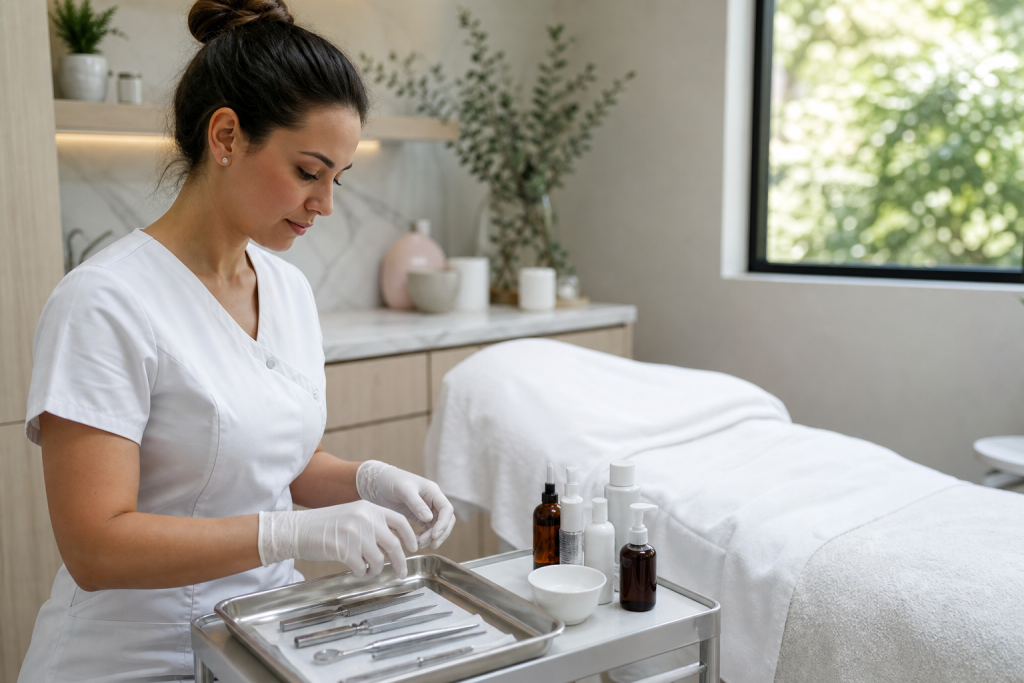
Typical steps in a professional session include consultation and skin analysis, double cleansing, exfoliation (enzymatic or gentle chemical), manual or assisted extractions, calming serums, mask, and sunscreen application. Add-ons such as LED therapy, high-frequency, or galvanic deep infusion may be recommended to reduce bacteria, calm inflammation, or improve product delivery. Confirmed fact: licensed estheticians commonly offer manual extractions as part of a facial, but scope and technique vary by license and training; serious or nodulocystic acne should be managed by a dermatologist [2].
Confirmed facts, official guidance, and local safety
Confirmed fact: the American Academy of Dermatology published updated acne care guidance in 2024 describing evidence-based management of acne and when to escalate care to medical treatments; this guideline supports combining in-office procedures with topical and systemic therapies under medical supervision when appropriate [2].
Official announcement: the California Board of Barbering and Cosmetology lists clear infection-protection consumer guidance—single-use items, professional sanitization, and licensed facilities must follow disinfection protocols to reduce infection risk [3]. Independent reporting: local spas and medspas in Southern California increasingly incorporate infection-control checks into client intake and visible sanitization practices.
Safe extractions: what licensed estheticians may—and may not—do
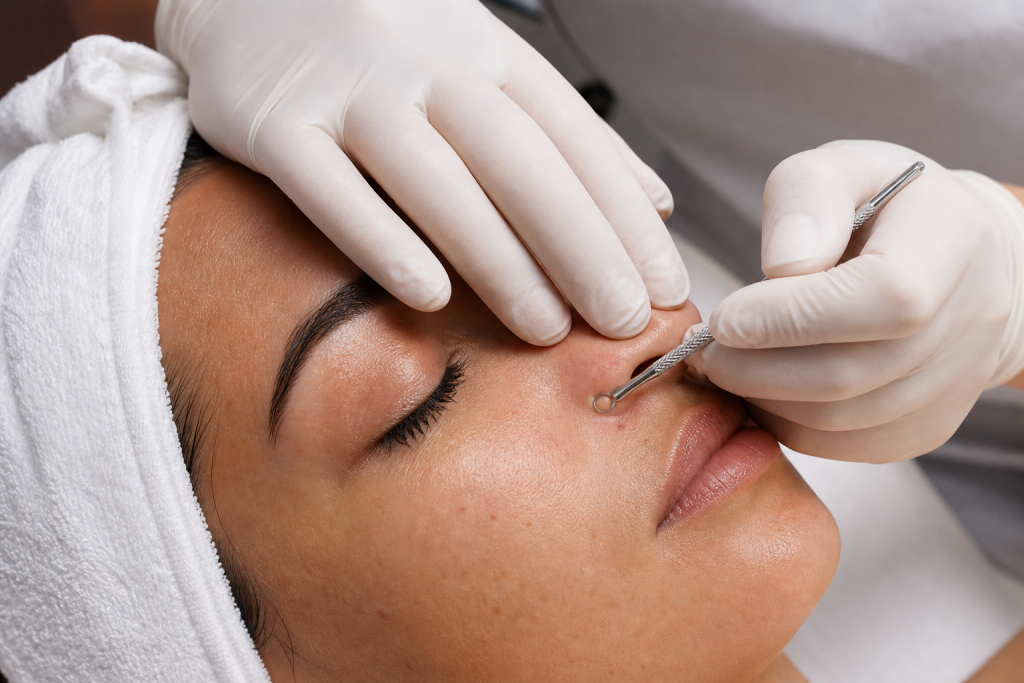
Analysis: trained estheticians can safely extract open comedones (blackheads) and some closed comedones (whiteheads) when the lesion is non-inflamed, superficial, and yields under gentle pressure. They should stop if the lesion is deep, inflamed, painful, or bleeds. Confirmed fact: manipulating inflamed cysts or nodules can worsen infection and scarring; these lesions are best evaluated and treated by a dermatologist [1][2].
Practical limits: estheticians do not prescribe oral antibiotics, isotretinoin, or medical-grade peels requiring physician oversight. If a client is on isotretinoin or has widespread inflammatory acne, the esthetician should defer extractions and coordinate care with the treating physician [2].
Infection-control checklist for clients
- Confirm the studio is licensed and follows state sanitation rules [3].
- Ask if tools are single-use or sterilized between clients; metal extraction tools should be disinfected and stored properly [3].
- Notify staff of recent isotretinoin use, diabetes, immune suppression, or open wounds—these change safety decisions [2][3].
Common benefits, limitations, and realistic expectations
Benefits: immediate cosmetic improvement in pore appearance, temporary reduction of congested bumps, and clearer skin surface that improves the effect of serums applied after the facial. Limitations: extractions remove existing comedones but do not change oil production or follicular keratinization permanently; recurrence is common without regular maintenance and a suitable home routine [1][2].
Estimate: many clients see visible improvement after one professional session, but managing chronic congestion usually requires repeat sessions, consistent home care, and sometimes medical treatments if inflammatory acne is present.
Aftercare: reduce complications and prolong results
Post-session care commonly recommended by professionals includes:
- Avoid heavy makeup, sweating, and sun exposure for 24–48 hours after extractions.
- Use gentle, non-comedogenic cleansers and avoid physical scrubs for at least 48 hours.
- Follow recommended topical products (e.g., gentle retinoid introduction when appropriate) and sun protection; consult your esthetician or dermatologist before starting prescription-level therapies.
Risk notice: over-manipulation at home after a professional extraction increases the risk of scarring and infection. If you notice increasing redness, warmth, swelling, or drainage, consult a clinician promptly. Confirmed fact: these signs may represent infection and require medical attention [3].
Comparing facial options and add-ons: which appointment suits your skin?
Below is a concise comparison to help clients decide between common professional options.
| Service | Best for | Pros | Cons |
|---|---|---|---|
| Deep-cleansing facial | Clogged pores, blackheads, mild congestion | Manual extractions, tailored exfoliation, immediate cosmetic clarity | Temporary; may require series for chronic congestion |
| Acne-focused facial | Oily, acne-prone skin with papules/pustules (mild–moderate) | Includes antibacterial serums, LED, high-frequency | Not a substitute for prescription therapy when needed |
| Medical-grade peel (physician-directed) | Persistent texture issues, post-inflammatory marks | Stronger exfoliation, longer-lasting texture change | Requires medical screening and downtime |
| Hydrating/anti-aging facial | Dry, mature, or sensitized skin | Soothing, restorative, supports barrier function | Less focused on clearing comedones |
Professional care versus at-home extractions
Analysis: estheticians combine training, sterile technique, and appropriate tools to reduce trauma and infection risk. At-home squeezing often uses unclean hands, insufficient lighting, and improper pressure—factors that raise the likelihood of scarring or persistent inflammation. Confirmed fact: when in doubt, seek a professional consult; red, painful, or expanding lesions should prompt medical evaluation [2][3].
When to see a dermatologist instead of or in addition to an esthetician
- Persistent or worsening inflammatory acne (nodules, cysts) despite over-the-counter care — refer for medical therapy [2].
- Signs of infection after a procedure: spreading redness, fever, drainage [3].
- History of isotretinoin use within past 6 months — plan extractions with your prescribing physician [2].
- Rapid scarring or pigment changes after procedures — consider medical assessment.
Costs, availability, and practical next steps (Woodland Hills)
Estimate: pricing and availability vary by studio and add-ons. Many spas offer introductory packages or memberships for maintenance. Confirmed fact: the California Board regulates licensing and sanitation, which affects where you can safely receive in-person treatments [3].
Practical next steps:
- Request a consultation focused on your skin history and any medications.
- Ask to see the studio’s sterilization and single-use item practices prior to extraction.
- Start with a single professional session, then plan a maintenance schedule with your esthetician and, if needed, coordinate with a dermatologist for medical therapy [2][3].
Sample treatment pathway for congested skin
Estimate and example: initial visit—consultation and deep-cleansing facial with limited extractions; follow-up at 4–6 weeks to reassess and add LED or high-frequency if indicated; if inflammatory lesions persist or worsen, refer to dermatology for topical or systemic therapy [2].
FAQs
Q: Will a deep cleansing facial permanently remove blackheads?
A: No. A professional extraction removes existing comedones, improving appearance short-term, but it does not permanently change sebum production or follicular turnover. Long-term control requires maintenance treatments and a consistent home regimen; medical therapy may be needed for inflammatory acne [1][2].
Q: Are extractions safe after recent isotretinoin?
A: No—clients should inform their esthetician and follow their prescribing physician’s guidance. Many providers advise avoiding aggressive procedures during and for several months after isotretinoin due to altered healing [2].
Q: How can I reduce the chance of infection after extractions?
A: Follow the studio’s aftercare instructions, avoid touching treated areas, use gentle cleanser and sunscreen, and watch for spreading redness or drainage. Confirmed fact: ask whether tools are single-use or sterilized between clients per California Board guidance [3].
Q: How often should I schedule deep-cleansing facials for congestion?
A: Frequency depends on skin type and severity. Many clients begin with monthly visits to control congestion, then extend intervals as home care and results stabilize. This is an estimate; your esthetician will tailor timing.
Q: Can men benefit from these facials, especially after shaving irritation?
A: Yes. Men’s skin often benefits from tailored deep-cleansing and soothing protocols that address shaving-related clogged pores and irritation; discuss sensitive-skin options with your esthetician.
Analysis note: This guidance synthesizes clinical recommendations and consumer-safety rules to help Woodland Hills clients weigh professional deep-cleansing options. Confirmed facts reference the AAD guideline (2024) and Cleveland Clinic explanations of comedonal acne [2][1], and state infection-control standards [3].
Ready to book a consultation in Woodland Hills? For a personalized deep cleansing facial congested pores Woodland Hills treatment plan, book online or call Asal Skin Lounge at +1 (747) 746-3818. Visit our studio at 19903 Ventura Blvd #3, Woodland Hills, CA 91364 to review safety practices and plan your next facial.
Frequently asked questions
Will a deep cleansing facial permanently remove blackheads?
No. Professional extractions remove existing blackheads and whiteheads for visible improvement, but they do not permanently stop oil production or follicle blockage. Long-term control usually requires maintenance treatments, a tailored home routine, and sometimes medical therapy for inflammatory acne [1][2].
Are extractions safe if I’m using prescription acne medication?
You should inform your esthetician about any prescription acne treatments. Certain medications—particularly recent isotretinoin use—can affect healing and may require postponing extractions. Coordinate with your prescribing clinician before in-office procedures [2].
How does Asal Skin Lounge reduce infection risk during extractions?
Confirmed practices include working with licensed staff, using sterilized or single-use instruments, following state-mandated disinfection protocols, and conducting a pre-treatment consultation to identify risk factors. These measures align with California Board guidance [3].
When should I see a dermatologist instead of an esthetician?
See a dermatologist if you have widespread or severe inflammatory acne (nodules, cysts), signs of infection (spreading redness, fever, drainage), or if you need prescription oral or topical therapies. The 2024 AAD guideline outlines when medical escalation is appropriate [2].
Need practical help?
Asal Skin Lounge — Contact us to schedule service or request a quote. Service area: Woodland Hills.
Topic in context
Sources and further reading
These links were validated and checked when possible when this article was created; some publishers limit automated requests. Facts, guidance, prices, regulations, and availability can change.
- Comedonal acne: Causes & treatment — Cleveland Clinic
- Guidelines of care for the management of acne vulgaris (Journal of the American Academy of Dermatology, published online Jan 30, 2024) — Journal of the American Academy of Dermatology / AAD guideline (2024) (2024-01-30)
- Infection Protection (Board of Barbering & Cosmetology guidance for consumers) — California Board of Barbering and Cosmetology