
LED light therapy facial add-on safety Woodland Hills
LED light therapy facial add-on safety Woodland Hills: LED light therapy facial add-on safety Woodland Hills: 2026 guide on benefits, limits, contraindications…
View article sections
- 01Table of contents
- 02LED light therapy facial add-on safety Woodland Hills: what changed on 2026-09-04 and why it matters
- 03What the evidence and regulators say (confirmed facts and official announcements)
- 04Benefits you can reasonably expect (evidence‑based)
- 05Limitations and realistic expectations
- 06When to skip LED: common contraindications and cautionary scenarios
- 07Device and provider variability: why selection matters
- 08Practical safety steps we follow at Asal Skin Lounge (Woodland Hills)
- 09Costs and availability (estimates and local context)
- 10Alternatives and complementary add‑ons
- 11How to decide before booking: a simple checklist
- 12Sources and how we used them (official, independent, analysis)
- 13Final recommendations for Woodland Hills clients
- 14Frequently asked questions
- 15Related guides and resources
- 16Frequently asked questions
- 17Need practical help?
- 18Topic in context
Estimated reading time: 10 minute read
Table of contents
- LED light therapy facial add-on safety Woodland Hills: what changed on 2026-09-04 and why it matters
- Quick summary for Woodland Hills clients
- What the evidence and regulators say (confirmed facts and official announcements)
- Analysis: what these findings mean for an LED add-on during a facial
- Benefits you can reasonably expect (evidence‑based)
- Limitations and realistic expectations
- When to skip LED: common contraindications and cautionary scenarios
- Device and provider variability: why selection matters
- Comparing in‑spa LED add‑ons, at‑home devices, and other facial add‑ons
- Practical safety steps we follow at Asal Skin Lounge (Woodland Hills)
- Costs and availability (estimates and local context)
- Alternatives and complementary add‑ons
- How to decide before booking: a simple checklist
- When to call your doctor
- Sources and how we used them (official, independent, analysis)
- Final recommendations for Woodland Hills clients
- Frequently asked questions
- Is LED light therapy safe for all skin types?
- How soon after a peel or microneedling can I have LED?
- Can I use my at‑home LED mask between professional sessions?
- Will LED prevent skin cancer or cause cancer?
- How many sessions are recommended?
- Related guides and resources
- Frequently asked questions
- Is LED light therapy safe for all skin types?
- How soon after a peel or microneedling can I have LED?
- Can I use my at‑home LED mask between professional sessions?
- Will LED therapy cause or prevent skin cancer?
- How many LED sessions will I need to see results?
- Need practical help?
- Topic in context
- Sources and further reading
LED light therapy facial add-on safety Woodland Hills: what changed on 2026-09-04 and why it matters
On 2026-09-04 Asal Skin Lounge updated its client guidance because recent regulatory and clinical reviews altered how consumers and professionals view LED treatments. Notably, a March 2026 FDA 510(k) summary for a consumer multi‑light LED mask was published and multiple systematic reviews and randomized trials have clarified short‑term safety and limits of low‑level light (photobiomodulation) for skin use [1][2][3]. This matters if you live in Woodland Hills and are weighing an LED add-on during a facial: you should understand both the confirmed evidence and practical precautions before you book.
Quick summary for Woodland Hills clients
As of 2026-09-04: Official regulatory summaries and independent clinical reviews show low‑level LED red and near‑infrared exposures used in consumer and professional devices are generally well tolerated in short trials, with few serious adverse events reported when used within recommended parameters [1][2][3]. However, there are important contraindications, device variability, and realistic limits to what LED alone can achieve. Below you’ll find confirmed facts, practical risks, how we apply LED add-ons safely at Asal Skin Lounge, and alternatives to consider.
What the evidence and regulators say (confirmed facts and official announcements)
Official announcement: The U.S. Food and Drug Administration cleared a consumer LED multi‑light therapy mask via a 510(k) summary published in March 2026, which documents technical performance and safety considerations for that device class as of that filing [1].
Independent reporting: Systematic reviews of photobiomodulation for aesthetic skin rejuvenation have examined oncologic safety and broader adverse-event data and did not find consistent evidence that low‑level LED therapy increases cancer risk, based on available clinical studies and follow-up intervals in the literature through 2022 [2].
Confirmed facts from randomized controlled trials: Two randomized trials (STARS 1 & 2) assessing red LED light on human skin reported favorable safety profiles for the treatment regimens studied, with intermittent mild effects such as transient warmth, redness, or dryness but no serious harms in the trial populations [3].
Analysis: what these findings mean for an LED add-on during a facial
Analysis: The evidence supports that, when administered within device recommendations and professional protocols, LED light therapy add-ons are low‑risk for most clients in the short term. Nevertheless, risk is not zero. Device output (wavelength, irradiance), session duration, cumulative exposure, and individual photosensitivity determine safety and tolerability. Also, published studies typically follow people for months, not years, so long‑term effects remain less well described [2].
Benefits you can reasonably expect (evidence‑based)
- Short‑term improvements in skin appearance reported in clinical trials include temporary reduction in redness and perceived skin tone or texture improvements when LED is used as part of a course of treatments; outcomes vary by device and protocol [2][3].
- LED add‑ons are non‑invasive, usually painless, and require little to no downtime, which suits clients seeking relaxation and maintenance during a custom facial.
Limitations and realistic expectations
LED therapy is not a quick fix for deep wrinkles, significant volume loss, or active inflammatory disorders. Results are generally subtler than procedures that create controlled injury (e.g., lasers, microneedling). Frequency, consistency, and combining LED with professional exfoliation or serums can influence outcomes, but LED alone has limits documented in clinical summaries and trials [2][3].
When to skip LED: common contraindications and cautionary scenarios
Do not use LED add‑ons during a facial if any of the following apply (as of 2026-09-04):
- Active, open skin infections, fresh chemical peels, or recently exposed compromised skin.
- Known photosensitivity disorders or medications that increase light sensitivity (for example, certain antibiotics, retinoids, or photosensitizing supplements). Ask your provider and disclose medications before treatment.
- Pregnancy or breastfeeding, when clients prefer to avoid discretionary light therapy; discuss personal concerns with your provider.
- History of skin cancer in the treatment area—consult a dermatologist before cosmetic light treatments.
These contraindications are standard clinical precautions and reflect analysis of trial populations and regulatory guidance; they do not replace personalized medical advice.
Device and provider variability: why selection matters
Device characteristics that affect safety and expected effects include wavelength (commonly red ~630–660 nm and near‑infrared ~810–850 nm), irradiance (power delivered), and treatment time. Consumer at‑home masks and professional in‑spa panels differ in output, fit, and safety interlocks. The FDA 510(k) summary for a consumer mask describes design controls and testing for that specific device; other devices will have different specifications and clearances or claims [1].
Comparing in‑spa LED add‑ons, at‑home devices, and other facial add‑ons
| Feature | In‑spa LED add‑on | At‑home LED device | Other common add‑ons (high frequency / galvanic) |
|---|---|---|---|
| Typical operator | Licensed esthetician or trained provider | Client (self‑administered) | Licensed esthetician |
| Device output control | Higher control, protocolized | Lower or fixed output | Energy‑delivery varies by device |
| Safety checks | Pre‑screening, eye protection, trained timing | User reads manufacturer instructions | Pre‑screening and contraindication review |
| Evidence for short‑term safety | Good when protocols followed [2][3] | Generally safe if used per labeling; device‑specific differences exist [1] | Well‑established; different risk/benefit profile |
Practical safety steps we follow at Asal Skin Lounge (Woodland Hills)
- Pre‑treatment consultation and health screening to identify photosensitivity, medications, or skin conditions.
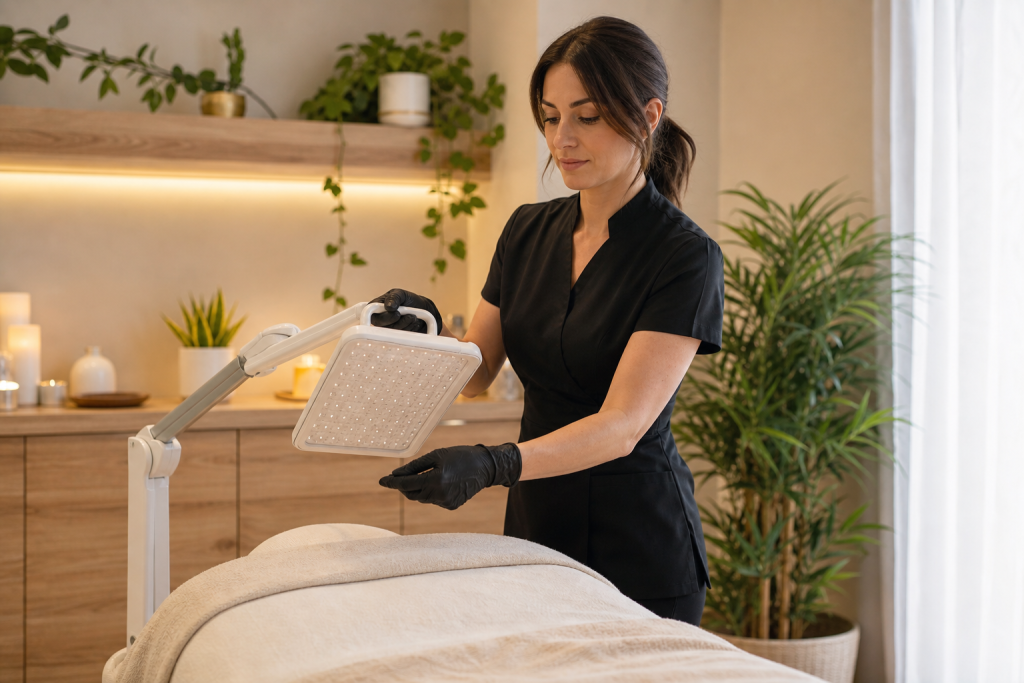
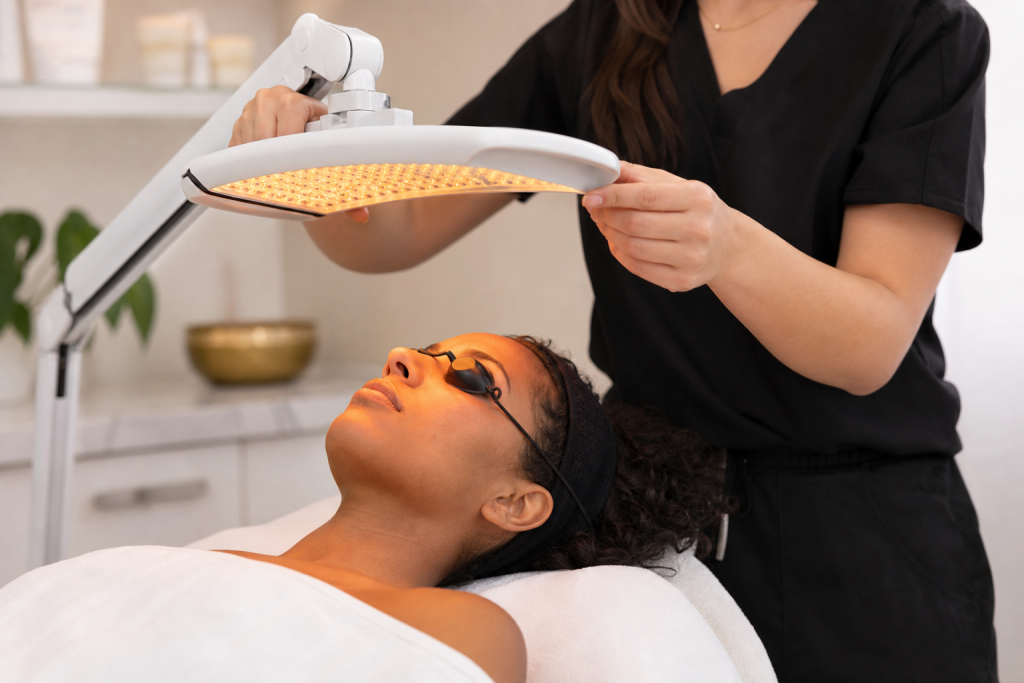
- Use of professionally maintained LED panels with known wavelengths, timed protocols, and client eye protection.
- Combining LED only with compatible facial steps—avoiding LED immediately after aggressive chemical peels or active resurfacing unless cleared by a provider.
- Documenting device used, exposure time, and client tolerance so we can adjust future sessions.
Costs and availability (estimates and local context)
Estimate: At Asal Skin Lounge in Woodland Hills, LED facial add‑ons are offered as an optional enhancement to most custom facials. Pricing varies by session length and combination with other services; check current menu for exact pricing. Availability depends on appointment type and staff schedules. Call or book online to confirm. These are business estimates and subject to change.
Alternatives and complementary add‑ons
If LED isn’t right for you, or you want additional benefits, consider:
- High frequency: targeted for congestion and surface bacteria management during extraction-focused facials.
- Galvanic deep infusion: helps deliver serums and hydrating agents deeper into the skin when suitable.
- Professional chemical exfoliation or gentle resurfacing (when appropriate) for texture and tone improvements.
Each option has its own contraindications and recovery profile; we’ll review these in your consultation.
How to decide before booking: a simple checklist
- Tell us about medications, medical history, and recent procedures.
- Ask which device and wavelengths the salon uses and why the protocol suits your skin.
- Discuss realistic goals and whether LED is best alone or combined with other treatments.
- Confirm potential side effects and what to expect during and after the session.
When to call your doctor
If you have a history of skin cancer, are taking photosensitizing medication, or have a systemic condition that may affect skin healing, consult your physician before elective LED cosmetic treatments.
Sources and how we used them (official, independent, analysis)
- Official: FDA 510(k) summary for a consumer LED multi‑light therapy mask (published March 5, 2026) — used to document regulatory clearance activity and device testing information relevant to consumer‑grade LED products [1].
- Independent review: A 2022 systematic review in the Aesthetic Surgery Journal examined oncologic safety of low‑level light therapy and is cited for its synthesis of clinical trial data and safety signals through 2022 [2].
- Clinical trials: STARS 1 & 2 randomized trials report short‑term safety data for red LED on human skin and inform tolerability expectations [3].
- Analysis: Where the literature is limited (for example, long‑term data and device variability), we note that conclusions are analytical estimates rather than definitive facts.
Final recommendations for Woodland Hills clients
If you are considering an LED add‑on at Asal Skin Lounge, start with a pre‑treatment screening and a frank discussion about your medications and skin history. For most clients, evidence and regulatory updates through 2026 support that LED delivered under professional protocols is low risk in the short term, but it is not a substitute for procedures that address deeper skin concerns [1][2][3] (confirmed facts and analysis, as of 2026-09-04).
To schedule a consultation, book online or call +1 (747) 746-3818. We’ll review whether an LED light therapy facial add-on safety Woodland Hills protocol fits your individualized facial plan and goals.
Frequently asked questions
Is LED light therapy safe for all skin types?
Most published studies include a range of skin types and report good tolerability when protocols are followed; however, individual photosensitivity, active inflammation, or certain medications can increase risk. Disclose these during pre‑screening (analysis; see trial safety data [2][3]).
How soon after a peel or microneedling can I have LED?
Timing depends on the aggressiveness of the procedure. Mild resurfacing may allow LED within a few days, while deeper treatments typically require longer healing before light therapy; consult your provider for device‑specific guidance (analysis and clinic protocol).
Can I use my at‑home LED mask between professional sessions?
Many clients safely use approved at‑home devices between professional sessions if they follow the manufacturer’s instructions and avoid overlapping high exposures. That said, at‑home devices differ from professional panels in output and fit; mention any home devices during your consultation so we can coordinate protocols (confirmed device variability [1]).
Will LED prevent skin cancer or cause cancer?
There is no evidence that low‑level LED therapy prevents or causes skin cancer in the clinical literature reviewed to date; systematic reviews and trials have not demonstrated oncologic risk for the parameters studied, but long‑term data are limited and clients with a history of skin cancer should consult a physician first [2][3] (independent review and trial findings).
How many sessions are recommended?
Recommendations vary by goal and device. Some maintenance programs suggest multiple sessions spaced over weeks; during your consultation we’ll propose a schedule based on your skin type and goals (clinic estimate).
For a personalized plan, book online or call Asal Skin Lounge at +1 (747) 746-3818. We look forward to helping you choose safe, evidence‑based facial add‑ons tailored to your skin in Woodland Hills.


Frequently asked questions
Is LED light therapy safe for all skin types?
Most studies report good tolerability across skin types when protocols are followed, but individual photosensitivity, active inflammation, or certain medications can increase risk. Disclose medications and skin history during pre‑screening so your provider can advise.
How soon after a peel or microneedling can I have LED?
Timing depends on procedure aggressiveness. Mild resurfacing may allow LED within a few days; deeper treatments usually require longer healing before light therapy. Your provider will give device‑specific guidance during consultation.
Can I use my at‑home LED mask between professional sessions?
If your at‑home device is used exactly per manufacturer’s instructions, it can often be used between professional sessions. However, at‑home and professional devices differ in output; mention any home devices so the salon can coordinate safe exposure schedules.
Will LED therapy cause or prevent skin cancer?
Current systematic reviews and clinical trials have not shown that low‑level LED therapy causes or prevents skin cancer for the parameters studied, but long‑term data are limited. Clients with a history of skin cancer should consult their physician before elective treatments.
How many LED sessions will I need to see results?
Recommended session counts vary by device and goals. Many plans involve several sessions over weeks for measurable changes. During your consultation, Asal Skin Lounge will recommend a schedule tailored to your skin and objectives.
Need practical help?
Asal Skin Lounge — Contact us to schedule service or request a quote. Service area: Woodland Hills.
Topic in context
Sources and further reading
These links were validated and checked when possible when this article was created; some publishers limit automated requests. Facts, guidance, prices, regulations, and availability can change.
- FDA 510(k) summary: CurrentBody Skin LED Multi Light Therapy Mask (K260715) — U.S. Food & Drug Administration (2026-03-05)
- Photobiomodulation: A Systematic Review of the Oncologic Safety of Low-Level Light Therapy for Aesthetic Skin Rejuvenation — Aesthetic Surgery Journal / PubMed Central (2022-10-01)
- Safety of light emitting diode-red light on human skin: two randomized controlled trials (STARS 1 & 2) — PubMed Central (PMC) (2021-03-01)