


LED high-frequency galvanic add-ons comparison — Analysis
LED high-frequency galvanic add-ons comparison: Independent analysis of LED high-frequency galvanic add-ons comparison for Woodland Hills facials. Safety, bene…
View article sections
- 01Table of contents
- 02What this guide covers and why it matters
- 03LED high-frequency galvanic add-ons comparison: quick guide
- 04Evidence, safety and current regulatory context
- 05Side-by-side comparison table
- 06Who benefits from each add-on
- 07Combining add-ons safely and effectively
- 08Costs, availability, and what to expect at Asal Skin Lounge
- 09Common problems and how we manage them
- 10Alternatives and upgrades
- 11Practical next steps for Woodland Hills clients
- 12Labeling of source types used in this article
- 13Common questions clients ask
- 14Next step: booking and consultation
- 15FAQ
- 16Related guides and resources
- 17Frequently asked questions
- 18Need practical help?
Quick summary: This independent, source-based update compares LED (photobiomodulation), high-frequency, and galvanic facial add-ons used at Asal Skin Lounge in Woodland Hills. It explains mechanisms, safety considerations, typical sequencing, contraindications, and practical booking steps.
Estimated reading time: 9 minute read
Table of contents
- What this guide covers and why it matters
- LED high-frequency galvanic add-ons comparison: quick guide
- How LED (PBM) devices work
- How high-frequency devices work
- How galvanic deep-infusion works
- Evidence, safety and current regulatory context
- What the protocols say about session sequencing
- Side-by-side comparison table
- Who benefits from each add-on
- Combining add-ons safely and effectively
- Costs, availability, and what to expect at Asal Skin Lounge
- Common problems and how we manage them
- Alternatives and upgrades
- Practical next steps for Woodland Hills clients
- Labeling of source types used in this article
- How we use this information at Asal Skin Lounge (analysis)
- Common questions clients ask
- Next step: booking and consultation
- FAQ
- Related guides and resources
- Frequently asked questions
- What is the difference between LED, high-frequency, and galvanic add-ons?
- Are these add-ons safe for everyone?
- Can I get more than one add-on in a single facial?
- How should I prepare for a session?
- Why mention the FDA on 2026-09-03?
- Need practical help?
- Topic in context
- Sources and further reading
On 2026-09-03, renewed regulatory attention to photobiomodulation (PBM) devices — including draft guidance from the U.S. Food & Drug Administration — made device safety, labeling, and premarket review a higher-profile topic for spas and clients. This update matters for anyone choosing add-ons during a facial because devices that use light or currents are now more likely to face clarified safety and claims expectations [1]. This article is independent analysis and reporting, not an official confirmation, and it compares LED, high-frequency, and galvanic options used as facial add-ons at Asal Skin Lounge in Woodland Hills.
LED high-frequency galvanic add-ons comparison is the focus of this dated, source-based update. As a result, the article separates verified details from analysis.
What this guide covers and why it matters
This guide explains how each add-on works, summarizes supporting protocols and professional guidance, labels confirmed facts versus analysis, flags likely risks, and gives practical next steps for booking. It draws on official draft guidance for PBM devices and established professional protocols for LED and high-frequency use [1][2][3].
LED high-frequency galvanic add-ons comparison: quick guide
The concise answer: LED targets cellular responses with light (photobiomodulation), high-frequency delivers oscillating current to the skin surface for sanitizing and stimulation, and galvanic uses a direct low-voltage current to help move water-soluble serums deeper or to ionize products for extraction. Each tool is complementary, but they have different mechanisms, session timing, and safety checks. Below we expand on each and explain typical use cases.
How LED (PBM) devices work
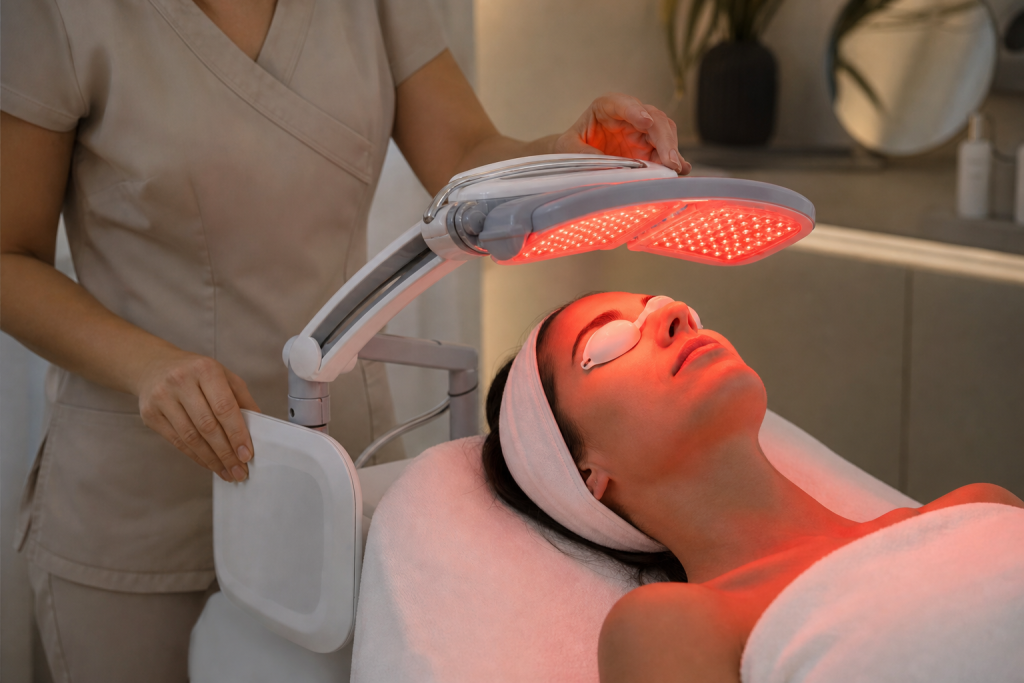
LED facial devices deliver narrow bands of visible light (commonly red and near-infrared) to the skin. The intended effect is photobiomodulation of cellular processes, primarily through interactions with mitochondrial chromophores. Professional protocols use controlled wavelengths, power densities, and treatment durations to target concerns such as overall skin tone and recovery; device manufacturers publish specific treatment protocols and timing recommendations for their systems [2].
Confirmed fact: the FDA has published draft guidance addressing premarket notification expectations for PBM devices, which signals regulatory scrutiny on labeling and claims for LED devices used in consumer and professional settings [1].
How high-frequency devices work
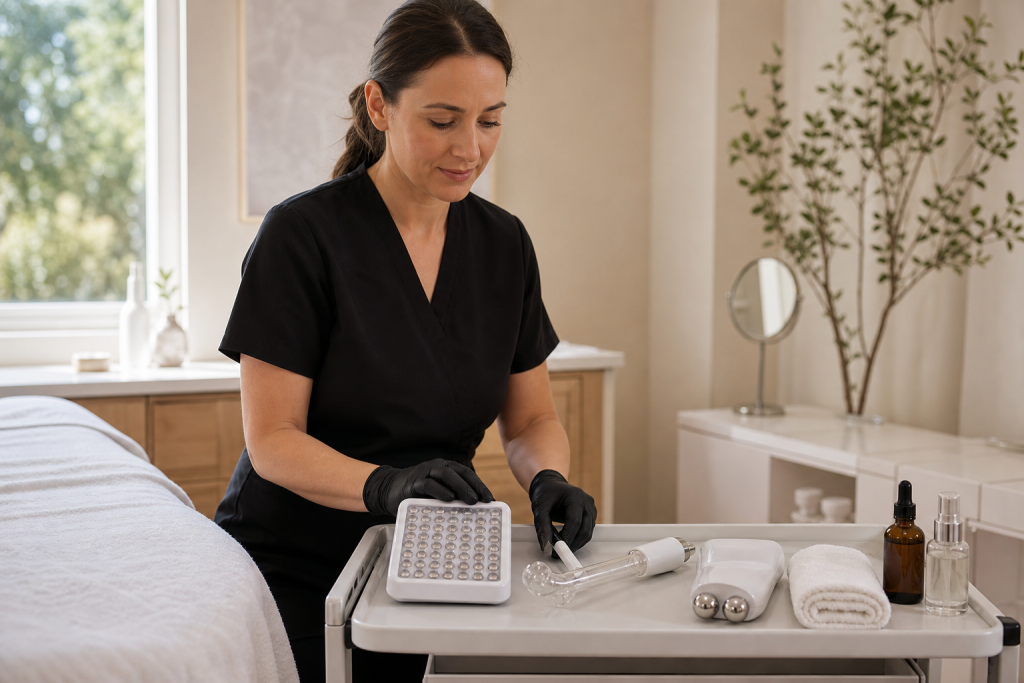
High-frequency devices generate a gentle alternating current that produces a subtle thermal and ozone effect at the electrode tip. In professional facials, estheticians use high-frequency to help with localized congestion, to calm inflammation after extractions, and to provide a tightening sensation. Professional education resources outline application protocols, electrode choices, and session timing used by licensed providers [3].
How galvanic deep-infusion works
Galvanic devices pass a small direct current into the skin to support two primary actions: desincrustation (using negative polarity to soften and loosen oil-clogged debris) and iontophoresis (using polarity to help move charged, water-soluble ingredients into the skin). This method is often used when the facial includes professional serums that benefit from assisted penetration.
Evidence, safety and current regulatory context
Official announcement: the FDA draft guidance for PBM devices provides recommendations for premarket 510(k) claims and test data and signals that manufacturers and clinics should be careful about claims of medical benefit [1]. This is an official document from the FDA (draft) and not a regulatory change in law; it guides reviewers and applicants as of the draft date [1].
Independent reporting and analysis: manufacturers and professional education sources publish treatment protocols and safety instructions used in clinical practice. For example, a professional LED provider outlines wavelength, dose, and timing guidance used by licensed estheticians [2], while professional trade education explains safe high-frequency protocols and contraindications [3].
Key safety points:
- Eye protection and dosing: LED sessions use wavelengths and intensities that should follow manufacturer protocols; both clients and providers must avoid inappropriate claims and must protect the eyes when required [1][2].
- Contraindications: implantable electronic devices (e.g., pacemakers), active infection, open wounds, pregnancy (relative precautions), and photosensitizing medications require consultation before treatment. These are standard professional contraindications; check manufacturer and clinical guidance [2][3].
- Product claims: regulatory attention means clinics should avoid medical claims (e.g., curing disease) and instead explain intended cosmetic or aesthetic objectives in plain language [1].
What the protocols say about session sequencing
Professional protocols typically sequence add-ons to maximize safety and efficacy. For example, cleansing, exfoliation and extractions usually come before galvanic iontophoresis or LED. High-frequency can be used after extractions to calm treated areas. LED is often used at the end of the treatment for soothing PBM exposure or as a standalone recovery step [2][3].
Side-by-side comparison table
| Dimension | LED (PBM) | High-frequency | Galvanic |
|---|---|---|---|
| Mechanism | Light-induced photobiomodulation (red/near-IR) | Oscillating alternating current; thermal/ozone micro-effect | Low direct current for iontophoresis / desincrustation |
| Typical session role | Soothe/energize cells; finish or standalone | Sanitize, calm post-extraction, mild stimulation | Improve serum penetration; unclog pores |
| Common sensation | Warmth or no sensation | Tingling at electrode; warmth | Tingling; conductive gel required |
| Time per add-on | 5–20 minutes (protocol dependent) | 2–8 minutes on focused areas | 5–15 minutes (depending on stage) |
| Evidence & guidance | Professional protocols; FDA draft guidance for PBM devices [1][2] | Trade-level clinical guidance for estheticians [3] | Common esthetic practice; device-specific safety instructions |
| When to avoid | Photosensitizing meds; certain implants; active severe inflammation | Breaks in skin; certain cardiac implants; active bleeding | Open wounds; certain implants; unmanaged severe rosacea |
Who benefits from each add-on
- LED: clients seeking a soothing add-on after extractions, or those who want a noninvasive finish to improve skin appearance and recovery. LED protocols vary by device and provider [2].
- High-frequency: clients with localized congestion, whiteheads, or who need calming after manual extractions. It can provide a visible tightening sensation and aid in sanitation when used properly [3].
- Galvanic: clients receiving professional serums and targeted deep-infusion steps or desincrustation to address oil-clogged pores. Galvanic works best when combined with appropriate serums and professional technique.
Combining add-ons safely and effectively
In practice, estheticians combine these modalities to address multiple concerns. A safe and common sequence is deep cleansing and exfoliation, optional extractions, high-frequency to calm and sanitize, galvanic iontophoresis to introduce hydrophilic serums, and finishing LED for soothing PBM exposure [2][3].
Independent analysis: combining tools can increase session complexity and cost, and clients should expect individualized planning. Discuss medications, implants, and skin sensitivity before booking.
Costs, availability, and what to expect at Asal Skin Lounge
Estimate: Add-on prices vary by studio, device brand, and session length. At professional studios in Woodland Hills, typical add-ons range from modest five- to twenty-minute boosts to longer combined protocols. For current pricing and combination packages at Asal Skin Lounge, please inquire when booking because prices, device models, and promotions change over time.
Availability: popular add-ons often book quickly; if you plan to combine multiple modalities (for example, galvanic plus LED), allow extra appointment time when scheduling.
Common problems and how we manage them
- Mild redness or tingling: common and typically resolves quickly. Providers reduce intensity or shorten exposure if sensitivity occurs.
- Photosensitivity reactions: rare but possible with certain medications or topical agents. Tell your provider about all prescriptions, supplements, and topical retinoids before LED treatments [2].
- Electrical interference concerns: clients with pacemakers or certain implants may be advised against high-frequency or galvanic services; consult your physician when in doubt [3].
Alternatives and upgrades
If you prefer a lower-technology add-on, consider serums with professional-grade ingredients, focused manual lymphatic massage, or cooling masks that support similar cosmetic goals without electrical devices. Conversely, advanced in-clinic devices (delivered by medical professionals) may offer stronger effects but carry different risk profiles and require medical oversight.
Practical next steps for Woodland Hills clients
- Review medications, supplements, and medical devices with your esthetician before booking any add-on.
- Decide whether you prefer a single targeted add-on or a combined sequence; ask about session timing and estimated sensations.
- When booking at Asal Skin Lounge, request specific device names or protocols if you have prior preferences or sensitivities.
- If you have an implantable electronic device or are pregnant, seek medical clearance before electrical-based add-ons.
Labeling of source types used in this article
- Official (draft guidance): U.S. Food & Drug Administration draft guidance for PBM devices — relevant to LED device claims and premarket expectations [1].
- Manufacturer protocol: professional LED device treatment guidance and recommended wavelengths and timings from a device provider [2].
- Professional education: trade-level high-frequency protocols for estheticians from a professional brand education source [3].li>
How we use this information at Asal Skin Lounge (analysis)
Asal Skin Lounge integrates manufacturer protocols and trade education into our treatment planning while following best-practice safety checks. Because regulatory attention to PBM devices is active, we emphasize transparent client screening, conservative claims about outcomes, and conservative dosing consistent with published device protocols and trade guidance [1][2][3]. This is our independent analysis of how those documents affect client choices.
Common questions clients ask
- How long does an LED add-on take? Typical LED add-ons last 5–20 minutes depending on protocol [2].
- Will galvanic make me sensitive? Galvanic can cause mild tingling; providers tailor intensity and avoid use over open wounds.
- Can I combine all three? Yes, when clinically appropriate and after screening; sequencing matters for safety and results.
Next step: booking and consultation
If you live in Woodland Hills, Tarzana, Encino, West Hills, Canoga Park, Calabasas, or nearby, and you want a personalized consultation to choose LED, high-frequency, galvanic, or a combination, book a session with Asal Skin Lounge. Our team will review your medical history, current skincare, and goals before recommending add-ons and sequencing. Book online or call +1 (747) 746-3818.
FAQ
See below for expanded answers to common questions about LED, high-frequency, and galvanic add-ons.


Frequently asked questions
What is the difference between LED, high-frequency, and galvanic add-ons?
LED uses specific light wavelengths to influence cellular activity (photobiomodulation). High-frequency uses an alternating current through a glass electrode to create a mild thermal/ozone effect for localized sanitation and calming after extractions. Galvanic delivers a low direct current to facilitate desincrustation or iontophoresis to help charged, water-soluble ingredients penetrate deeper.
Are these add-ons safe for everyone?
Most clients tolerate these add-ons well, but there are standard contraindications. People with implantable electronic devices, active severe infections, open wounds, or certain photosensitizing medications should avoid or seek medical clearance. Always disclose medications and implants during your consultation.
Can I get more than one add-on in a single facial?
Yes. Common, safe sequences include cleansing and exfoliation, extractions if needed, high-frequency to calm and sanitize, galvanic to assist serum penetration, and LED as a final soothing step. Your esthetician will tailor timing and intensity based on your skin and risk factors.
How should I prepare for a session?
Avoid heavy topical retinoids or chemical exfoliants for a short period before treatments if advised by your esthetician. Bring a list of medications and any implantable devices. Plan for extra appointment time when combining multiple add-ons.
Why mention the FDA on 2026-09-03?
On 2026-09-03 we highlighted that regulatory attention and draft FDA guidance for PBM devices make safety and claims more important in practice. This article presents independent analysis of those developments and their practical impact for clients and providers rather than asserting a legal change.
Need practical help?
Asal Skin Lounge — Contact us to schedule service or request a quote. Service area: Woodland Hills.
Topic in context
Sources and further reading
These links were validated and checked when possible when this article was created; some publishers limit automated requests. Facts, guidance, prices, regulations, and availability can change.
- Photobiomodulation (PBM) Devices – Premarket Notification [510(k)] Submissions (Draft Guidance) — U.S. Food & Drug Administration (FDA) (2023-01-12)
- LED Light Therapy Treatment Protocols — Celluma (device manufacturer) (2026-06-01)
- Dermalogica PRO Clear / High-Frequency Protocols (professional guidance) — Dermalogica (professional education) (2023-05-01)